
Here is a number that should wake you up: 75% of Google users never scroll past the first page of results. If your website is sitting on page two or beyond, you are essentially invisible to the vast majority of people searching for exactly what you offer. I have seen businesses invest thousands into their products and services, only to wonder why their website gets zero traffic. The answer, almost every single time, comes down to one thing: search visibility.
Today, I am going to walk you through the exact factors that determine where your website shows up in Google and AI-powered search results, backed by the latest research, real numbers, and practical steps you can start applying today. Whether you are just getting started or trying to fix a site that has been underperforming, this is the most important thing you can do for your digital presence in 2026.
Why Website Visibility Matters More Than Ever in 2026
Let me put the opportunity in perspective. Google now handles more than 8.3 billion searches every single day. That is roughly 96,000 searches every second. Organic search alone drives over 53% of all website traffic, making it the single largest source of visitors for most businesses online. Compare that to social media, which accounts for just around 5% of website traffic on average, and you start to see why ranking in search is not optional. It is everything.

68% of all online experiences begin with a search engine.
The number one result on Google captures 39.8% of all clicks. Position two gets just 18.7%. (FirstPageSage, 2025)
Only 0.63% of searchers ever click on a page two result.
What makes 2026 particularly interesting is the rise of AI-powered search. AI Overviews, ChatGPT search, Perplexity, and Google’s own AI Mode are changing how people discover content. I have watched AI traffic increase nearly 10x between mid-2024 and mid-2025 according to Ahrefs data. The rules are not the same as they were even two years ago, and the strategies I am sharing here reflect that shift.
1. Content Quality and Search Intent: The Foundation of Everything
I will be direct with you: if your content does not genuinely help people, nothing else on this list will save you. Google has made this abundantly clear with its Helpful Content system. The algorithm is now sophisticated enough to tell the difference between content written for humans and content written purely to game rankings.
The key to getting this right is understanding search intent. Every query a person types into Google falls into one of four categories: informational (they want to learn something), navigational (they are looking for a specific site), commercial (they are comparing options), and transactional (they are ready to buy or sign up). When I write content for Dexora Digital, I always start by asking: what does this person actually want right now? What problem are they trying to solve?
One more thing I want you to take seriously: long-form content consistently outperforms short content in search rankings. Pages in the top 10 on Google average around 1,890 words. Articles over 2,000 words generate 77% more backlinks than shorter ones. That is not a coincidence. Depth signals expertise, and expertise is exactly what Google rewards.
Content over 3,000 words wins roughly 3 times more traffic than average-length articles.
2. E-E-A-T: Experience, Expertise, Authority and Trust
Google’s quality raters use a framework called E-E-A-T to evaluate content. The four letters stand for Experience, Expertise, Authority, and Trust. This framework was already important before, but in the age of AI-generated content flooding the internet, Google has doubled down on it. I have seen firsthand how content with clear author credentials, original insights, and cited sources consistently outranks generic articles that say the same things in slightly different words.
Here is what I do to strengthen E-E-A-T for every piece of content: I include real author profiles with credentials. I cite research and data sources. I share personal experience and case studies. I keep information accurate and up-to-date. And I make sure the website itself has trust signals, such as an SSL certificate, a clear privacy policy, and visible contact information. These signals matter to Google, and they matter to your readers.
3. Technical SEO: Making Sure Google Can Find and Read You
Even the most brilliant content in the world will not rank if search engines cannot properly crawl and index your site. Technical SEO is the infrastructure work that makes everything else possible. I think of it as laying the foundation before building a house.
The areas I focus on most are page speed, mobile-friendliness, Core Web Vitals, and site structure. Let me give you the numbers on why speed matters so much: 40% of users abandon a website that takes longer than three seconds to load. Conversion rates drop by 4.42% for every additional second of load time. And as of late 2025, only about 54.6% of websites pass Google’s Core Web Vitals assessment. That means nearly half of websites out there are leaving rankings on the table simply because of poor technical performance.
Mobile devices now account for 62.73% of all global website traffic.
For mobile, the situation is even more urgent. Google uses mobile-first indexing, which means it primarily evaluates the mobile version of your site to determine rankings. If your website is difficult to navigate on a phone, you are sending Google a very clear signal that you do not care about the majority of your visitors.
Other technical elements I always check include: a clean XML sitemap submitted to Google Search Console, proper canonical tags to avoid duplicate content issues, descriptive and keyword-rich URLs, and structured data markup (schema) to help Google understand your content and qualify for rich results.
4. Keyword Research and Topical Authority
Keywords are still important in 2026, but the way I approach them has completely changed over the past few years. I no longer obsess over single keywords. Instead, I think about topics and topic clusters. The idea is to build a web of content around a subject area so that Google recognises my site as a genuine authority on that topic, not just a page that happens to mention a phrase a few times.
I start with seed topics that match what my audience is actually searching for. Then I expand using tools like Google’s own Search Console, People Also Ask boxes, and keyword research platforms. I pay close attention to long-tail keywords, which are longer, more specific phrases that tend to have less competition and much higher intent. These account for around 70% of all search traffic, yet most businesses ignore them in favour of broad head terms.
74% of keywords get 10 or fewer searches per month. The competition is lowest in the long tail. (SE Ranking, 2025)
I also map each piece of content to a specific intent and a specific stage of the customer journey. A blog post targeting someone who is just discovering a problem looks very different from a landing page targeting someone ready to hire an agency. Getting this mapping right is one of the highest-leverage things I have done for improving organic traffic.
5. Backlinks: Earning Trust from Other Websites
Backlinks remain one of the most powerful ranking signals in Google’s algorithm. A backlink is a link from another website pointing to yours, and Google treats these as votes of confidence. The more authoritative and relevant the site linking to you, the more value that link carries.
The numbers tell a stark story: pages in the top spot on Google have 3.8 times more backlinks than pages in positions two through ten. And a staggering 96.55% of pages on the internet get zero organic traffic, largely because they have no backlinks pointing to them. Building a strong backlink profile is not optional if you want to compete.
My approach to link building focuses on quality over quantity. I create content that is genuinely worth linking to, including original research, detailed guides, and useful tools. I also pursue relationships with relevant websites in my industry, seek mentions in press and media, and leverage business directories for local SEO signals. I never buy low-quality links because the short-term gain is not worth the long-term penalty.
6. Optimising for AI Search: The New Frontier
This is where things get really exciting, and where I believe most businesses are leaving the most opportunity on the table. AI-powered search platforms like Google’s AI Overviews, ChatGPT Search, and Perplexity are now part of how millions of people find information every day. The rules for appearing in these AI answers are different from traditional SEO, but they reward the same underlying things: clarity, authority, and structure.
What I have learned from testing and research is that AI systems prefer content that is well-structured, uses clear headings, answers questions directly, and comes from authoritative sources. Branded mentions, not just backlinks, play a stronger role in AI visibility. One study found that branded web mentions have a correlation of 0.664 with AI Overview brand visibility. If people are talking about your brand online, AI is more likely to cite you.
The average LLM visitor is worth 4.4 times more than an average traditional organic search visitor. (Semrush, 2025)
I also structure content with clear FAQ sections, short direct answers to common questions, and schema markup wherever possible. Featured snippets, which appear at position zero in Google, have a click-through rate of 42.9%, which actually exceeds the standard first organic result. Optimising for these is one of the fastest ways to gain visibility.
7. On-Page Optimisation: The Details That Drive Clicks
All the strategy in the world means nothing if your individual pages are not optimised properly. On-page SEO is about making each page as clear, relevant, and clickable as possible. I will walk through the elements I always check.
Title tags are the most important on-page element. They appear as the blue clickable headline in search results and should include your primary keyword near the front, stay under 60 characters, and make a clear promise to the reader. Meta descriptions, while not a direct ranking factor, heavily influence whether someone clicks on your result. I treat them like ad copy: one focused sentence that answers the query and invites the click. URLs should be short and descriptive, because pages with keyword-relevant URLs see a 45% higher click-through rate than those without.
Internal linking is another on-page element I take very seriously. When I link from one page on my site to another, I am helping both Google and visitors understand the relationship between topics. A strong internal linking structure distributes authority across your site and keeps visitors engaged for longer, which sends positive behavioural signals back to Google.
8. User Experience: Because Google Watches How People Behave
Google does not just look at what is on your page. It pays close attention to what people do when they land on it. Metrics like bounce rate, dwell time, and pages per session all influence how the algorithm evaluates the quality of your content. If people click on your result and immediately go back to search for something else, Google takes that as a signal that you did not satisfy their query, and your rankings will reflect that.
I think about user experience in terms of three questions: Can people find what they came for quickly? Is the page pleasant to read on a phone? Does the site make people want to explore further? When I can answer yes to all three, the performance metrics follow.
Putting It All Together: Where to Start
If you are feeling overwhelmed by all of this, I get it. The good news is that you do not need to do everything at once. I recommend starting with a technical audit to identify crawl errors and site speed issues, then moving to content quality and keyword research. From there, build your internal linking structure and start working on backlinks through genuine relationship building and great content creation.
The most important thing I can tell you is this: SEO is not a one-time project. It is an ongoing investment. The businesses that win in search are the ones that treat visibility as a discipline, not a checkbox. At Dexora Digital, we help businesses do exactly that, with strategies grounded in data and built for long-term results.
91% of marketers reported that SEO positively impacted their website performance and marketing goals in 2024. (Conductor State of SEO, 2025)
Frequently Asked Questions
How long does it take to see results from SEO?
SEO is a long-term strategy. Most websites start seeing meaningful changes in rankings within three to six months of consistent effort, though highly competitive industries can take longer. Technical fixes tend to show impact faster than content-based improvements.
What is the difference between SEO and ranking in AI results like ChatGPT or Perplexity?
Traditional SEO focuses on ranking in Google’s blue link results. AI visibility, sometimes called Generative Engine Optimisation (GEO), focuses on being cited or referenced in AI-generated answers. The signals overlap: authority, clear content structure, and trustworthiness matter for both. However, AI systems also give extra weight to branded mentions and direct, concise answers.
How many backlinks do I need to rank on page one of Google?
There is no magic number. What matters is the quality and relevance of the links, not just the quantity. Research shows that the top-ranking website for a keyword has an average of 35,000 backlinks, but that reflects highly competitive terms. For niche or long-tail keywords, even a handful of strong, relevant backlinks can be enough to reach page one.
Does page speed really affect my Google rankings?
Yes, significantly. Page speed is a confirmed Google ranking factor, and it also directly affects user behaviour. If your page takes more than three seconds to load, you are likely losing 40% or more of your potential visitors before they even see your content. Improving speed typically leads to better rankings and better conversion rates at the same time.
What is E-E-A-T and why does it matter?
E-E-A-T stands for Experience, Expertise, Authority, and Trust. It is the framework Google uses to evaluate whether content was created by someone who genuinely knows the subject. Pages that demonstrate real-world experience, cite credible sources, have clear authorship, and come from trustworthy websites rank significantly better, especially in competitive or sensitive niches.
Should I focus on Google or also optimise for AI search tools?
Both. Google still commands around 89.7% of global search market share and should remain your primary focus. However, AI tools like ChatGPT and Perplexity are growing fast, and research shows that AI-referred visitors are worth significantly more per visit. Fortunately, the strategies that improve Google rankings, namely quality content, strong authority signals, and good structure, also improve your chances of being cited in AI results.
How do I get my website into Google’s Featured Snippets?
Featured snippets reward content that directly and concisely answers a specific question. Structure your content with clear headings that match common queries. Provide a direct answer in the first one or two sentences after the heading, ideally in under 60 words. Use structured formatting like numbered steps for how-to queries, and make sure the page already ranks in the top 10 for the keyword.
Is social media good for SEO?
Social media does not directly affect Google rankings, but it plays an indirect role. Content that performs well on social media tends to attract backlinks and brand mentions, both of which do influence rankings. Additionally, social platforms like YouTube, Reddit, and LinkedIn frequently appear in the top 10 Google results, making a presence there part of a complete visibility strategy.
Ready to improve your website’s visibility in search? At Dexora Digital, I work with businesses to build SEO strategies that generate real, sustainable results, not quick fixes that disappear with the next algorithm update. Visit dexoradigital.com to learn more about how we can help your brand show up where it matters most.

I am Syed Haider Shah, Co-Founder of Dexora Digital and a technical SEO specialist with a focus on the systems that determine whether a website gets found or gets ignored. At Dexora, I work alongside our founding team to deliver the kind of search growth that compounds: the type built on clean technical infrastructure, precise keyword strategy, and structured data that both Google and AI-powered search platforms can clearly understand.
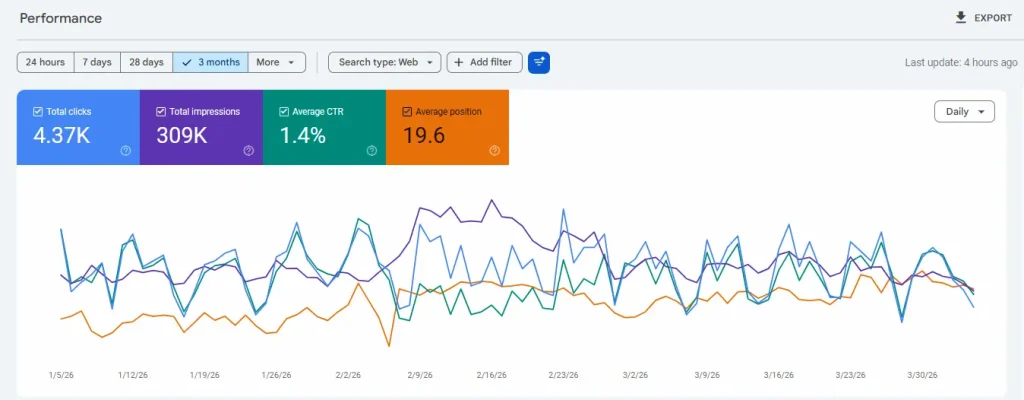
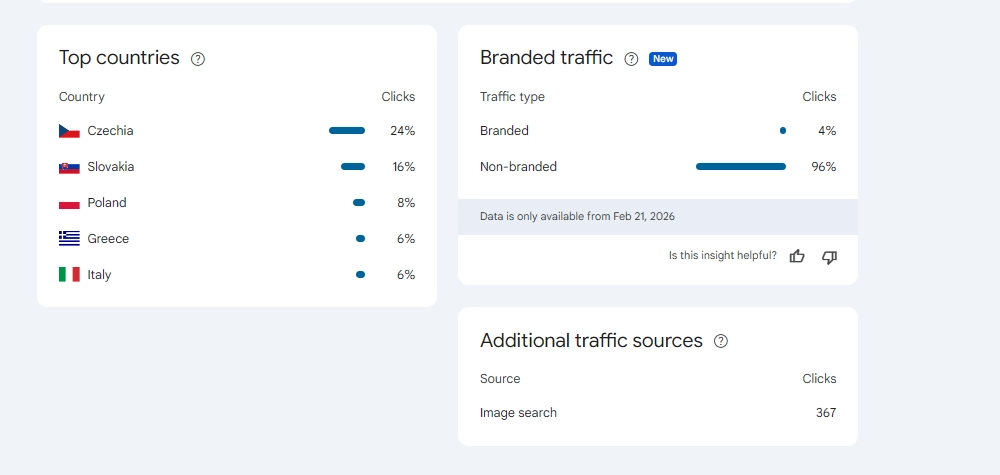
My technical specialization sits at the intersection of schema markup, structured data, and on-page architecture. These are the elements most agencies overlook because they are less visible than content or links, but they are often the single greatest source of untapped opportunity on a website. In one recent campaign, that approach generated 731,000 search impressions and 7,540 organic clicks in a single quarter for an international client, results that came not from shortcuts but from fixing what was holding the site back and building systematically from there.
Before co-founding Dexora Digital, I built my experience managing SEO campaigns for clients across Europe and the US, working with tools including Ahrefs, SEMrush, Google Analytics, and Google Search Console. I graduated from Bahauddin Zakariya University in Multan, Pakistan, and have spent my career staying ahead of how search evolves: from traditional Google rankings to Local SEO, AI Overviews, and the growing importance of structured content for Answer Engine Optimization.
At Dexora, everything I write is grounded in what we actually do for clients every day. No recycled theory. No generic advice. If it is on this blog, it is because we have tested it, measured it, and seen it work. If you are evaluating your website’s organic performance or want to understand what is holding your rankings back, start with our free SEO audit or connect with me directly on LinkedIn.