
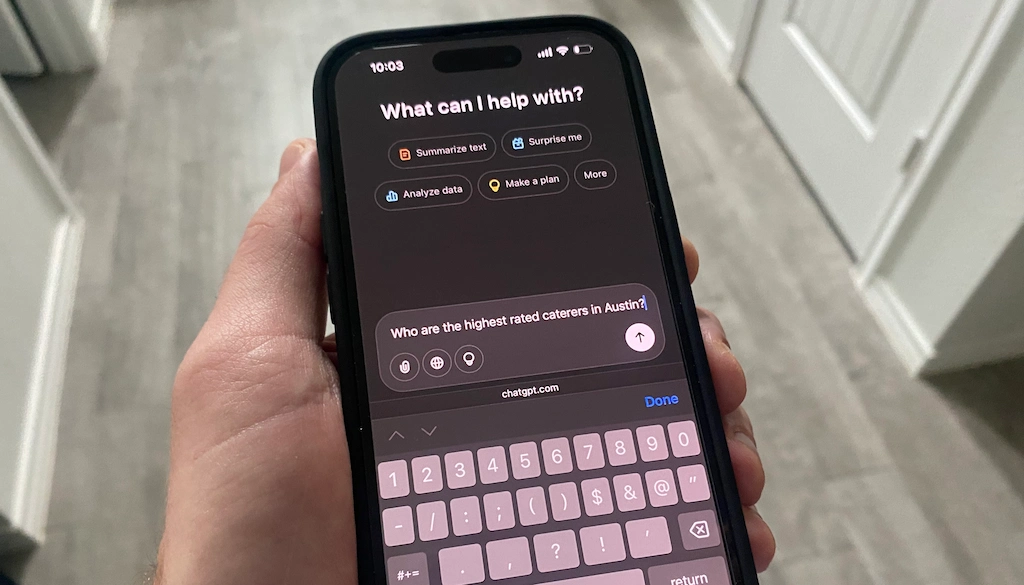
AI systems are now recommending businesses to millions of people every single day.
When someone asks ChatGPT which plumber to call in Houston, asks Perplexity to find a reliable HVAC company in Atlanta, or gets a Google AI Overview recommending a dentist in Los Angeles, those recommendations come from somewhere. They come from businesses whose websites AI systems can access, read, and trust.
Most business owners have no idea whether they appear in those recommendations or not. And the ones who are not appearing are losing customers to competitors who figured this out first.
This article covers exactly how AI systems decide which businesses to recommend, what you need to have in place to appear in those recommendations, and how to check where your website stands right now.
How AI Search Systems Decide Which Businesses to Recommend
Before you can fix the problem you need to understand how each major AI platform actually works.
ChatGPT and GPTBot
ChatGPT uses OpenAI’s GPTBot crawler to visit and index websites. When a user asks ChatGPT to recommend a local business or answer a question about a service, ChatGPT draws from websites it has been able to crawl and process. If GPTBot is blocked in your robots.txt file your website is invisible to ChatGPT search regardless of how good your content is. According to OpenAI’s documentation GPTBot respects the robots.txt standard so a single line of code can either include or exclude your entire website from ChatGPT’s knowledge base.
Perplexity and PerplexityBot
Perplexity works differently from ChatGPT in one important way. It crawls the web in real time when answering queries rather than relying purely on pre-trained data. This makes it both more current and more dependent on immediate crawler access. PerplexityBot visits your website, reads your content, and decides whether it is credible and relevant enough to cite. Perplexity is now one of the fastest growing AI search platforms in the world with millions of users making purchasing and hiring decisions based on its recommendations.
Google AI Overviews
Google AI Overviews appear above organic search results for a growing percentage of queries including local business searches. Google uses Google-Extended as a separate crawler specifically for its AI systems including Gemini. A website can rank on page one of traditional Google search while being completely invisible to Google AI Overviews if Google-Extended is blocked. These are two entirely separate systems operating on separate crawler permissions.
Claude and Anthropic AI
Claude uses both ClaudeBot and anthropic-ai crawlers. As Claude becomes more widely used for research, business recommendations, and information gathering the importance of allowing these crawlers is growing. Blocking them removes your business from Claude’s recommendations entirely.
The common thread across all four platforms is the same. If the crawler cannot access your website the AI system cannot recommend your business. It is that simple.
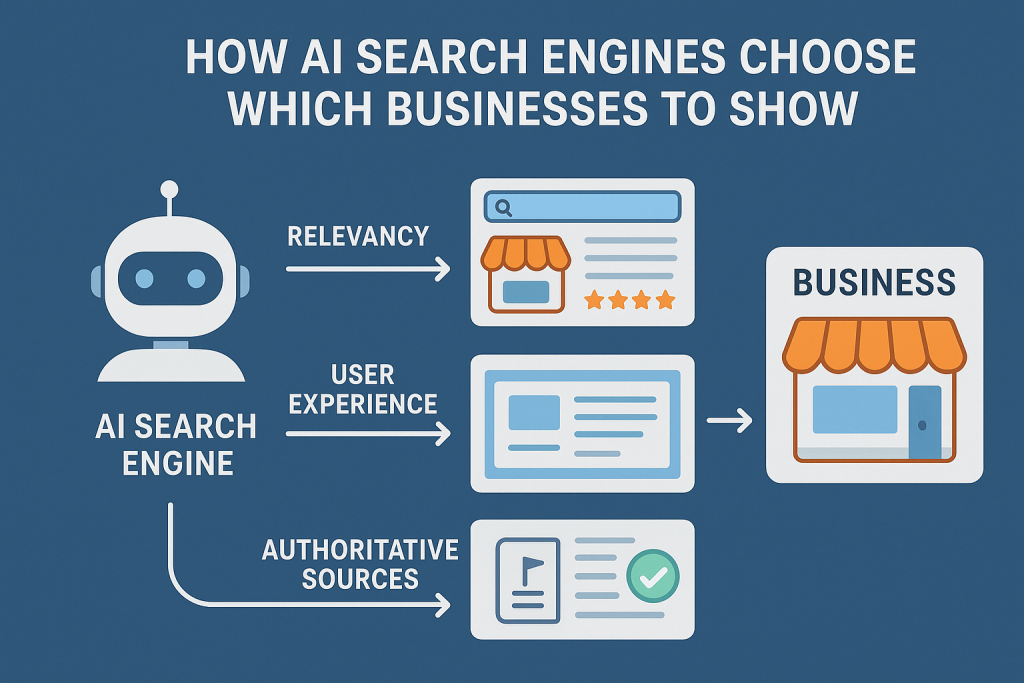
The 5 Things That Determine Whether AI Recommends Your Business
After auditing hundreds of websites for AI readiness these are the five factors that consistently separate businesses that appear in AI recommendations from businesses that do not.
1. AI Crawlers Must Be Allowed in Your robots.txt
Your robots.txt file controls which bots can access your website. Many websites were configured years ago with broad blocking rules that were sensible at the time but now block every major AI crawler without the owner knowing.
Check your robots.txt file by typing yourdomain.com/robots.txt in your browser. If you see User-agent: * Disallow: / every crawler including all AI bots is blocked. If you see specific Disallow rules for GPTBot, ClaudeBot, or PerplexityBot those individual platforms are blocked.
The fix is adding explicit allow rules for each AI crawler. This takes less than 10 minutes and is the single highest impact change most businesses can make for AI search visibility.
2. Your Content Must Be Structured for AI Extraction
AI agents do not browse your website the way humans do. They read text, follow links, and extract structured information. They cannot see your design, cannot read text embedded in images, and struggle with content that only loads through JavaScript.
The most common AI content accessibility problems are JavaScript-dependent content that agents cannot render, pages with minimal written text that rely on visual design to communicate, and navigation structures so complex that AI agents cannot reach your key service and contact pages.
Every important page on your website needs clean readable text that clearly explains what your business does, who it serves, and where it operates. This is what AI systems extract to form recommendations.
3. Your Contact Information Must Be Findable Within One Click
This is the one that surprises most business owners. When an AI system recommends your business to a user it extracts actionable contact information to include in that recommendation. If it cannot find your phone number or contact form within one click from your homepage it may simply recommend a competitor whose contact information is immediately accessible.
Your phone number should appear as clickable text in your website header on every page. Your contact page should be accessible directly from your main navigation. Contact forms and phone numbers embedded in images or inside JavaScript widgets that agents cannot access are invisible to AI recommendation systems.
4. Your Entity Signals Must Be Consistent Across the Web
AI systems build confidence about a business by seeing consistent information about it across multiple credible sources. Your business name, address, phone number, and description should appear identically across Google Business Profile, your website, major directories, and any other platforms where your business is listed.
Inconsistencies in this information create uncertainty. An AI system that finds five different versions of your phone number across five different platforms cannot confidently recommend you because it cannot verify which information is accurate.
This is especially critical for local businesses. Your NAP consistency directly influences how confidently AI systems identify and recommend your business for location-based queries.
5. Your Content Must Directly Answer the Questions Your Customers Ask
AI systems cite content that answers questions clearly and specifically. Generic service descriptions that say things like we provide high quality plumbing services at competitive prices give AI systems nothing useful to extract or cite.
Content structured around specific questions performs significantly better in AI search. What does an emergency plumber do. How long does HVAC installation take. What is the average cost of electrical panel replacement. These are the kinds of questions that generate AI Overview inclusions and ChatGPT citations because they directly match what users are asking.
Adding FAQ sections to your key service pages using FAQPage schema is one of the most effective ways to signal to AI systems that your content directly answers user questions.
How to Check Where Your Website Stands Right Now
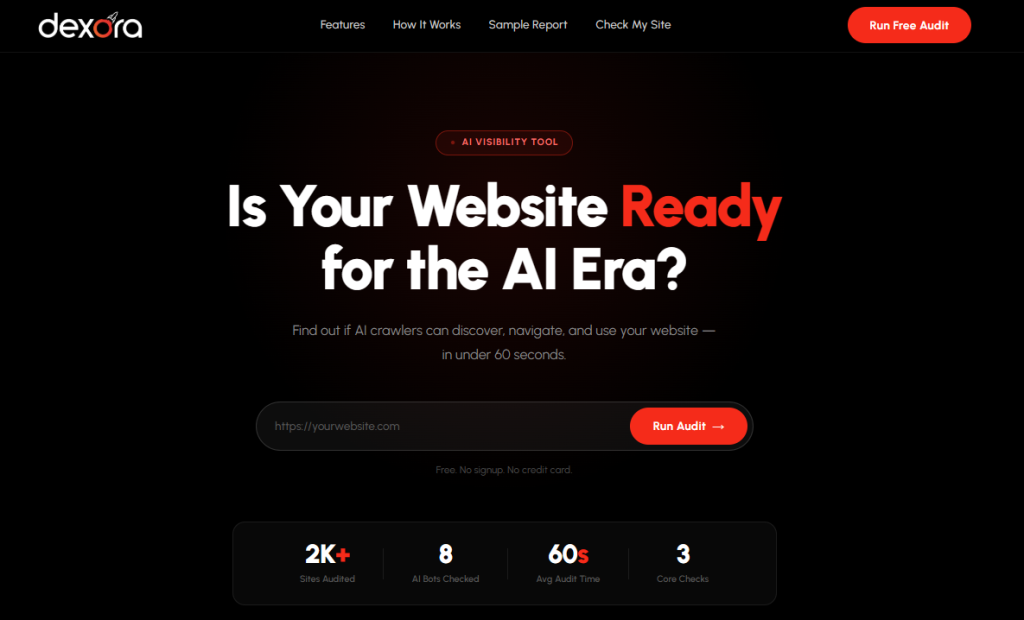
The fastest way to find out whether AI crawlers can actually access your website is to use the Dexora Digital AI Visibility Tool.
Enter your URL, click Run Audit, and within 60 seconds you get a complete AI Readiness Score out of 100 covering three areas. AI Discoverability which checks all 8 major AI crawlers against your robots.txt. Agent Accessibility which sends a real AI agent to navigate your website and verify that content is readable and accessible. Contact Findability which checks whether your contact information is reachable within one click.
You also get a branded PDF report showing exactly what passed, what failed, and what to fix first.
It is completely free. No signup. No credit card.
If you want a deeper technical analysis of everything affecting your AI and traditional search visibility our free SEO audit tool covers technical SEO, page speed, schema markup, and AI crawler access in a single comprehensive report.
Step by Step Fixes for Each Area
If your AI crawlers are blocked:
Open your robots.txt file and add these rules:
User-agent: GPTBot Allow: /
User-agent: ChatGPT-User Allow: /
User-agent: ClaudeBot Allow: /
User-agent: anthropic-ai Allow: /
User-agent: PerplexityBot Allow: /
User-agent: Google-Extended Allow: /
User-agent: Applebot-Extended Allow: /
User-agent: meta-externalagent Allow: /
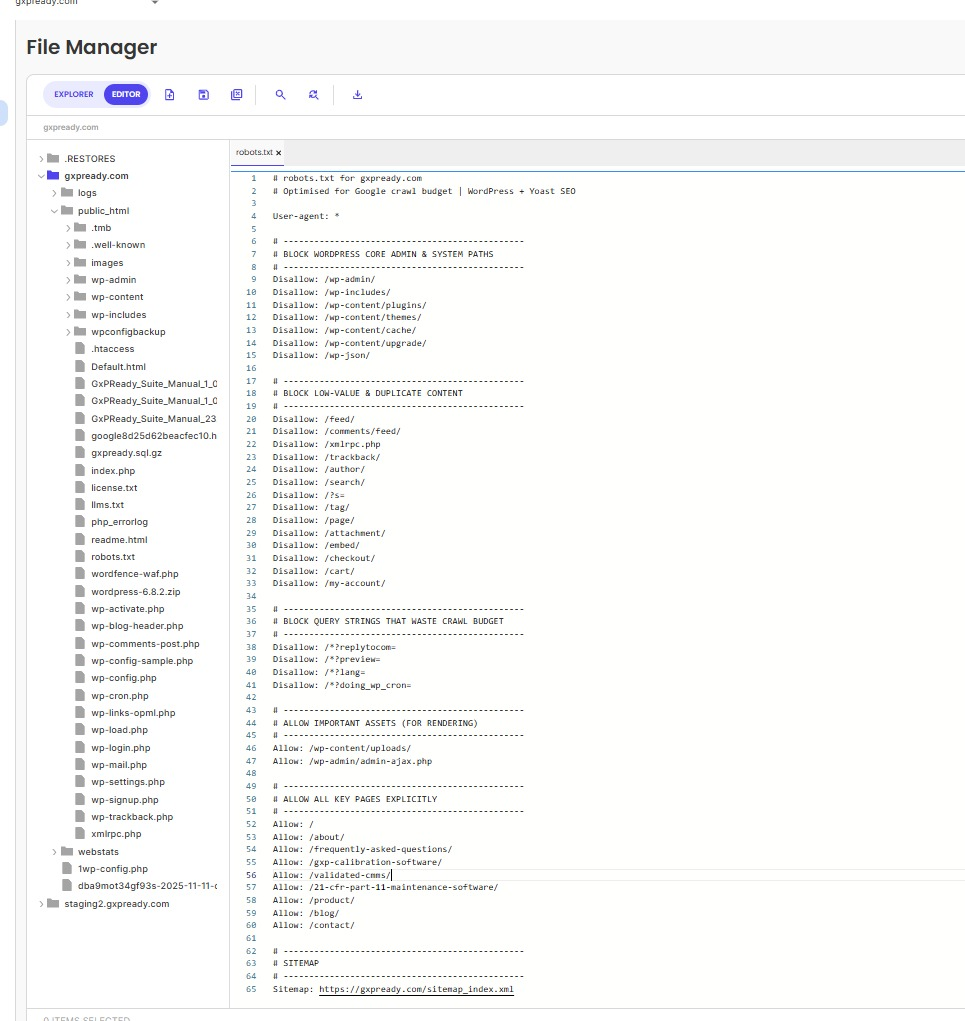
Save the file and verify the changes at yourdomain.com/robots.txt. This is the single most important fix for AI search visibility.
If your agent accessibility score is low:
Run your website through Google PageSpeed Insights and fix the highest impact performance issues. Compress images. Enable caching. Minimize JavaScript that blocks content loading. Ensure your main content is present in the static HTML not just loaded dynamically.
If your contact findability score is low:
Add your phone number as visible text in your website header. Ensure your contact page is in your primary navigation. Check that your contact form loads without JavaScript enabled.
For content structure improvements:
Add a dedicated FAQ section to every key service page. Use clear H2 and H3 headings that answer specific questions. Write at least 300 words of readable text on every important page. Add LocalBusiness schema to help AI systems understand your business location and category.
For comprehensive AI search optimization across all of these areas read our complete guide on what AI discoverability is and how to improve it and our guide to AI Search Optimization Services.
How Long Does It Take to Appear in AI Search
This is the honest answer based on what we have seen across our client work.
Fixing your robots.txt to allow AI crawlers produces results fastest. Most AI crawlers will revisit and index your website within 2 to 4 weeks of being allowed access. ChatGPT search in particular tends to update relatively quickly once GPTBot can access a site.
Google AI Overviews inclusion typically takes 30 to 60 days after technical improvements are made. Google needs time to recrawl, reprocess, and reassess your content for AI Overview eligibility.
Perplexity improvements can appear faster because it crawls in real time. Websites that become accessible to PerplexityBot often start appearing in Perplexity recommendations within 2 to 3 weeks.
Content structure improvements take longer to show results because they require Google and AI systems to recrawl and reassess your pages. Expect 4 to 8 weeks for content changes to fully influence AI search recommendations.
The businesses that move on this now will have a meaningful head start over competitors who wait. The window to build AI search visibility before it becomes as competitive as traditional SEO is still open in most niches. It will not stay open indefinitely.
Frequently Asked Questions
How do I know if AI can recommend my business right now?
Run the free AI Readiness Check at dexoradigital.com/ai-labs. It checks all 8 major AI crawlers, agent accessibility, and contact findability in under 60 seconds and gives you a score out of 100.
Does fixing my robots.txt guarantee I will appear in ChatGPT search?
Allowing GPTBot is a necessary condition but not a sufficient one. You also need accessible content, proper structure, and consistent entity signals. Allowing the crawler gets you in the door. Content quality and structure determines whether AI systems choose to recommend you.
Is AI search optimization different from regular SEO?
They overlap significantly but are not identical. Traditional SEO focuses on ranking signals for Google’s traditional algorithm. AI search optimization focuses on crawler access, content structure for AI extraction, and entity signal consistency. Our guide on traditional SEO vs AI search optimization covers this in detail.
How many AI crawlers should I allow?
All eight of the major ones. GPTBot, ChatGPT-User, ClaudeBot, anthropic-ai, PerplexityBot, Google-Extended, Applebot-Extended, and meta-externalagent. Each powers a different AI platform and blocking any of them reduces your visibility on that specific platform.
What is the most important single change I can make for AI search visibility?
Check and fix your robots.txt to ensure AI crawlers are not blocked. This is the highest impact change for most websites and takes less than 30 minutes to implement.
Can a local business appear in AI search recommendations?
Yes. AI systems are increasingly recommending specific local businesses for service queries. Plumbers, electricians, HVAC companies, dentists, and lawyers are all being recommended by ChatGPT and Perplexity when the AI can access and trust their website content. Local businesses with strong entity signals and accessible websites are appearing in AI recommendations regularly.

Local SEO and AI Search (AEO & GEO) Specialist.
Building search visibility that converts into qualified demand.
Today, businesses need visibility on Google Maps and AI powered search and websites that actually convert visitors into leads. I am a Local SEO, AI Search & Conversion Rate Optimization (CRO) Specialist with 5+ years of hands on experience helping businesses turn underperforming websites into high converting growth engines. My work combines Local SEO, Technical SEO, Semantic SEO, GEO/AEO, and conversion focused landing page optimization to ensure brands are discoverable and profitable.
My Experience
I have delivered SEO and web growth projects across the US, UK, Australia, Canada, Finland, Germany, and the Czech Republic, working in industries such as local businesses (electrician, hvac, cleaning, Real estate, healthcare, B2B, eCommerce, SaaS, and environmental services.
Some Results
>> 200+ websites audited globally
>> specifically worked with 100+ local business (80% from USA)
>> 80+ websites improved through technical SEO & schema fixes
>> 20+ businesses featured in Google AI Overviews (SGE)
>> Multi million impression growth for eCommerce & SaaS brands
Book Free Consultation: calendly.com/dexora/30min
