
Google’s June 2025 Core Update rolled out starting June 30 and completed over a three-week period. As with all broad core updates, this wasn’t about penalties or targeting specific industries—it was about recalibrating how Google evaluates quality across the web. If your site was affected, it’s crucial not to panic but to respond with strategic clarity.
Top Areas of Impact
Content Relevance & Intent Alignment
One of the most significant impacts of the Google core update June 2025 has been the reassessment of content relevance. Sites that previously ranked well but offered thin, outdated, or generic information saw steep declines. This is a clear sign that Google’s algorithms — especially those powering AI search overviews — are prioritizing freshness, topical depth, and clear intent matching more than ever.
To remain competitive after this June 2025 core update, your content must go beyond surface-level coverage. It needs to deeply satisfy user intent, especially for high-value queries like what is the latest Google algorithm update or seo update today. If your content fails to directly answer these kinds of questions, expect reduced visibility across traditional and AI-powered SERPs.
Start by auditing pages that dropped in performance using Google Search Console (GSC). Identify keywords where you’ve lost ground and align your content to meet the evolving expectations of both users and search engines. Integrate key queries into H2s, intro paragraphs, and FAQ sections. Ensure you’re not just targeting keywords, but fully addressing the search journey behind them.
Use People Also Ask (PAA) insights, competitor gap analyses, and long-tail variations like google core update June 2025 SEO impact to structure rich, intent-focused articles. This is especially crucial for satisfying Google’s content classifiers, which now heavily rely on semantic understanding and topical coverage across a site — not just on individual pages.
The goal isn’t to “beat the update.” It’s to evolve with it. Build content that anticipates user needs, answers contextually, and supports Google’s mission to deliver helpful, expert-driven results.

E-E-A-T Signals (Experience, Expertise, Authoritativeness, Trustworthiness)
The Google core update June 2025 reinforced one of the most consistent ranking principles in recent years: content must not only be helpful — it must also be credible.
If your site suffered traffic drops after the June update, it’s worth asking: does your website prove its authority? Google’s algorithm — especially as enhanced by AI search systems — evaluates pages based on more than just keyword use. It increasingly prioritizes signals of E-E-A-T (Experience, Expertise, Authoritativeness, and Trustworthiness), especially for sites within YMYL (Your Money or Your Life) topics like finance, health, or legal advice.
To align with this standard
- Ensure your site includes author bios with relevant credentials.
- Add a robust About Us page that outlines your business’s mission, experience, and expertise.
- Use transparent sourcing by linking to external authority domains.
- Embed real-world examples, client success stories, or first-hand data to prove topical experience.
Additionally, Google’s evolving Answer Engine Optimization (AEO) and Generative Engine Optimization (GEO) models require semantically enriched, structured content that clearly reflects subject authority. That’s why you should consider building dedicated pages or site sections for key areas like:
- core update Google coverage,
- AI search behavior,
- and SEO innovation trends like AEO and GEO.
Doing so increases your site’s chances of being referenced in Google AI overviews, Featured Snippets, and People Also Ask results — especially for high-value queries like core update Google, seo core update 2025, or generative engine optimization.
Bottom line: It’s no longer enough to say you’re an expert — your content structure, signals, and site architecture must prove it consistently across all pages.

Core Web Vitals & Technical Health
As part of the June 2025 core update, Google continues to refine how it measures user experience signals — and the bar is now higher than ever. If your site saw ranking drops, poor performance on Core Web Vitals (CWVs) is likely a key culprit.
Three critical metrics stand out
- Largest Contentful Paint (LCP): Measures loading speed. A slow LCP (>2.5s) signals sluggish page rendering.
- Cumulative Layout Shift (CLS): Gauges visual stability. High CLS can frustrate users and cause negative engagement.
- First Input Delay (FID)/INP: Tracks interactivity. Pages must respond quickly to user actions, especially on mobile.
Google’s AI-powered systems now heavily factor these UX metrics into ranking calculations — especially as generative search models surface content based on performance and readability. Pages that load slowly, shift unexpectedly, or aren’t mobile-optimized are likely to be filtered out of AI overviews and top-ranking placements.
Action Steps for Recovery & Optimization
- Run a full technical SEO audit using tools like PageSpeed Insights, Lighthouse, Screaming Frog, and Chrome DevTools.
- Identify and fix render-blocking resources, oversized images, unused scripts, and inconsistent CSS.
- Ensure your mobile experience is seamless — this is critical for both Google core update 2025 June impact and user retention.
- Implement lazy loading, minification, and efficient font delivery.
By prioritizing these improvements, not only do you enhance UX, but you also signal to Google that your site deserves to surface in high-value placements such as featured snippets, AI-generated summaries, and zero-click results tied to technical SEO and search update today.
Remember: in the current algorithm environment, site speed and technical excellence are no longer optional — they are foundational.

Semantic & Generative SEO Readiness
As Google Search evolves into an AI-powered ecosystem, traditional keyword targeting alone is no longer enough. The June 2025 Core Update reinforces a shift toward semantic SEO and Generative Engine Optimization (GEO) — where content must not only match keywords but also answer nuanced, conversational queries that appear in AI Overviews and zero-click summaries.
Sites that failed to adapt to this paradigm saw visibility decline. Why? Because their content wasn’t structured in a way that generative models can interpret, segment, and rank with confidence.
Key Ranking Factors in This New Model
- Semantic Structure: Use clear headings, subheadings, and logical hierarchy. This helps AI understand the relationships between topics.
- Question-Answer Formatting: Incorporate “People Also Ask”-style FAQs and answers that directly respond to user intent.
- Entity-Rich Text: Include named entities (brands, tools, people, industries) and related concepts to boost topical relevance.
- Structured Data: Implement schema.org markup such as FAQ, Article, Breadcrumb, and Organization for better parsing by Google’s systems.
To improve your visibility for critical search terms like june google core algorithm update, google search core update june 2025, google core update june 2025 SEO impact, and AI SEO, your content must be optimized for both semantic accuracy and generative interpretation.
Explore how we help businesses prepare for this shift in our in-depth guide: Best Semantic SEO Consultants in the USA.
AI doesn’t just crawl — it interprets. If your site lacks semantic depth, you’ll be outranked by those who’ve already adapted to this future-forward SEO model.

Thin Content, Redundant Pages, and Index Bloat
One of the harshest penalties from Google’s June 2025 core update hit sites burdened with thin, repetitive, or low-value content. Pages created purely for keyword manipulation — often with outdated data, minimal insights, or spun content — are now being deprioritized by both Google’s traditional algorithm and its AI-based overview systems.
Search queries like google core update june, core update juni, and core update june 2025 surfaced strong correlation with visibility drops across bloated websites.
What you should do
- Audit and Deindex Low-Value Pages: Use tools like Screaming Frog, GSC’s Page Indexing report, and Ahrefs to find thin or duplicate content.
- Merge Overlapping Content: Consolidate related articles into long-form, deeply valuable guides that satisfy multiple intents.
- Prune Zombie Pages: Remove outdated or low-performing posts that receive zero impressions over extended periods.
- Avoid Keyword Cannibalization: Use canonical tags and internal links to establish a clear content hierarchy.
More importantly, align your editorial calendar around real queries like seo core update 2025, google update june 2025, and google rolls out june 2025 core update — targeting high-intent users with fresh, helpful content.
By decluttering your index and enhancing the semantic weight of key landing pages, you improve not just crawl efficiency, but also your site’s eligibility for AI Overview placement and rich SERP features.

Recovery Strategy: What to Do Now
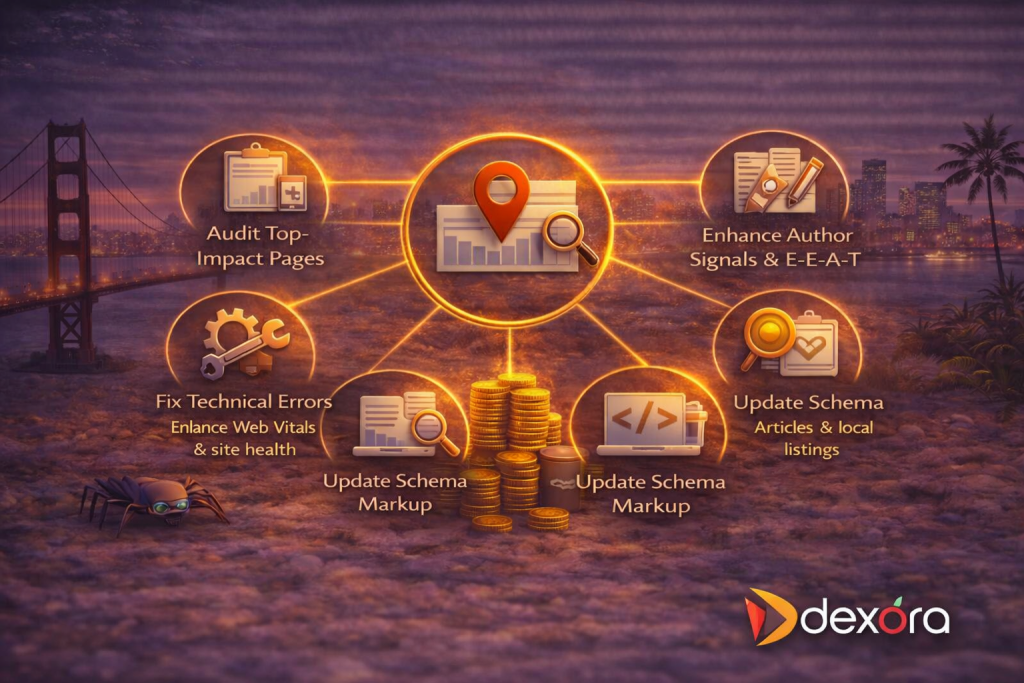
If your site experienced volatility following the Google June 2025 Core Update, don’t rush into random fixes. Instead, take a methodical approach focused on quality, authority, and technical refinement — all key areas Google reassessed in this latest rollout. Below are the strategic pillars to guide your recovery and help reclaim visibility.
Audit Top-Impact Pages
Use Google Search Console (GSC) to pinpoint which URLs dropped in performance since late June. Track lost clicks, impressions, and average positions. Prioritize pages that previously ranked for queries like google june core update, google update june 2025, and related long-tail keywords.
Tip: Filter by GSC query reports with keywords such as “google rolls out june 2025 core update” or “seo update today” to find correlated losses.
Improve Content Depth & Structure
Shallow or outdated content is now being filtered out by both traditional ranking systems and Generative Engine Optimization (GEO) models. Expand core pages with:
- Step-by-step answers to search intent queries
- Updated facts and authoritative data
- Visual aids (infographics, diagrams)
- Internal links to semantically related pages
Focus on building content that answers — not just ranks.
Enhance Author Signals & E-E-A-T
If your article lacks an author or clear brand attribution, fix that now. Add:
- Author bios with qualifications
- References to real-world experience
- Links to third-party profiles or citations
This improves your Experience, Expertise, Authoritativeness, and Trustworthiness signals — essential for AI-based snapshots.
Fix Technical Errors
Post-update crawls become stricter. Clean up:
- Redirect chains
- Broken internal links
- CLS and LCP issues impacting Core Web Vitals
- Slow page speeds
- Conflicting canonical tags or indexing blocks
Even small technical lapses can now affect how AI Overviews choose content sources.
Update Schema Markup
Proper structured data boosts eligibility for rich results. Ensure key templates include valid and enhanced schema such as:
FAQPagefor FAQsArticleorNewsArticlefor blogsReview,Breadcrumb,Person, andOrganizationwhere relevant
Align with AI Overviews
The Generative Search Experience now powers high-visibility snippets in many verticals. Make your content overview-ready by:
- Summarizing answers early in the content
- Using clear subheadings for each query
- Structuring responses with bullet points and stats
- Including exact-match phrasing from high-impression queries like “google june 2025 core update” or “core update google”
Stay Patient — Let the Dust Settle
Search rankings tend to bounce during and shortly after rollout phases. Avoid rewriting everything in panic mode. Give your changes time to reflect, while continuously:
- Monitoring trends in GSC
- Producing helpful, original content
- Strengthening your site’s topical authority
This recovery plan is your foundation not just for restoring rankings post-update, but for becoming AI-first SEO ready in the evolving era of Google Search + Generative Overviews.
To dive deeper into our initial coverage and live response to this update, read our main breakdown blog here:
Google June 2025 Core Update Overview – Dexora Digital
Pro Tip: Want to future-proof your rankings? Ask us about our AI SEO & Generative Engine Optimization audits that prepare your website for the next generation of search.
Start with a Free SEO Audit Report
Has your traffic dropped since the June 2025 Core Update?
Get a comprehensive SEO audit – 100% free. We’ll diagnose what changed, what’s holding you back, and how to recover.
👉 Request Your Free SEO Audit Report Now
Ready to Recover, Rank, and Future-Proof?
At Dexora Digital, we specialize in Generative Engine Optimization, AI-focused content strategies, and technical SEO that aligns with Google’s evolving search systems.
✦ Reclaim your visibility.
✦ Stay ready for the next update.
✦ Dominate AI Overviews.
📩 Book a Free Strategy Call
📈 Explore AI SEO & GEO Services

Local SEO and AI Search (AEO & GEO) Specialist.
Building search visibility that converts into qualified demand.
Today, businesses need visibility on Google Maps and AI powered search and websites that actually convert visitors into leads. I am a Local SEO, AI Search & Conversion Rate Optimization (CRO) Specialist with 5+ years of hands on experience helping businesses turn underperforming websites into high converting growth engines. My work combines Local SEO, Technical SEO, Semantic SEO, GEO/AEO, and conversion focused landing page optimization to ensure brands are discoverable and profitable.
My Experience
I have delivered SEO and web growth projects across the US, UK, Australia, Canada, Finland, Germany, and the Czech Republic, working in industries such as local businesses (electrician, hvac, cleaning, Real estate, healthcare, B2B, eCommerce, SaaS, and environmental services.
Some Results
>> 200+ websites audited globally
>> specifically worked with 100+ local business (80% from USA)
>> 80+ websites improved through technical SEO & schema fixes
>> 20+ businesses featured in Google AI Overviews (SGE)
>> Multi million impression growth for eCommerce & SaaS brands
Book Free Consultation: calendly.com/dexora/30min
