

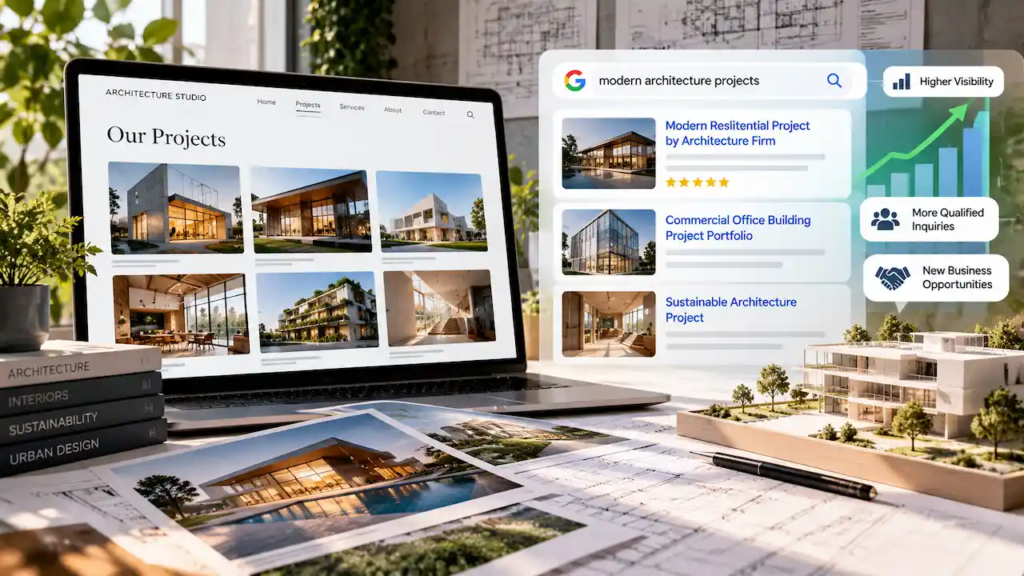
An architecture firm may have an impressive portfolio filled with completed buildings, thoughtful design solutions, and professional photography, yet those projects receive little visibility in search results. For principals and marketing directors, this means valuable evidence of the firm’s expertise remains largely accessible only to people who already know its name.
The issue is rarely the quality of the architecture. Often, project pages rely on images and minimal descriptions, leaving search engines and prospective clients with insufficient context. Architecture portfolio SEO helps connect completed work with the sectors, services, locations, and project challenges that prospective clients are researching, without compromising the portfolio’s visual presentation.
Why Architecture Portfolio Pages Struggle to Appear in Search Results
Architecture portfolios are typically designed to impress visually. Large photography, minimal navigation, and concise project titles can create a sophisticated experience, but they may not explain what a project demonstrates.
Beautiful Project Photography Cannot Explain Everything
Consider a completed medical office building presented under the title “The Meridian Project,” followed by several exterior photographs. A prospective healthcare developer searching for an architect experienced in outpatient facilities may never encounter that page because it does not clearly identify the building type, architectural scope, or relevant design expertise.
The same problem affects workplace interiors, adaptive reuse projects, multifamily housing, and institutional architecture. Photography demonstrates design quality. Supporting text explains why that work matters to someone planning a comparable project. This distinction is central to effective SEO for architects and contractors, where discoverability depends on communicating specialized capabilities rather than presenting a broad collection of attractive projects.
Poor Discoverability Can Limit Business Development
A completed project represents more than a portfolio entry. It provides evidence that the firm has addressed a particular building type, client requirement, or design challenge. When these details are absent, prospective clients may struggle to determine whether the firm has relevant experience.
This can weaken early vendor evaluation, especially when developers, institutional clients, or corporate real estate teams are comparing multiple architecture practices before initiating conversations. The commercial opportunity is not to make every project page rank independently. It is to make strategically important work easier to find, understand, and connect to the firm’s services.
How to Optimize Architecture Project Pages Without Sacrificing Design
Successful architecture project page SEO combines editorial clarity with architectural presentation. The goal is not to cover project photography with keywords, but to give each meaningful project a clear purpose.
Create a Consistent Project Page Structure
A useful project template should establish the project’s identity before moving into the visual story. The page can include a descriptive project heading, building type, location, architectural services, project scope, and a concise explanation of the design approach.
For example, “Commercial Office Adaptive Reuse in Denver” communicates more searchable context than an internal project name alone, provided that description accurately reflects the work. A consistent template also helps marketing teams maintain quality when publishing new projects. Through thoughtful website design for architects, firms can preserve large photography, clean typography, and intuitive navigation while making essential project information accessible.
Explain the Project Scope and Architectural Contribution
Project descriptions should answer questions a prospective client might ask when evaluating the firm’s experience. What type of facility was involved? Was the work new construction, renovation, or adaptive reuse? What architectural services did the firm actually provide?
Where approved for publication, include meaningful details such as square footage, project location, building use, design constraints, and collaboration responsibilities. Avoid claiming responsibility for engineering, construction, or other services outside the firm’s actual scope.
A short explanation of how the design addressed circulation, site constraints, workplace functionality, or an existing building condition can communicate more expertise than several paragraphs of promotional language.
Make Images Accessible and Search-Friendly
Architecture websites depend on high quality imagery, but image presentation also requires technical care. Use descriptive filenames where practical, provide accurate alternative text for meaningful images, and ensure image dimensions and file formats support efficient loading. For example, an image showing the entrance to a completed healthcare facility could use alternative text such as “Main entrance of a contemporary outpatient medical building with covered patient drop-off.“
Avoid repeating the target keyword across every image. Decorative images may not require descriptive alternative text. Google’s image SEO guidance provides additional recommendations on descriptive text, image context, and technical implementation.
Connect Projects to Relevant Services
A portfolio should help visitors move from completed work to the services they may need. An adaptive reuse project can link to the firm’s adaptive reuse service page. A healthcare facility project can connect to a healthcare architecture sector page, where those pages genuinely exist. Relevant internal links also help establish relationships between project examples and broader service expertise.
For additional guidance, Dexora Digital’s internal linking SEO guide explains how connected content supports website navigation and discovery. Avoid inserting unrelated service links simply to increase link counts. Each connection should help a visitor investigate a relevant capability.
Turn Portfolio Visibility Into Qualified Project Inquiries
Search visibility becomes commercially meaningful when prospective clients can move from evaluating completed work to discussing a relevant project. A portfolio page should provide a clear next step, such as viewing related projects, exploring the applicable service, or submitting a project inquiry.
The call to action should match the page’s context. Someone reviewing healthcare projects may respond better to “Discuss Your Healthcare Facility Project” than a generic “Learn More” button.
Architecture firms should also review which project pages attract organic visitors, which services those visitors explore, and whether relevant inquiries follow.
Dexora Digital can support this process through architecture-focused SEO, content strategy, and website optimization. Its SEO services can help firms evaluate how portfolio structure, search intent, and internal linking contribute to discoverability.
Conclusion
An architecture portfolio should communicate both design excellence and professional relevance. Beautiful images establish visual credibility, while project descriptions, accessible media, and meaningful internal links help prospective clients discover and evaluate the firm’s experience.
The strongest portfolio strategy does not treat SEO as an addition that compromises design. It integrates search clarity into the way architectural work is presented, making completed projects more useful throughout the client evaluation process.
Get an architecture portfolio SEO assessment. If your firm’s strongest projects are difficult to discover, Dexora Digital can evaluate project page structure, search targeting, image accessibility, and links between portfolio and service content. Contact Dexora Digital to discuss opportunities to make your completed work more discoverable to relevant project buyers.
Frequently Asked Questions
What is architecture portfolio SEO?
Architecture portfolio SEO is the process of improving how architecture project pages are organized, described, linked, and technically presented so relevant work can be discovered through search. It includes descriptive project headings, useful scope information, accessible images, internal links, and clear navigation to related services.
How much text should an architecture project page include?
There is no universal word count for architecture project pages. The description should provide enough information to explain the building type, design scope, relevant constraints, and the firm’s contribution. A concise, informative description is more valuable than lengthy generic content written solely to target keywords.
Can architecture portfolio images rank in Google Images?
Architecture photographs can appear in Google Images when Google can discover and index them. Descriptive surrounding content, meaningful alternative text, supported image formats, and technically accessible image URLs can help Google understand the images. However, following image SEO recommendations does not guarantee rankings or traffic.
Should every architecture project have its own SEO page?
Not necessarily. Projects with distinct sectors, services, locations, or meaningful design challenges are often stronger candidates for dedicated pages. Similar projects with limited supporting information may be better organized within a sector portfolio. Prioritize pages that offer useful evidence to prospective clients rather than publishing thin pages for every photograph.
How can architecture firms convert portfolio visitors into project inquiries?
Connect project pages to relevant architectural services, related work, and clear contact opportunities. Explain the firm’s responsibilities so visitors can assess whether its experience matches their needs. Track which projects attract relevant visitors and whether those visitors progress toward service exploration or qualified project conversations.