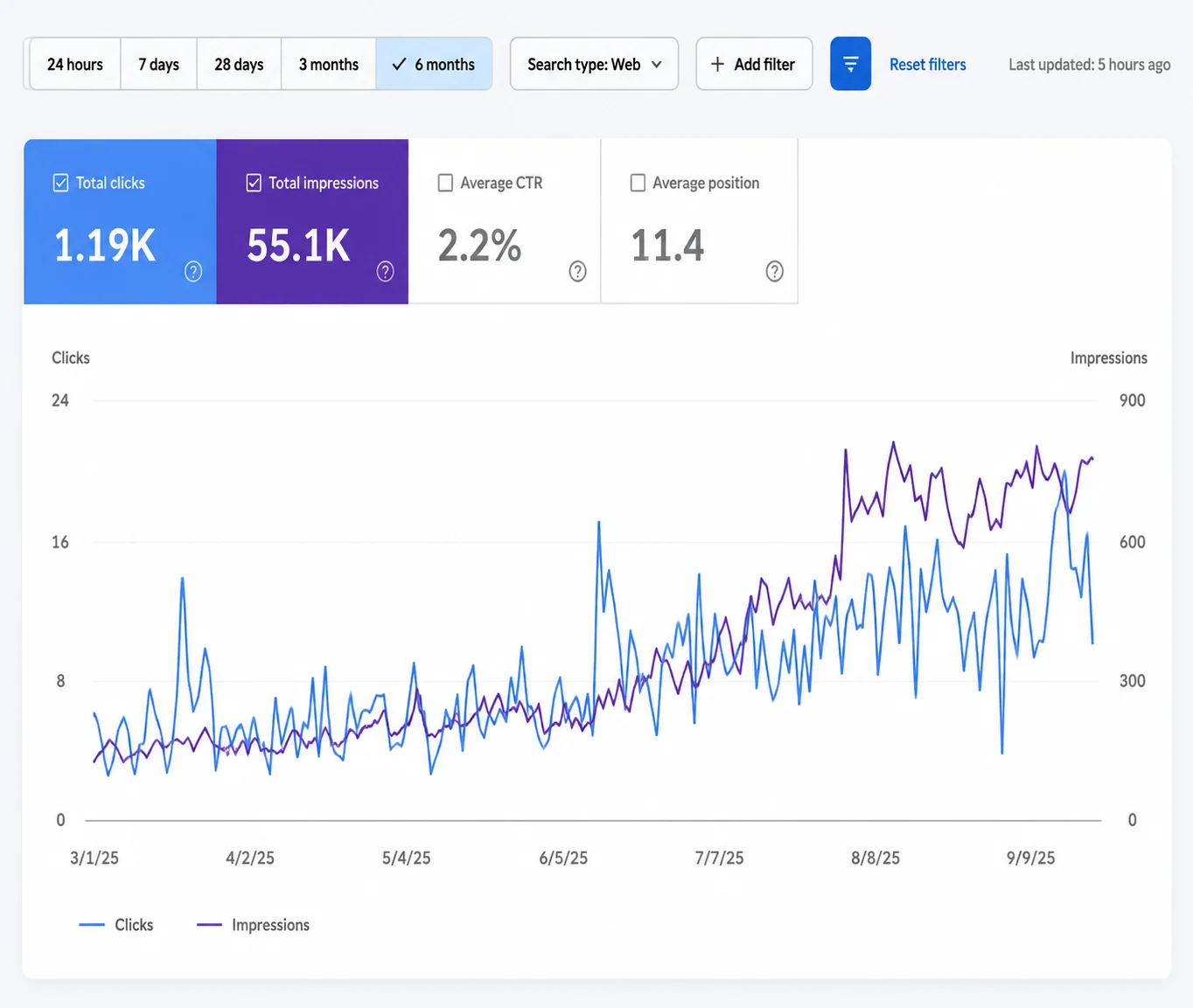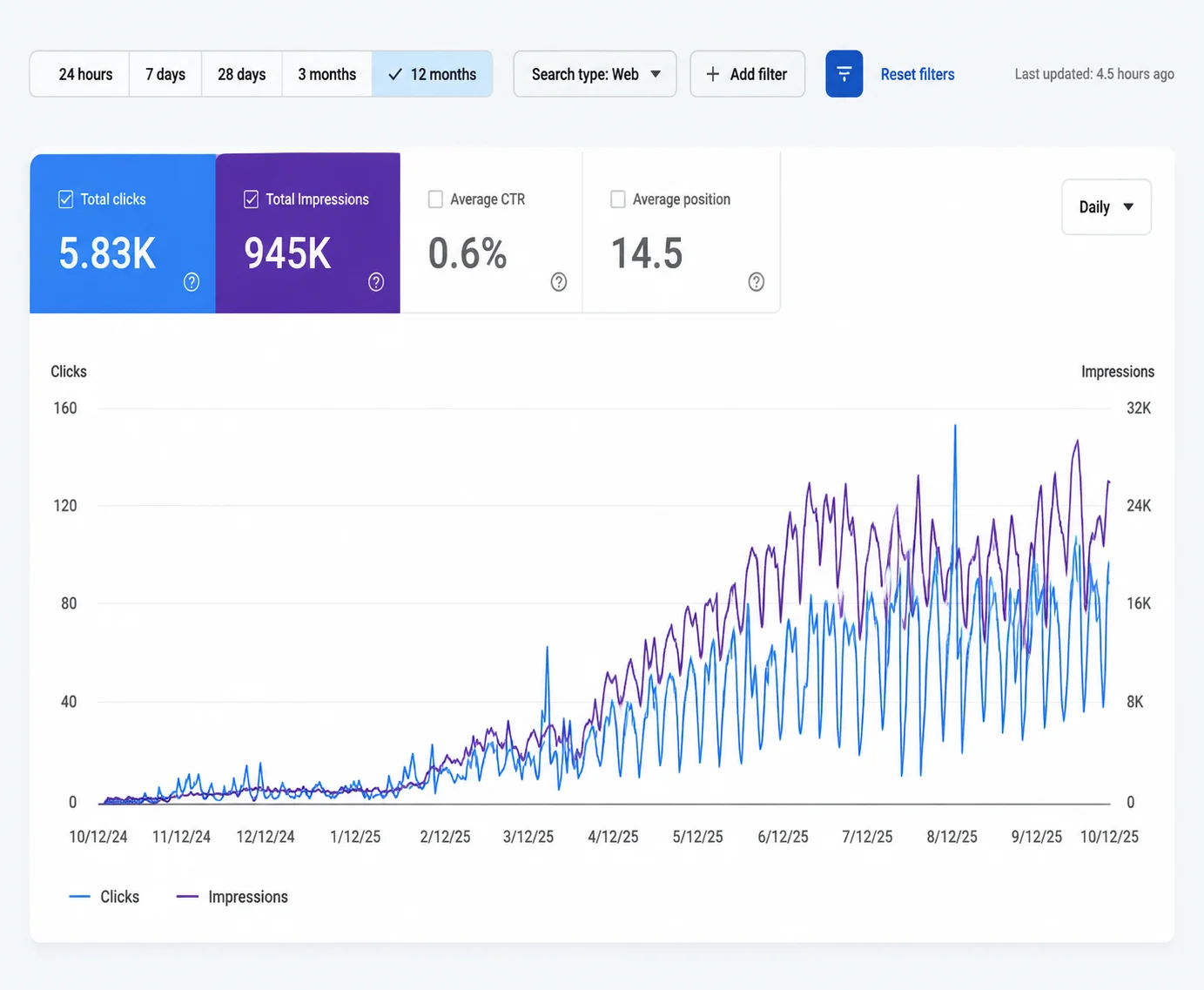

UrbanClans is an international streetwear brand selling across four markets — US, Canada, UK, and Australia. Before running a single paid ad, we rebuilt their Shopify store from the ground up: mobile-first design, faster load times, and a homepage that actually converts. Then we launched a Meta Ads traffic campaign with six audience segments tested simultaneously. In 20 days, we generated 1,054 landing page visits at just $0.15 per click — a fraction of the $0.50–$1.50 industry average for fashion ecommerce. Here’s exactly what we did and how.
| Metric | Result |
|---|---|
| Campaign Period | November 1–20, 2026 |
| Markets | US, Canada, UK, Australia |
| Landing Page Visits | 1,054 |
| Cost Per Click | $0.15 |
| Total Impressions | 20,381 |
| Total Reach | 10,730 |
| Ad Spend (Traffic Campaign) | $158.94 |
| Audiences Tested | 6 |
| Services Delivered | Shopify Store Redesign + Meta Ads |
The Client: An International Streetwear Brand
UrbanClans is a streetwear and urban fashion brand selling across four English-speaking markets — the United States, Canada, the United Kingdom, and Australia. The brand carries a strong visual identity rooted in hip-hop culture, street fashion, and contemporary urban style.
When they came to Dexora Digital, they had a loyal niche audience, solid product photography, and a clear brand direction. What they didn’t have was a website that converted — and they’d been burning ad spend trying to work around it.
The Problem: Running Ads to a Store That Wasn’t Ready
This is one of the most common mistakes we see in ecommerce. A brand launches Meta Ads before its website is conversion-ready, then blames the ads when sales don’t come.
UrbanClans had tried running traffic to their existing Shopify store. The results were inconsistent — high bounce rates, poor mobile experience, and a homepage that didn’t immediately communicate the brand’s identity or give visitors a reason to stay.
The core issues we identified:
- Homepage design did not reflect the streetwear aesthetic strongly enough
- Product pages lacked the visual hierarchy needed to drive add-to-cart behavior
- Mobile experience was inconsistent — layout broke on certain screen sizes
- Page load speed was slower than benchmarks for fashion ecommerce
- No clear trust signals above the fold — no social proof, no urgency cues
- CTA placement was weak across product and collection pages
The result: even when ads brought visitors in, the store wasn’t doing its job.
Phase 1: Shopify Store Redesign
Before a single ad was launched under our management, we rebuilt the store from the ground up.
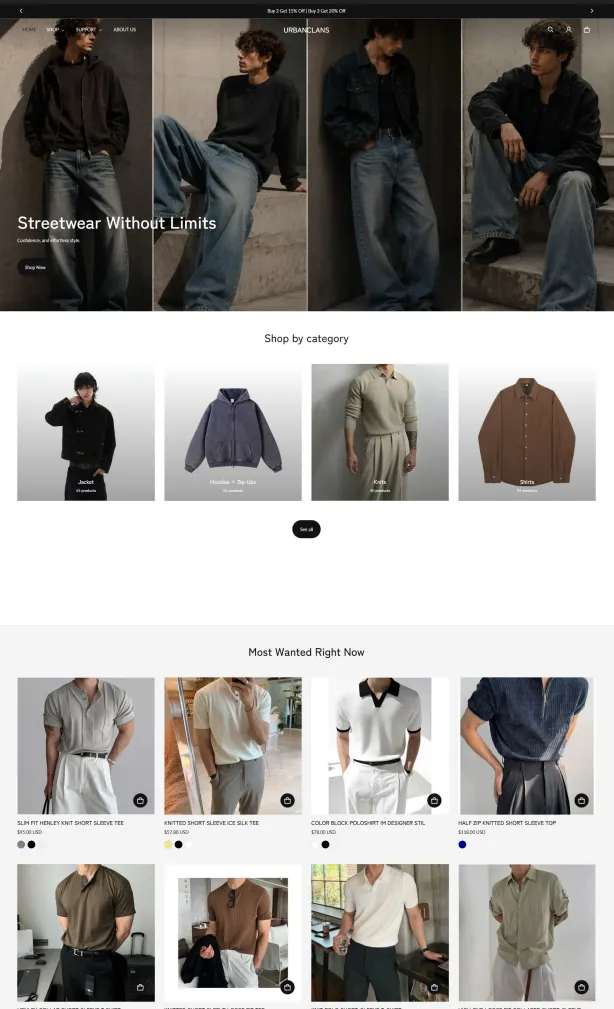
See the full before and after below.
BEFORE
AFTER


What We Changed and Why
Homepage
The homepage is the brand’s first impression. We redesigned it to immediately communicate identity — bold typography, full-width streetwear imagery, and a clean hero section with a direct CTA. The goal was to make a visitor feel the brand within three seconds of landing.
Product Pages
We restructured product page layouts to place the most important conversion elements — product image, name, price, and add-to-cart button — above the fold on both desktop and mobile. We added size guides, trust badges, and customer-facing trust copy to reduce purchase hesitation.
Mobile-First Design
Over 90% of fashion traffic arrives on mobile. We rebuilt the layout as mobile-first, then expanded to desktop — not the other way around. This meant every tap target, font size, and image was tested at 375px width before anything else.
Site Speed
We compressed and optimized images sitewide, removed redundant app scripts that were slowing render time, and ensured above-the-fold content loaded without delay. Speed directly affects both Google rankings and Meta Ads Quality Score.
Navigation and Collections
We reorganized the navigation to reflect how streetwear shoppers actually browse — by style category rather than product type. Cleaner menu, faster path to purchase.
Visual Consistency Across Markets
Since the brand operates in four different markets, we ensured the design felt premium and culturally relevant across US, UK, Canadian, and Australian audiences — without being market-specific in ways that would require separate stores.
Phase 2: Meta Ads — Audience Architecture
With the store rebuilt, we launched a Meta Ads traffic campaign targeting audiences across all four markets.
The strategy was not to find one audience and scale it. The strategy was to build an audience architecture — multiple targeted segments, each representing a different streetwear identity — and let the data tell us which performed best.
The 6 Audience Segments We Built
| Audience Segment | Markets | Type |
|---|---|---|
| Streetwear + Household Income | US | Prospecting – Traffic |
| Hip-Hop Fashion (Clothing) | US, CA, UK, AU | Prospecting – Sales |
| Men’s Clothing (Apparel) | US, CA, UK, AU | Prospecting – Sales |
| Street Fashion (Clothing) | US, CA, UK, AU | Prospecting – Sales |
| Kpop + Clothing + Engaged Shoppers | US | Prospecting – Traffic |
| Streetwear (Clothing) | US, CA, UK, AU | Prospecting – Sales |
Each audience was given its own ad set with consistent creative so performance differences could be attributed to audience quality, not creative variance.
Results by Audience
The Streetwear + Household Income segment was the dominant performer — reaching 10,100 unique users and generating 18,500 impressions in 20 days. This combination of fashion interest with income targeting proved to be the most cost-efficient path to qualified traffic.
The Hip-Hop Fashion segment came in second with 5,320 reach and 10,800 impressions — confirming strong demand from the hip-hop fashion community across international markets.
Smaller segments including Men’s Clothing, Street Fashion, Kpop + Clothing, and Streetwear continued to deliver consistent, low-cost reach throughout the campaign period.
Overall Campaign Performance (Nov 1–20, 2026)
- Total reach: 10,730 unique users
- Total impressions: 20,381
- Average frequency: 1.90 (users saw ads 1.9 times on average)
- Landing page visits: 1,054
- Cost per landing page visit: $0.15
- Total ad spend: $158.94
A $0.15 cost per landing page visit for a fashion brand running internationally across four markets is significantly below the industry average of $0.50–$1.50 per click for the fashion and apparel category.


Why $0.15 Per Click Matters
In fashion ecommerce, your cost per click is not just a media buying metric — it’s a signal of audience-creative fit. When your cost per click is low, it means:
- Meta’s algorithm found your creative relevant to the people it was shown to
- Your audience targeting matched actual purchase intent
- Your landing page (post-click) was good enough that Meta’s system gave you a higher Quality Score, reducing your cost
The $0.15 CPC in this campaign didn’t happen by accident. It happened because the store was ready before the ads launched, the audiences were researched and segmented properly, and the creative aligned with the brand identity each audience expected.
The Full-Service Approach: Why It Works
Most agencies do one thing. They run ads. Or they build websites. Or they do SEO.
The problem with that model is that each piece of the funnel operates in isolation. An ad agency sends traffic to a site they didn’t build and can’t fix. A web agency builds a beautiful store but doesn’t know if it converts under paid traffic conditions.
At Dexora Digital, we work across the full funnel. That means we don’t launch ads until the landing experience is ready. We don’t build a store without understanding how it will be marketed. Every decision — from page speed to audience targeting to CTA placement — is made with the full picture in view.
This case study is a direct example of that approach working.
What’s Next for UrbanClans
The traffic campaign has validated our audience architecture — we now know exactly which segments respond best across each market. The next phase is:
- Scaling the top-performing audiences with increased budget
- Launching retargeting campaigns for the 1,054 visitors who didn’t purchase on first visit
- Building lookalike audiences from the highest-value visitor segments
- Running conversion-optimized campaigns with refined product page creative
- Expanding SEO and content strategy to capture organic streetwear search traffic
Frequently Asked Questions
What is a Shopify store redesign and do I actually need one?
A Shopify store redesign means rebuilding your store’s visual layout, page structure, and user experience — typically using a new or heavily customized theme. You need one if your store has a high bounce rate, low add-to-cart rate, inconsistent mobile experience, or simply doesn’t reflect your brand at the level your products deserve. In this case, the store redesign was the prerequisite to profitable Meta Ads — without it, the ad spend would have produced poor returns.
How much does it cost to run Meta Ads for a fashion brand?
Ad spend varies widely depending on your goals, markets, and audience size. This campaign generated 1,054 landing page visits across four international markets for $158.94 — a $0.15 average cost per click. The budget you need depends on how many visitors per day you want and what your store’s conversion rate is once traffic arrives.
What is a good cost per click for fashion ecommerce Meta Ads?
The industry average cost per click for fashion and apparel on Meta Ads ranges from $0.50 to $1.50. Anything under $0.40 is strong. The $0.15 CPC achieved in this campaign is well below average and reflects precise audience targeting combined with a high-quality landing page experience.
Why do you redesign the website before running ads?
Because ads amplify what already exists. If your website converts at 1%, paid traffic will convert at 1%. If your website is slow, broken on mobile, or unclear in its messaging, every dollar of ad spend is working against itself. We always ensure the store is conversion-ready before launching traffic campaigns.
How long does a Shopify store redesign take?
Depending on the complexity of the store, a full Shopify redesign typically takes 2–4 weeks. This includes discovery, design, development, QA across devices, and speed optimization. For UrbanClans, we completed the redesign before launching the November 2026 ad campaign.
Can you run Meta Ads across multiple countries at once?
Yes — and in many cases it’s the right strategy. By running across the US, Canada, UK, and Australia simultaneously, we were able to identify which markets responded to which audience types, allocate budget more efficiently, and build a broader data set for future lookalike and retargeting campaigns.
What industries does Dexora Digital work with for Meta Ads and Shopify design?
We work across fashion and apparel, streetwear and lifestyle brands, Shopify stores of all sizes, and ecommerce businesses targeting English-speaking markets worldwide. If you sell a physical product and want both a store that converts and a paid traffic strategy that scales, we can help.
How do I get started with Dexora Digital?
Contact us through the form on this page or message us directly. We’ll review your current store and ad account, identify the biggest gaps, and propose a phased approach — just like we did with UrbanClans.
Ready to Scale Your Fashion Brand?
If you’re running a Shopify store and your Meta Ads aren’t delivering, the problem is usually one of three things: the store isn’t ready, the audience targeting is wrong, or both.
We fix both.
Get a Free Store Review
Start Your Meta Ads Campaign
Dexora Digital is a full-service ecommerce growth agency specializing in Shopify store design, Meta Ads, SEO, and AI search optimization. We work with fashion, lifestyle, and consumer brands across the US, UK, Canada, and Australia.