
If your website is not showing up where your customers are searching you are not just missing traffic. You are missing revenue that is going directly to your competitors.
I have spent the last several years helping businesses across the USA improve their search visibility and what I have learned is that most websites are not failing because of a single big problem. They are failing because of a collection of small problems that compound on each other until the site becomes effectively invisible.
This guide covers exactly what website visibility means in 2026, why it matters more than ever, and the specific steps I use to improve it for every client I work with.
What Website Visibility Actually Means in 2026
Most people think of website visibility as simply ranking on Google. That was true five years ago. In 2026 visibility means something significantly broader.

Your website needs to be visible in traditional Google organic search results, in the Google local map pack for location-based searches, in Google AI Overviews which are now appearing for a growing percentage of commercial queries, in ChatGPT and Perplexity recommendations when people ask AI systems for business recommendations, and in voice search results when people ask smart devices for local service providers.
If you are only optimizing for traditional Google rankings you are invisible to a growing percentage of your potential customers before they ever reach a search results page.
I wrote about this in detail in our guide on what AI discoverability is and why it matters for your business. The short version is that AI systems are making recommendations based on signals that most websites have not addressed yet. This is a genuine window of opportunity for businesses that move now.
Why Most Websites Have Low Visibility
After auditing hundreds of websites across industries from plumbing to professional services to ecommerce, the same visibility problems come up repeatedly.
Technical issues blocking search engines from properly crawling and indexing the site. A website that cannot be crawled cannot be ranked. This sounds obvious but the majority of websites I audit have at least one technical issue preventing Google from properly understanding their content. Broken internal links, missing XML sitemaps, misconfigured robots.txt files, slow page load times, and missing schema markup are the most common culprits. Our complete technical SEO audit checklist covers every one of these in detail.
Weak or missing local signals for businesses that serve specific geographic areas. If you are a local or regional service business your visibility is determined not just by your website but by your Google Business Profile, your citation consistency across directories, your review velocity, and the geographic signals you send across your entire web presence. A business in California with no California-specific content, no local citations, and no optimized GBP is invisible for the searches that matter most to their revenue. Read our guide on how local SEO works for California businesses for a deep dive into the local signals that drive visibility in competitive state markets.
Content that does not match search intent. Google has become exceptionally good at understanding what someone actually wants when they type a query. A plumbing company with a homepage that talks about their commitment to quality and their family values but never explicitly targets searches like emergency plumber Houston or drain cleaning near me will never rank for those searches regardless of how good their other signals are.
No AI search visibility. This is the newest and fastest growing visibility gap. Most websites were not built with AI crawlers in mind. They have no llms.txt file. They block AI crawlers in their robots.txt. Their contact information is buried in JavaScript that AI agents cannot read. Their content does not answer the specific questions that AI systems are extracting to form recommendations.
The Eight Factors That Determine Website Visibility in 2026
1. Technical Foundation
Before anything else your website needs to be technically sound. Google cannot rank what it cannot crawl. AI systems cannot recommend what they cannot read.

The technical foundation covers site speed and Core Web Vitals, mobile usability, HTTPS security, XML sitemap configuration, robots.txt setup, canonical tags, structured data and schema markup, and internal linking architecture.
I always start every client engagement with a full technical audit before touching content or links. Everything else you do to improve visibility is built on this foundation. If the foundation has cracks the visibility improvements you build on top of it will be unstable.
Use our free SEO audit tool to get your technical foundation score in under 60 seconds. It covers 40 plus technical checks and gives you a letter grade with specific fixes prioritized by impact.
2. On-Page Optimization
On-page optimization means making sure every page on your website clearly communicates what it is about to both Google and human visitors.
This covers title tags that include your primary keyword and are under 60 characters. Meta descriptions that create a compelling reason to click. H1 headings that match the primary search intent of the page. Body content that covers the topic with enough depth to compete with what is currently ranking. Image alt text that describes what is in the image using relevant keywords. Internal links that connect related content and distribute authority across your site.
The most common on-page mistake I see is websites that have excellent services but describe those services in language their customers would never search for. A roofing company that talks about their comprehensive exterior weatherproofing solutions instead of roof repair near me is optimizing for their own vocabulary not their customer’s vocabulary.
3. Local SEO Signals
For any business serving a specific geographic area local SEO is not optional. It is the difference between being in the top 3 on Google Maps generating consistent daily calls and being invisible to everyone in your service area.
The core local SEO signals are Google Business Profile optimization, NAP consistency across all directories and listings, review volume and recency, local landing pages for each service area you cover, and local backlinks from relevant geographic sources.
I have helped dozens of home service businesses significantly improve their local visibility including plumbing companies, HVAC contractors, and electrical businesses. Our guides on local SEO for plumbers and local SEO for HVAC companies cover the complete local visibility strategy for those specific industries.
For businesses targeting specific US states our California local SEO services page shows exactly how we approach state-level visibility for competitive markets.
4. Content Depth and Topical Authority
Google increasingly favors websites that demonstrate genuine expertise across a topic rather than websites that have a single thin page targeting a keyword.
Topical authority means building a cluster of interconnected content that covers a subject from multiple angles. A plumbing company with a main local SEO page, supporting articles on specific plumbing services, FAQ content answering common customer questions, and case studies showing real results is building topical authority. A plumbing company with a single homepage is not.
The websites that consistently rank at the top of competitive searches are the ones that have built the most comprehensive and genuinely useful content ecosystems around their core topics. This takes time but it compounds. Every piece of content you publish strengthens the authority of every other piece.
5. Backlinks and Domain Authority
Backlinks remain one of Google’s most important ranking signals. A link from a credible relevant website to yours is a vote of confidence that Google weighs heavily in its ranking decisions.
Not all backlinks are equal. A single link from a high authority industry publication is worth more than a hundred links from low quality directories. The focus should always be on earning links that a real editor chose to include because your content was genuinely useful or newsworthy.
Our off-page SEO services cover the link building strategies we use to build sustainable domain authority for clients across competitive niches.
6. AI Search Visibility
This is where most websites have the biggest opportunity gap right now and the least competition.

When someone asks ChatGPT to recommend a local electrician or asks Google AI which plumbing company in Dallas has the best reviews, the AI system is making that recommendation based on specific signals. Websites that allow AI crawlers, have properly structured content, maintain consistent entity signals across the web, and make their contact information accessible within one click are the ones appearing in those recommendations.
The businesses appearing in AI recommendations right now did not pay for that placement. They simply built their digital presence correctly. Check where your website currently stands with our free AI Visibility Tool which shows your AI readiness score across all eight major AI crawlers in under 60 seconds.
For a complete understanding of how AI search works and what it means for your business visibility read our guide on what AI discoverability means for your website.
7. Website Speed and User Experience
Google uses page experience signals including Core Web Vitals as ranking factors. A website that loads slowly, jumps around as it loads, or is difficult to use on mobile is being penalized in rankings compared to a faster and more stable competitor.
More practically a slow website loses visitors before they ever read your content. A one second improvement in load time has been shown to improve conversion rates by up to 7 percent. Visibility improvements mean nothing if the visitors you earn leave before they contact you.
8. Semantic SEO and Entity Signals
Google has moved far beyond simple keyword matching. It now understands topics, entities, and the relationships between them using natural language processing.
Semantic SEO means structuring your content so Google clearly understands the entities your business represents, the topics you are authoritative on, and the relationships between those topics and your location and services.
This is where structured data, consistent entity mentions across the web, and content written with semantic depth rather than keyword density becomes important. Our work with semantic SEO strategy covers how we approach entity building for clients in competitive markets.
The Visibility Improvement Framework I Use With Every Client
Here is the exact process I follow when a new client comes to me saying their website is not getting found.

Week 1 and 2 — Baseline and Technical Audit
Before making any changes I document exactly where the website stands. Full technical audit, keyword position baseline, competitor analysis, and identification of the highest impact quick wins. The free SEO audit tool handles the technical baseline in minutes. The competitive and keyword analysis requires deeper tool access.
Week 3 and 4 — Technical Fixes
Fix every technical issue identified in the audit starting with the highest impact items. Indexing problems, speed issues, schema markup, and robots.txt configuration all get addressed before any content work begins.
Month 2 — On-Page and Content Foundation
Optimize existing pages for their primary search intent. Rewrite title tags and meta descriptions for click intent. Build out thin pages with genuine depth. Add FAQ schema to high traffic pages targeting question-based searches.
Month 3 onwards — Authority and AI Visibility
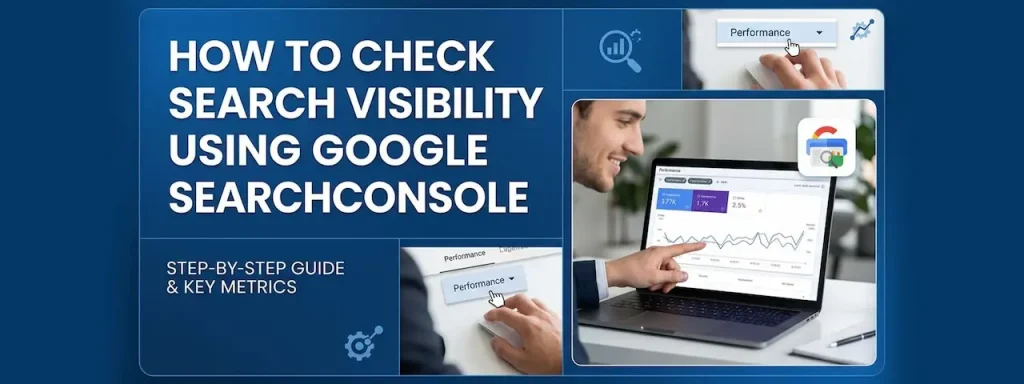
Begin systematic link building and citation building. Implement AI crawler access. Build topical content clusters. Expand local landing pages for service areas. Set up regular reporting through Google Search Console.
The visibility improvements from this process are not immediate but they are durable. Most clients start seeing meaningful ranking movements in month 2 to 3 and significant traffic growth in month 4 to 6. The compounding effect means results in month 9 to 12 are significantly stronger than results in month 3 to 4 from the same ongoing work.
The CTR Problem Most Businesses Miss
One thing I want to address directly because I see it consistently misunderstood.
A website with 1.7 million monthly impressions and a 0.4 percent CTR is getting 6,800 clicks per month. The same website with the same impressions but a 2 percent CTR would get 34,000 clicks. That is five times more traffic from the same rankings.
Improving your visibility means both improving your positions and improving the percentage of people who click when they see you. Title tag optimization, meta description rewriting, and featured snippet targeting are all high impact CTR improvements that most websites completely ignore.
Visibility without click magnetism is wasted potential.
Where to Start Right Now
If you are reading this because your website is not generating the visibility and leads it should be here is the fastest path to understanding exactly what is holding it back.
Run your free technical and AI visibility audit at dexoradigital.com/seo-audit. You will have a complete picture of your technical health, your AI crawler accessibility, and your most urgent fixes in under 60 seconds with a downloadable PDF report.
If you want a full strategy conversation about your specific market and what realistic visibility growth looks like for your business book a free strategy call and we will walk through exactly what a 6 to 12 month visibility improvement plan would look like for you.
Visibility is not luck. It is a system. And the system works when it is built correctly and given the time it needs to compound.

Local SEO and AI Search (AEO & GEO) Specialist.
Building search visibility that converts into qualified demand.
Today, businesses need visibility on Google Maps and AI powered search and websites that actually convert visitors into leads. I am a Local SEO, AI Search & Conversion Rate Optimization (CRO) Specialist with 5+ years of hands on experience helping businesses turn underperforming websites into high converting growth engines. My work combines Local SEO, Technical SEO, Semantic SEO, GEO/AEO, and conversion focused landing page optimization to ensure brands are discoverable and profitable.
My Experience
I have delivered SEO and web growth projects across the US, UK, Australia, Canada, Finland, Germany, and the Czech Republic, working in industries such as local businesses (electrician, hvac, cleaning, Real estate, healthcare, B2B, eCommerce, SaaS, and environmental services.
Some Results
>> 200+ websites audited globally
>> specifically worked with 100+ local business (80% from USA)
>> 80+ websites improved through technical SEO & schema fixes
>> 20+ businesses featured in Google AI Overviews (SGE)
>> Multi million impression growth for eCommerce & SaaS brands
Book Free Consultation: calendly.com/dexora/30min