
Generative Engine Optimization (GEO) is the practice of improving a brand’s visibility inside AI-generated answers, citations, recommendations, and summaries. Instead of optimizing only for a position in traditional search results, GEO focuses on whether systems such as Google AI Overviews, AI Mode, ChatGPT Search, Gemini, Perplexity, and Copilot can discover, understand, retrieve, and use your information.
GEO does not replace SEO. It adds another layer to search visibility. Google’s 2026 guidance still emphasizes established Search systems and unique, non-commodity content rather than special “AI hacks.” The goal is to become a source worth finding, trusting, citing, and recommending.
What Is Generative Engine Optimization (GEO)?
Generative Engine Optimization is the process of improving how content and brands appear in responses produced by generative search engines. A successful GEO strategy can increase citations to your pages, mentions of your brand, inclusion in comparisons, and recommendations for relevant products or services.
The term was formalized in the 2023 paper GEO: Generative Engine Optimization by Pranjal Aggarwal and co-authors. Their work introduced a framework for measuring visibility in generative-engine responses and showed that some content changes improved visibility in their experimental setting. Effectiveness also varied by domain.
A 2026 review of 45 GEO studies found that generative visibility spans multiple stages, including retrieval, citation, and user behavior. Topical relevance was among the more repeatable signals, while generic tactics did not transfer reliably across systems.
That distinction matters because GEO should not become another checklist of supposed universal ranking factors.
If you are still separating the terminology, our guide to GEO vs AEO vs SEO explains where these disciplines overlap and where their goals differ.
How GEO Works Across AI Search Engines
Generative engines retrieve and synthesize information differently by platform, so a tactic that helps one system should not automatically be treated as a universal GEO ranking factor.
Google AI Overviews and AI Mode
Google says pages must be indexed and eligible to appear in Search with a snippet before they can be eligible for its generative Search features.
Google can also use query fan-out, where a complex question generates several related searches to retrieve supporting information. Its generative experiences remain rooted in Google’s core Search ranking and quality systems.
That means traditional search fundamentals remain critical:
- Crawlability
- Indexability
- Search intent
- Internal linking
- Useful content
- Technical accessibility
- Authority
- Original information
Our Google AI Overviews guide covers the Google-specific optimization layer in more detail.
ChatGPT Search
OpenAI says any public website can appear in ChatGPT Search.
For content to be discoverable for summaries and snippets, OpenAI specifically recommends making sure OAI-SearchBot is not blocked. Publishers allowing OAI-SearchBot can also identify ChatGPT referral traffic through analytics.
ChatGPT Search may also rewrite a user’s request into one or more targeted search queries before retrieving information.
This does not mean allowing a crawler guarantees citations.
Crawler access only removes one technical barrier. Your content still needs to be relevant and useful enough to become part of the answer.
Gemini, Perplexity, and Other Answer Engines
These systems differ in retrieval, freshness, and citation behavior. Build a technically accessible, authoritative site, then measure platform-specific results rather than assuming one formula works everywhere.
GEO vs SEO: What Actually Changes?
SEO and GEO share the same foundation, but they measure visibility differently.
| Traditional SEO | Generative Engine Optimization |
| Targets rankings and organic clicks | Targets citations, mentions, recommendations, and AI referrals |
| Optimizes around search intent | Also considers conversational questions and follow-up needs |
| Measures impressions, positions, CTR, and conversions | Adds citations, cited URLs, brand mentions, and AI share of voice |
| Builds topical and domain authority | Also considers how external sources support brand credibility |
| Primarily tracks search-engine performance | Requires monitoring across multiple generative platforms |
The mistake is treating GEO as “SEO plus FAQ schema.”
Google says no special structured data is required for generative Search. Improve the qualities that make a page genuinely useful, then measure whether AI systems retrieve and cite it.
This is also why semantic SEO remains important.
A strong page should explain the complete subject rather than repeat one keyword. That includes related entities, processes, comparisons, problems, limitations, examples, and natural follow-up questions.
A page about Generative Engine Optimization should therefore explain much more than the definition of GEO. It should explain how discovery works, what makes information useful, where authority comes from, how different platforms behave, and how results are measured.
The Dexora GEO Framework: Five Areas to Optimize
We use five practical areas to evaluate GEO opportunities.
These are not universal AI ranking factors. They are a working framework for improving discoverability, relevance, authority, evidence, and measurement.
Technical Discoverability
Start with crawlability, indexation, canonicals, redirects, rendering, internal links, and crawler access.
If an important page cannot be reliably accessed, content quality cannot compensate for that technical limitation.
A technical SEO review should verify Googlebot access and check whether relevant AI crawlers are being blocked unintentionally.
Our free robots.txt generator can help create basic crawler directives, but robots.txt should always reflect your actual crawling and privacy requirements.
Topical Relevance and Coverage
Give each important page one primary search intent.
Then support it with narrower content addressing genuinely different subtopics.
Avoid publishing separate pages for:
- What is GEO?
- GEO optimization
- How GEO works
- GEO SEO
- Generative search optimization
if every URL provides almost the same answer.
Instead, map the information a reader actually needs: definitions, processes, platforms, examples, limitations, measurement, implementation, and related concepts.
This creates stronger topical ownership and reduces internal cannibalization.
Original Evidence and First-Hand Expertise
Generic summaries are easy to reproduce.
Original evidence is not.
Use:
- Real case studies
- Client results
- Screenshots
- Experiments
- Proprietary data
- Expert observations
- First-hand implementation lessons
Google’s 2026 generative Search guidance specifically emphasizes unique, expert-led, non-commodity information rather than recycling material already available elsewhere.
For example, our engineering SEO and AI search case study documents a specialist U.S. engineering business that reached 879 ranking keywords, 506 referring domains, and 8,119 tracked Bing Copilot citations in 15 months.
The website also appeared across ChatGPT, Google AI Mode, Google AI Overviews, and Gemini.
The important lesson is not that one formatting trick produced those results.
The campaign combined technical improvements, systematic topical coverage, specialist content, credible references, authority building, internal architecture, and broader organic visibility.
Clear Entity and Source Signals
Generative systems need to understand not only what a page discusses, but who produced the information and how that source relates to the subject.
Strengthen:
- Named authorship
- Expert biographies
- Consistent organization information
- Accurate service descriptions
- Primary-source references
- Clear About and team pages
- Appropriate structured data
- Consistent brand/entity relationships
Our guide to entity-first SEO and schema explains how entity relationships and structured information fit into broader search understanding.
Schema helps describe information where appropriate.
It should not be presented as a guaranteed AI citation trigger.
Independent Authority
What your website says about your business is only one source of evidence.
Editorial backlinks, industry references, expert contributions, customer reviews, digital PR, relevant partnerships, and genuine third-party mentions help create independent confirmation that your brand belongs in a topic.
Do not manufacture forum mentions or low-quality references simply to influence AI answers.
Build authority by producing information that credible people and websites genuinely want to reference.
What Works for GEO in 2026—and What Does Not
A strong GEO strategy separates proven foundations from unsupported shortcuts.
What We Would Prioritize
Prioritize:
- Technical accessibility
- Clear topic ownership
- Strong topical relevance
- Original information
- First-hand expertise
- Primary-source citations
- Internal linking
- Independent authority
- Consistent brand/entity signals
- Repeated measurement
Write direct answers when they help the reader.
Use tables when comparison is clearer in a table.
Use schema when it accurately describes visible content.
These practices improve information quality and accessibility, but they should not be presented as guaranteed citation formulas.
Do You Need FAQ Schema for GEO?
No.
Useful FAQs can answer genuine follow-up questions, but Google explicitly says structured data is not required for generative AI Search and there is no special schema.org markup required for AI visibility.
Google also removed its FAQ rich-result documentation in June 2026 because the FAQ rich-result feature is no longer shown in Google Search results.
So add FAQs for users—not because you expect FAQPage markup to force an AI citation.
Do You Need llms.txt?
Not for Google Search.
Google says it does not use llms.txt for Search. Maintaining one for another platform will neither improve nor reduce Google rankings or generative Search visibility.
Other systems may handle emerging machine-readable standards differently.
Our llms.txt and AI SEO guide explains when the file may still be worth considering.
Should Every Paragraph Be an “AI Content Chunk”?
No.
Google specifically says publishers do not need to break content into tiny chunks for generative AI Search, and there is no universal ideal page length.
Clear writing still matters.
But clarity should improve the reader’s experience—not satisfy an invented rule such as “every answer must be 50 words.”
Current GEO research also suggests caution. Results vary between systems, query formulations, retrieval stages, and competitive environments.
GEO should therefore be treated as evidence-driven optimization rather than a fixed recipe.
How to Measure GEO Performance
GEO becomes useful when it can be connected to measurable visibility and business outcomes.
Start with a controlled set of prompts representing actual customer research.
Include:
- Informational questions
- Product or service comparisons
- High-intent commercial questions
- “Best provider” queries
- Problem/solution queries
- Brand-versus-competitor queries
Then monitor the same themes repeatedly.
Track:
- Whether your brand appears
- Which pages receive citations
- Citation frequency
- Competitor share of voice
- Recommendation context
- AI referral sessions
- Assisted conversions
- Organic rankings for the same topic cluster
One successful screenshot is not a reliable KPI.
Generative outputs can change between systems, prompts, and repeated runs. The 2026 GEO research literature specifically highlights substantial variability and recommends repeated measurement rather than treating one generated answer as stable evidence.
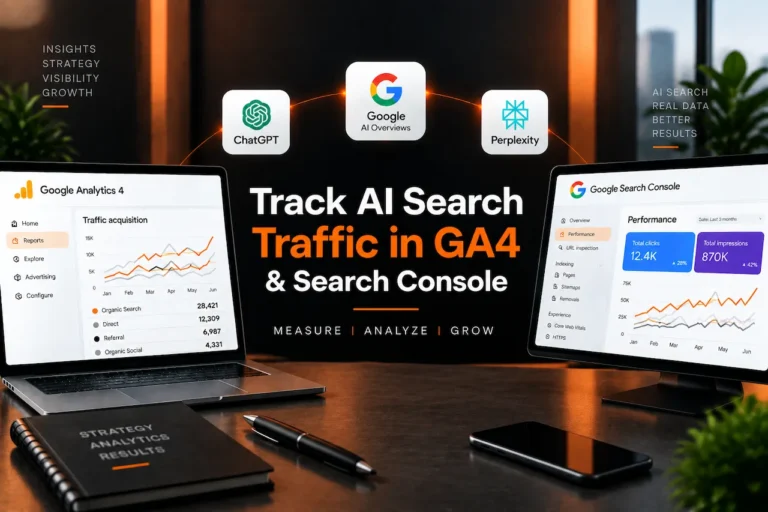
OpenAI says publishers allowing OAI-SearchBot can track ChatGPT referrals through analytics, including referral URLs carrying utm_source=chatgpt.com.
For a site-level starting point, Dexora’s All-in-One SEO Audit Tool can help identify technical and content issues before making broader GEO changes.
Connect discoverability → citations → mentions → referral traffic → conversions so GEO does not become a vanity metric.
A Practical Generative Engine Optimization Strategy
A sustainable GEO campaign should improve the website deliberately rather than chase every new AI-search theory.
Phase 1: Establish Eligibility
Audit:
- Indexation
- Crawlability
- Canonicalization
- Robots directives
- Important templates
- Internal links
- Rendering
- AI crawler controls
Fix anything preventing reliable discovery first.
Phase 2: Assign Clear Topic Ownership
Give every important URL one primary intent.
Identify pages that overlap heavily and decide whether to:
- Differentiate them
- Consolidate them
- Reposition them
- Redirect genuinely redundant pages
Strong content architecture is especially important as websites expand their SEO, GEO, and AEO coverage.
Phase 3: Upgrade the Information
Replace generic statements with:
- First-party examples
- Expert analysis
- Original research
- Primary-source references
- Real screenshots
- Client results
- Clear limitations
- Updated facts
Ask one question before publishing:
What does this page contain that another publisher cannot reproduce by summarizing the same ten articles?
If the answer is “nothing,” the page probably needs more original value.
Phase 4: Strengthen External Evidence
Earn references from websites and communities that have a legitimate reason to mention your work.
Focus on relevance and credibility rather than raw link volume.
Useful resources, original research, expert commentary, industry partnerships, and strong case studies naturally create better reasons for other sources to reference the brand.
Phase 5: Measure and Iterate
Monitor:
- Search visibility
- Target prompts
- Brand mentions
- Citations
- Cited URLs
- AI referrals
- Leads
- Conversions
Update important pages when facts, products, platform behavior, search intent, or evidence materially changes.
Do not rewrite a page every 60 days simply because an arbitrary GEO checklist says you should.
Businesses that need this implemented across technical SEO, content, authority, and measurement can explore our AI search optimization services.
Technical GEO Playbook: Six Steps for Developers
Five principles anchor GEO work in practice.
Tokenization optimization structures content so AI systems can parse meaningful units efficiently, rather than working through dense, unbroken blocks of text.
Semantic structuring uses headings, lists, and schema markup to clearly define relationships between entities and concepts on the page.
Citation and reference clarity provides authoritative, well-structured sourcing that strengthens a page’s overall trustworthiness.
Accessibility and crawlability depend on clean HTML, logical URL hierarchies, and fast-loading pages that AI ingestion systems can process without friction.
Dynamic update signals communicate content freshness, helping AI systems understand when a page has been genuinely updated versus left stagnant.
Step 1: Build on Semantic HTML and Structured Data
Semantic HTML gives AI systems a clear signal for how a page’s content is organized and what it means. This starts with using proper heading tags to define content hierarchy, list elements for enumerated information, well-formed paragraph tags for coherent text blocks, and JSON-LD schema for entities, FAQs, and events.
Structured data improves entity recognition significantly, which in turn increases the likelihood of accurate citation. We treat this as the non-negotiable first layer of any GEO implementation, because everything else built on top of a poorly structured page inherits that same weakness.
Step 2: Write Content That’s Tokenization-Friendly
Large language models process content in tokens, not simply as words or characters, and that distinction shapes how content should be written for AI ingestion. Concise, contextually rich sentences read more cleanly than long, meandering ones. Bullet points and tables handle lists and numeric data far more efficiently than dense prose paragraphs trying to convey the same information.
Breaking content into logical chunks under clear headings ensures AI systems can extract the most relevant information without having to parse through unrelated context first. This is one of the more overlooked technical adjustments teams miss when adapting existing content for GEO.
Step 3: Establish Citation Readiness
AI systems lean on structured signals to determine which sources are genuinely authoritative. Clearly linked references to credible external sources, comprehensive authorship and publication metadata, inline citations for specific factual claims, and consistent canonical URLs all contribute to this signal.
Proper citation structure does more than improve trust it directly increases the likelihood that AI systems will reference a page’s content accurately rather than paraphrasing it incorrectly or attributing it elsewhere. A technical SEO audit is often the fastest way to identify where a site’s existing citation structure is falling short before rebuilding it properly.
Step 4: Confirm LLM Crawlability and Indexing
Traditional search crawlers and LLM ingestion agents don’t behave identically, and a site optimized only for the former can still create friction for the latter. Clean, accessible HTML without hidden scripts, fast-loading pages with optimized images and CSS, logical internal linking that signals content relationships, and properly maintained XML sitemaps all matter here.
Some teams are now also adjusting robots.txt configurations specifically to account for AI ingestion agents, distinct from traditional search crawler rules. Getting this layer right maximizes accurate content discovery and representation across generative search results.
Step 5: Map Entities and Semantic Context
Mapping key entities to their relevant concepts improves how clearly AI systems understand a page’s subject matter. This includes using schema.org types for products, organizations, locations, and people, writing descriptive alt text with genuine semantic relevance for images, and cross-referencing related entities naturally within the content itself.
Entity-rich pages are consistently more likely to be cited accurately and favored in AI-generated summaries, because they give the model less ambiguity to resolve before it can confidently reference the content.
Step 6: Monitor and Adjust Continuously
GEO performance needs its own tracking approach, separate from traditional ranking reports. Watching citation frequency across AI platforms, inclusion rates in AI-generated snippets, structured data validation results, and crawl or ingestion diagnostics together paints a much clearer picture than any single metric alone.
Regular monitoring is what keeps content visible and authoritative as AI ecosystems continue evolving, rather than treating a GEO implementation as a one-time technical project. Our AI search optimization work builds this monitoring cycle directly into every engagement, since a static implementation loses ground quickly as models and their evaluation criteria shift.
Operationalizing GEO Across a Technical Team
Making GEO stick across an organization takes more than a single implementation pass. Assigning dedicated ownership within SEO and development teams, aligning content authors and developers around shared structured data and citation standards, integrating AI analytics tools to track ingestion performance, and running quarterly audits for tokenization efficiency and citation quality all keep the work from decaying over time.
Teams that treat GEO as a one-off project rather than an ongoing discipline tend to see the early gains erode within a few months, as models update and content ages without corresponding structural refreshes.
Common Challenges and How to Handle Them
A few recurring obstacles show up across nearly every GEO implementation we’ve worked through.
Token limitations on large language models mean overly long, unstructured pages risk losing content mid-processing the fix is disciplined content chunking and clearer structural breaks. Citation ambiguity, where sources aren’t clearly attributed, gets resolved by standardizing references with consistent metadata across every page. Crawling errors specific to AI ingestion agents are best addressed by maintaining clean HTML and properly configured sitemaps rather than assuming traditional SEO crawl settings automatically cover AI agents too. The rapid pace of AI evolution itself is arguably the hardest challenge to solve permanently the only real mitigation is scheduling regular audit cycles rather than treating any GEO setup as finished.
Frequently Asked Questions About Generative Engine Optimization
What is Generative Engine Optimization?
Generative Engine Optimization is the practice of improving a website or brand’s visibility in AI-generated answers. GEO focuses on discoverability, citations, mentions, recommendations, and referral traffic across generative search systems while building on established SEO fundamentals.
Is GEO replacing SEO?
No. GEO expands the definition of search visibility rather than replacing SEO. Search engines and AI systems still need accessible, relevant, authoritative information. Traditional SEO remains foundational, while GEO adds citation, recommendation, and AI-referral measurement.
What is the difference between GEO and AEO?
GEO focuses broadly on visibility within generative-engine responses, while AEO traditionally focuses on making information suitable for direct answers. In practice, the disciplines overlap significantly, especially as Google and AI assistants increasingly combine retrieval with generated responses.
How do I get cited in Google AI Overviews?
There is no guaranteed citation tactic. Google requires pages to be indexed and eligible for normal Search snippets. Focus on relevant, unique content, strong SEO fundamentals, credible sourcing, clear page structure, and information that genuinely supports the user’s question.
How can my website appear in ChatGPT Search?
OpenAI says public websites can appear in ChatGPT Search. Make important content publicly accessible and ensure OAI-SearchBot is not unintentionally blocked. Strong relevance, useful source material, and wider web authority remain important beyond crawler access.
Does schema markup improve GEO?
Schema can help machines understand entities and page structure when it accurately represents visible content, but Google says no special structured data is required for generative Search. Treat schema as a clarity tool, not a guaranteed AI-citation factor.
Is llms.txt required for GEO?
No universal requirement exists. Google says it does not use llms.txt for Search, although other systems may choose to interpret emerging machine-readable standards differently. Use the file only when it serves a documented platform or operational purpose.
How long does GEO take to work?
There is no reliable universal timeline. Results depend on current authority, technical health, competition, content quality, retrieval behavior, and third-party signals. Track progress through indexation, rankings, citations, mentions, AI referrals, and conversions rather than one deadline.
What are the most important GEO metrics?
Useful GEO metrics include citation frequency, cited URLs, brand mentions, competitor share of voice, AI referral traffic, assisted conversions, and related organic visibility. Repeated measurements matter because generative answers can change between prompts, platforms, and runs.
Need help adapting your content strategy for GEO? Get a free SEO audit to see exactly where your site stands on AI discoverability or book a strategy call to build a plan around your actual gaps.