


By Taqweem Ahmad | Founder, Dexora Digital | January 2026 | Dexora Digital Newsletter Issue 1
Welcome to the first Dexora Digital newsletter of 2026.
I am going to use this first issue to give you the clearest possible picture of where search stands right now — not as a technical briefing, but as a practical overview of what actually changed in the last twelve months and what it means for your business in the months ahead.
Because something genuinely significant happened to search in 2025. Not incrementally. Not as a gradual evolution. The way people find businesses, get answers, and make buying decisions shifted in a way that most businesses have not yet adjusted to.
If your traffic is flat or declining without an obvious reason, this newsletter is going to explain exactly why. And if things are going well, this will give you the context to understand why — and how to build on it.
Search no longer has one channel. It has three. And the businesses winning in 2026 are the ones showing up in all three simultaneously.
THE 2026 SEARCH LANDSCAPE — KEY NUMBERS
| 68%of US searches end without a click | 20%+of Google searches now show AI Overviews | 200M+weekly active users on ChatGPT | 44%of local search clicks go to Google Maps 3-pack |
What Actually Changed in Search Over the Last 12 Months
Let me be specific, because vague statements about ‘AI changing everything’ are not useful. Here is what concretely changed in search between January 2025 and January 2026.
Change 1 — AI Overviews Became a Standard Part of Google Search
At the start of 2025, Google AI Overviews were an experiment visible to a small percentage of users. By January 2026, they appear on more than 20 percent of all Google searches. That means one in five searches now shows an AI-generated answer at the top of the results page — above all ads, above all organic rankings, above everything.
For informational searches — ‘how does X work,’ ‘what is the best Y for Z,’ ‘how much does A cost’ — the AI Overview often resolves the user’s question without them clicking a single link. This is called a zero-click search. And 68 percent of US searches now end this way.
What this means for your business: if your website was generating traffic primarily from informational queries, that traffic has been declining. Not because your rankings dropped. Because the AI answered the question before the user needed to click.
Warning: 68 percent zero-click does not mean search is dying. It means the search results page itself has become the destination. The businesses that get cited in those AI answers are the ones staying visible. The ones that are not cited are the ones wondering where their traffic went.
How to get cited in AI Overviews
Change 2 — ChatGPT and Perplexity Became Legitimate Discovery Channels
In January 2025, asking ChatGPT to recommend a local business was something only a small segment of early adopters did. By January 2026, it is mainstream. Homeowners ask ChatGPT which plumber to hire. Business owners ask Perplexity which SEO agency to use. Healthcare patients ask AI systems which dentist takes their insurance.
The AI systems answering those questions cite sources. They recommend specific businesses. And the businesses they recommend are the ones that built the specific signals AI systems use to evaluate credibility — consistent entity information, authoritative FAQ content, schema markup, and a content footprint that clearly establishes what the business does and where it operates.
If you have never searched your own business name or category in ChatGPT or Perplexity, do it today. What you find is what every potential client who uses those tools finds when they are looking for someone like you.
Verified result: 50+ Dexora Digital clients are now cited in ChatGPT, Perplexity, and Google AI Overviews for local service queries in their markets.
AI Search Optimization — AEO and GEO services
What is Generative Engine Optimization (GEO)
Change 3 — Google Maps Became More Competitive and More Valuable Simultaneously
The Google Maps 3-pack — the three businesses that appear in the map box at the top of local search results — now captures 44 percent of all clicks on local search result pages. The organic results below it get the remainder. This means the map pack is worth more than it has ever been, while simultaneously becoming more competitive as every local business owner recognizes its value.
The formula for map pack visibility has not changed dramatically, but the stakes have. In 2025, a business with 30 reviews and a complete GBP could rank in the 3-pack in many US markets. In 2026, competitors are more optimized, review counts are higher, and the bar for map pack visibility has risen in every category.
The businesses that invested in GBP optimization and review acquisition in 2023 and 2024 are now defending strong positions. The businesses that delayed are now playing catch-up in a more competitive environment.
Local SEO Services — Google Maps and GBP optimization
Change 4 — Google Ran More Algorithm Updates Than Any Previous Year
2025 saw a higher cadence of Google core updates than any previous year. Core updates ran in March, May, and multiple spam updates ran throughout the year. Each update reinforced the same direction: original, expert, genuinely useful content for real people — and measurable penalties for content created primarily to rank rather than to help.
The practical consequence: businesses with a small number of high-quality, deeply researched pages generally held or improved rankings. Businesses with large volumes of thin, templated, or AI-generated content without editorial oversight saw consistent declines.
The distinction Google is making is not between human content and AI content. It is between content that demonstrates genuine expertise and serves a real need, and content that exists primarily to fill a page. That distinction is as relevant for a five-page local business website as it is for a 500-page publishing site.
The Three Search Channels Every Business Needs in 2026
Here is the framework I am using with every client entering 2026. Search no longer has one channel. It has three. Each does something different. Each requires different optimization. And together, they are how a business stays visible to potential clients at every stage of the discovery process.
| Channel | What It Does | Who Uses It | Your Priority |
| Google Search (Organic) | Shows your website in blue-link results below the map pack | People researching and comparing options | High — foundational |
| Google Maps (Local Pack) | Shows your business in the map box for local intent searches | People ready to call or visit a local business | Highest for local business |
| AI Search (ChatGPT, Perplexity, AI Overviews) | Cites your business in AI-generated answers and recommendations | Growing fast — especially research and recommendation queries | Medium now, high by end of 2026 |
A business that only exists in Channel 1 is already behind. The businesses that dominate their local market in 2026 will be the ones showing up in all three.
The good news: the foundation work is largely shared across all three channels. A technically correct website with proper schema markup, genuine expertise-based content, and consistent entity signals serves all three channels simultaneously. You are not building three separate presences. You are building one strong presence that feeds into all three channels.
The 3 Priorities for Every US Business in January 2026
Based on the changes above and the competitive landscape I am seeing across 500-plus audits, here are the three most important things to act on right now. In this order.
Priority 1 — Audit Your Technical Foundation
Nothing else works efficiently without this. A website with canonical tag errors, slow mobile load times, missing schema markup, or incorrectly configured robots.txt is a website where every content investment produces less return than it should. Before publishing any new content or running any new ads in 2026, verify that the technical foundation is correct.
The 6 technical checks that matter most right now:
Check Mobile PageSpeed score above 75 — Core Web Vitals are now scored as a composite. One failing metric suppresses all three. Check mobile LCP specifically at Google PageSpeed Insights.
Check Schema markup on every page — Organization or LocalBusiness schema on your homepage, Service schema on service pages, FAQPage schema on any page with Q&A content. Schema is how Google and AI systems explicitly understand your business.
Check Canonical tags on every page — Without self-referencing canonicals, Google distributes authority across multiple URL versions rather than concentrating it on a single preferred version.
Check robots.txt allowing AI crawlers — Verify that GPTBot (ChatGPT), ClaudeBot (Claude), and PerplexityBot are not blocked. If they are, your content is invisible to those AI systems regardless of its quality.
Check llms.txt file at your domain root — The file that tells AI crawlers what content exists on your site and how to prioritize it. If you type yourwebsite.com/llms.txt and get a 404, this is missing.
Check Google Search Console verification and sitemap submission — If you are not in GSC, you are flying blind on what Google sees and what it indexes.
Free SEO Audit — checks all 7 technical categories in 60 seconds
Technical SEO Service — full audit and implementation
Priority 2 — Optimize Your Google Business Profile
For any business with a local service area, the GBP is the highest-ROI optimization available in January 2026. A fully optimized GBP with consistent review velocity outranks a better-built website in the map pack on a regular basis. And the map pack captures 44 percent of all local search clicks.
A fully optimized GBP in January 2026 looks like this:
Check All categories filled — primary category as specific as possible, plus all relevant secondary categories. Most businesses use one category. Top-ranking businesses use three to five.
Check Services section complete — every individual service listed with a description. Google matches your GBP to searches based on this services list, not just your primary category.
Check 50-plus photos uploaded — businesses with more than 100 photos see significantly higher views. Upload at minimum 50 at setup, then add new photos monthly.
Check Recent reviews (within the last 30 days) — review recency is a ranking signal. A business generating 5 to 10 new reviews per month consistently outranks a static competitor with a higher total but older reviews.
Check Weekly posts — GBP posts signal to Google that the profile is active. One post per week minimum. Seasonal offers, completed jobs, tips relevant to your service.
Check Q&A section seeded — add your own questions and answers to the GBP Q&A section. This prevents competitors or uninformed users from filling it with incorrect information.
Verified result: Paso Robles property management client: 15% average click-through rate (industry average 2-5%), position 1 for primary keyword, 8 ChatGPT citations — driven primarily by GBP optimization and review strategy.
Local SEO Services — GBP optimization and review acquisition
Priority 3 — Add FAQ Content With FAQPage Schema to Your Service Pages
This is the single highest-leverage content action available in January 2026 for two specific reasons.
First: FAQPage schema makes your service pages eligible for featured snippets and FAQ rich result dropdowns in Google Search, which increase CTR at the same ranking position.
Second: FAQ content in question-and-answer format is the content type AI systems (ChatGPT, Perplexity, Google AI Overviews) most directly extract from when generating citations. It is the format they were built for. A service page with 10 well-researched FAQ answers in FAQPage schema is significantly more likely to be cited in AI search than the same information written in prose paragraphs.
The questions to add to your service page FAQs are not the ones on your contact page (how do I reach you, what are your hours). They are the questions your ideal client asks before deciding to hire you: what does the process look like, how long does it take, why does the pricing differ from competitors, what happens if I am not satisfied, what do you need from me.
These are the questions that convert — and they are the same questions AI systems are asked when someone is evaluating a service provider.
Why FAQs are important for SEO — the complete guide.
AI Search Optimization — how FAQ content generates AI citations
What to Stop Doing in 2026
Three things that were defensible practices in 2023 are now active liabilities in 2026. If you or your current agency are doing any of these, January is the right time to stop.
Stop 1 — Publishing AI-Generated Content Without Editorial Oversight
Google’s March 2025 spam update specifically targeted scaled AI content abuse — large volumes of AI-generated pages with no original editorial input, no genuine expertise, and no value beyond keyword targeting. The penalty is real and the recovery is slow.
This does not mean AI tools are off-limits. It means every piece of content published under your business name needs a human expert who actually knows the subject matter to review, improve, and add specific knowledge that AI alone cannot generate. That is what Google means by E-E-A-T — Experience, Expertise, Authoritativeness, Trustworthiness. The first E (Experience) specifically requires firsthand, real-world knowledge that cannot be faked at scale.
Stop 2 — Measuring SEO Success by Traffic Alone
Traffic numbers are increasingly misleading in a zero-click world. A page that had 10,000 monthly visitors in 2024 and has 7,000 in 2026 may have lost traffic for a reason that has nothing to do with your rankings — Google AI Overviews started answering that question directly, reducing the click rate.
Track leads, calls, form submissions, and revenue from organic channels alongside traffic. The businesses that are winning in 2026 often have lower raw traffic than in 2024 but higher quality traffic — because informational searchers who were never going to buy have been filtered out by zero-click, while commercial intent traffic still lands on their pages.
Stop 3 — Treating Local SEO and AI Search as Separate Projects
The businesses that run GBP optimization separately from their website SEO, and both separately from their AI search visibility, are paying more and getting less than businesses that treat all three as one integrated system.
A well-structured website with correct schema feeds both Google organic rankings and AI citations. A fully optimized GBP with strong reviews feeds both map pack rankings and AI recommendation systems. FAQ content with FAQPage schema feeds both Google featured snippets and ChatGPT citations. The work overlaps more than it differs. Build the integrated system, not three separate projects.
What to Expect in 2026 — The Forward View
I am not going to predict specific Google update dates. No one can. But I can tell you the directional trends that are highly likely based on what Google has been consistently moving toward for the last three years.
| Trend | What to Expect | What to Build Now |
| AI Mode expansion | AI Mode (conversational AI search) becomes the default experience for more query types | Content structured for AI extraction: FAQ schema, entity signals, llms.txt |
| AI Overviews on more queries | AI Overviews expand beyond informational to commercial and local queries | GBP optimization, local schema, review count — be the business AI recommends locally |
| Core Web Vitals composite scoring | Composite CWV scoring introduced in March 2026 — one weak metric hurts all | Fix the weakest of LCP, INP, or CLS before publishing more content |
| E-E-A-T pressure increasing | Google continues raising quality bar for YMYL and expert content categories | Author schema, credentials pages, team pages, verifiable expertise signals |
| Voice and conversational search growth | More searches phrased as full questions rather than keyword fragments | FAQ content written in natural question format matches this directly |
| Social content in Google Search | GSC Platform Properties show social content performance in Google Search | YouTube and Instagram content can now be tracked and optimized for search |
Your January 2026 Action Checklist
These 10 actions, completed in January, set up the best possible position for the rest of the year. Do them in order — foundation before content, content before authority.
Action 1: Run a free technical SEO audit — dexoradigital.com/seo-audit/ — 60 seconds, no credit card. See exactly where you stand before doing anything else.
Action 2: Check robots.txt for AI crawler access — Navigate to yourdomain.com/robots.txt and verify GPTBot, ClaudeBot, and PerplexityBot are not blocked.
Action 3: Check for llms.txt — Navigate to yourdomain.com/llms.txt. If you get a 404, create this file and upload it to your server root.
Action 4: Run Google PageSpeed Insights on your homepage — Mobile score only. Target 75+. If below 70, image compression is almost always the fastest fix.
Action 5: Open Google Business Profile and update every section — Categories, services, hours, photos (add at least 10 new ones), and post one update this week.
Action 6: Search your business name and primary service in ChatGPT — Type: ‘Who is the best [your service] in [your city]?’ See what appears. This is your current AI visibility.
Action 7: Add FAQPage schema to your top service page — Identify the 8 questions your clients ask before hiring you. Add them with answers and FAQPage schema.
Action 8: Export your Google Search Console data for 2025 — Download the full year of query data before it rolls out of the 16-month window. This is your 2025 baseline.
Action 9: Check your review count and last review date — If you have not received a new review in more than 30 days, activate a review request system today.
Action 10: Book a strategy call if you need help prioritizing — Free at dexoradigital.com/consultation/ — we will tell you exactly which of these to focus on first for your specific situation.
Frequently Asked Questions — The State of Search in 2026
Key insight: Add FAQPage JSON-LD schema to all questions below.
Q: What is the biggest change in Google Search in 2026?
A: The most significant structural change is the expansion of AI Overviews to more than 20 percent of US Google searches. This means one in five searches now shows an AI-generated answer above all organic results and ads. For businesses that relied on informational search traffic, this is the primary cause of declining click volumes — the AI answered the question before the user needed to visit a website. The strategic response is to become the source the AI cites rather than only ranking in the organic results below it.
Q: What is zero-click search and how does it affect my business?
A: A zero-click search is a search where the user gets the answer they needed without visiting any website. The answer appeared in a Google AI Overview, a featured snippet, a knowledge panel, or the Google Maps listing. Sixty-eight percent of US Google searches now end this way. For local businesses, the practical impact is that the Google Maps 3-pack and AI citation — where your business name and information appear directly in the search results — are now more valuable than a website ranking in position three on page one, because the map pack and AI citations are visible before the user even sees the organic results.
Q: What is AI Search Optimization and do I need it in 2026?
A: AI Search Optimization covers two related practices: AEO (Answer Engine Optimization) and GEO (Generative Engine Optimization). AEO focuses on structuring your content so that AI systems like ChatGPT and Perplexity can extract and cite it when answering user questions. GEO focuses on building the entity signals and authority that cause AI systems to recommend your business when users ask for recommendations. Both require specific technical implementation: llms.txt files, FAQPage schema, entity signals, and content structured in question-and-answer format. Most businesses do not need to start here — they need the technical foundation and GBP optimization first — but AI search is increasingly important and should be integrated into every SEO campaign in 2026.
Q: Should I stop doing traditional Google SEO and focus on AI search instead?
A: No. Traditional Google SEO — technical foundation, content quality, backlinks, local citations — is the same foundation that drives AI search visibility. The schema markup that helps Google understand your service pages is the same markup AI systems extract from. The FAQ content that earns Google featured snippets is the same content ChatGPT cites. The entity signals that confirm your GBP to Google Maps are the same signals that tell AI systems your business is real and credible in a specific location. Build the traditional SEO foundation correctly and AI search visibility follows. They are not competing strategies.
Q: How do I know if my business is appearing in AI search results?
A: The simplest method: open ChatGPT, Perplexity, and Google with AI Overviews enabled, then search for your service category in your city. Try multiple phrasings — ‘best [service] in [city],’ ‘who should I hire for [service] in [city],’ ‘recommend a [service] company near [city].’ Note whether your business appears and what it says about you. For a more systematic approach, SEMrush has an AI Visibility panel that tracks your citation count across ChatGPT, Gemini, Google AI Overviews, and AI Mode with daily data and competitive benchmarks.
Q: What is the Google Maps 3-pack and why does it matter?
A: The Google Maps 3-pack is the box showing three local business listings that appears at the top of Google search results for local service queries — above all organic results and typically above or alongside ads. It contains the business name, rating, review count, brief description, and a link to the full GBP profile. Research consistently shows the 3-pack captures 44 percent of all clicks on local search result pages. For a plumber, dentist, contractor, or any business serving a geographic area, appearing in the 3-pack is typically worth more traffic than appearing at position one in the organic results below it.
Q: How long does SEO take to show results in 2026?
A: The timeline depends significantly on what work is being done. Technical fixes — canonical errors, schema implementation, page speed improvements — often produce measurable ranking improvements within 4 to 8 weeks because Google can recrawl and re-evaluate corrected pages relatively quickly. Google Business Profile optimization and review acquisition typically shows map pack movement within 6 to 12 weeks. New content targeting specific keywords typically takes 3 to 6 months to rank competitively. AI search citation typically appears within 4 to 12 weeks of implementing FAQPage schema and entity signals correctly. Starting with technical fixes produces the fastest visible results.
Q: What should I prioritize if I have a small budget for SEO in 2026?
A: In order: first, fix any technical issues blocking search engines from indexing your site correctly — this is the highest-return action per dollar because it unlocks the value of everything already on your site. Second, fully optimize your Google Business Profile and start a systematic review request process — the map pack is free traffic and the GBP is a free tool. Third, add FAQ sections with FAQPage schema to your top two or three service pages — this is the lowest-cost way to improve both Google rich results eligibility and AI citation. These three actions cost less to implement than most monthly paid ad spends and compound in value over time, unlike paid traffic that stops when the budget stops.
Q: Is Google penalizing AI-generated content in 2026?
A: Google is not penalizing AI-generated content as a category. Google is penalizing content that lacks original expertise, genuine usefulness, and editorial oversight — regardless of how it was created. Content produced entirely by AI without a human expert reviewing and improving it, and without original insights or first-hand experience the AI could not have, tends to fall into this category. The March 2025 spam update specifically targeted scaled AI content abuse — large volumes of AI-generated pages with no editorial input. The distinction Google makes is people-first vs search-engine-first content. AI is a tool, not a strategy. Used to assist an expert who then applies genuine knowledge, it is fine. Used to replace that expertise, it is a liability.
Q: What is an llms.txt file and does my website need one?
A: An llms.txt file is a plain text file placed at your website’s root domain (yourwebsite.com/llms.txt) that tells AI crawlers — GPTBot for ChatGPT, ClaudeBot for Claude, PerplexityBot for Perplexity — what content exists on your site and how to prioritize it. Without it, AI crawlers discover your content by following links and making their own indexing decisions. With it, you are explicitly directing them to your most important content with the topical context they need to index it accurately. It is the AI equivalent of an XML sitemap for Google. Most websites launched before mid-2025 do not have one. Creating and uploading it takes about 30 minutes and the potential upside is improved AI citation frequency.
ABOUT THE AUTHOR
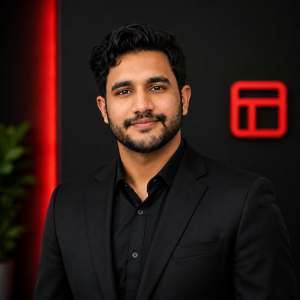
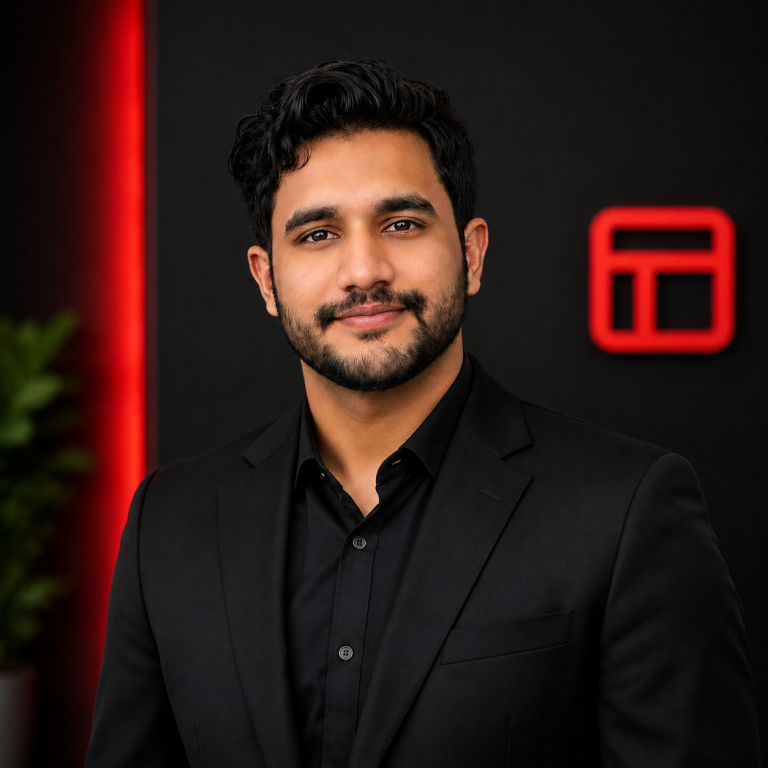
Taqweem Ahmad
Founder, Dexora Digital | AI SEO, AEO & GEO Specialist | 7+ Years | 1000+ Audits
Taqweem Ahmad founded Dexora Digital, a full-stack SEO and AI Search agency. Over 7 years and 1000+ audits across the USA, UK, Australia, and Canada, he has helped businesses rank on Google, dominate Google Maps, and get cited in ChatGPT and Perplexity.