
Your business may offer excellent services, have satisfied customers, and operate in a busy local market. But when someone searches Google for those services, what happens if they find three competitors instead of you?
For many small businesses in the USA, this is a real challenge. Potential customers are searching for nearby plumbers, HVAC contractors, dentists, and other service providers every day. Yet incomplete business information, weak website content, or poor Google Maps visibility can make it difficult for customers to discover the right business.
Local SEO services help small businesses improve their visibility in Google Search and Google Maps so nearby customers can find and contact them.
But how do local SEO services work, and which improvements actually matter?
The process involves more than adding a city name to a website. It includes Google Business Profile optimization, local keyword research, relevant service pages, accurate business information, customer reviews, and performance tracking.
This guide explains how local SEO works for small businesses in the USA, what each part of the process involves, and how to determine whether your local search strategy is helping attract qualified enquiries.
What Local SEO Services Means for Small Businesses
Local SEO is the process of improving a business’s online presence so it can appear in relevant location-based searches. These searches may include a city or neighborhood, such as “AC repair in Phoenix,” or phrases such as “dentist near me.”
Google can also use the searcher’s location to provide geographically relevant results, even when the customer does not mention a city. For small businesses, local SEO helps search engines and potential customers understand three important things:
- What the business offers: Its products, services, and specialties.
- Where the business operates: Its physical location or genuine service areas.
- Why customers should consider it: Relevant information, customer feedback, and an established online presence.
Traditional SEO may target broad searches across an entire country. Local SEO focuses on searches where geographic relevance plays an important role. For example, a plumbing company in Dallas usually benefits more from appearing for “emergency plumber Dallas” than from receiving visits from people searching for plumbing information nationwide.
The objective is not simply to attract more website traffic. It is to reach potential customers who need the business’s services. For a broader explanation, explore Dexora Digital’s local SEO guide.
Why Local SEO Services Matter in the USA
Small businesses compete for attention in increasingly crowded local markets. An HVAC company in Phoenix, a dental practice in Chicago, or a roofing contractor in Dallas may compete with several businesses offering similar services within the same area. Customers comparing these businesses often want quick answers:
- Does this company provide the service I need?
- Does it serve my location?
- What do other customers say about it?
- Can I contact or book the business easily?
A business with accurate service details, a helpful website, and a well-maintained Google Business Profile makes these decisions easier. Local SEO services help businesses address the visibility and information gaps that may prevent customers from finding them.
The real benefit is connecting the business with relevant local demand and providing a clear path from a search result to a phone call, appointment, or enquiry.
How Google Decides Local Search Rankings
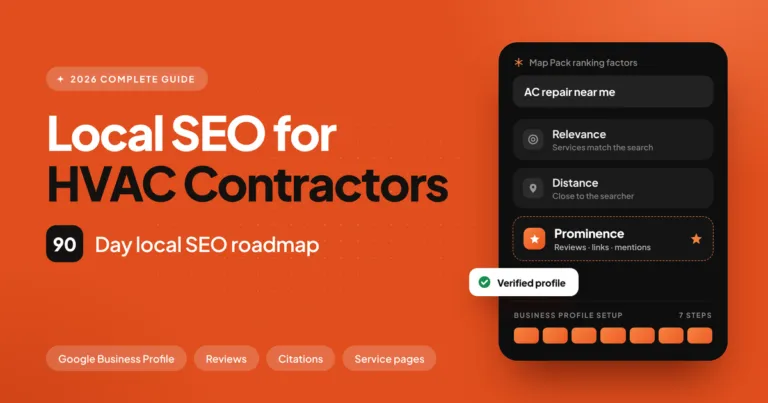
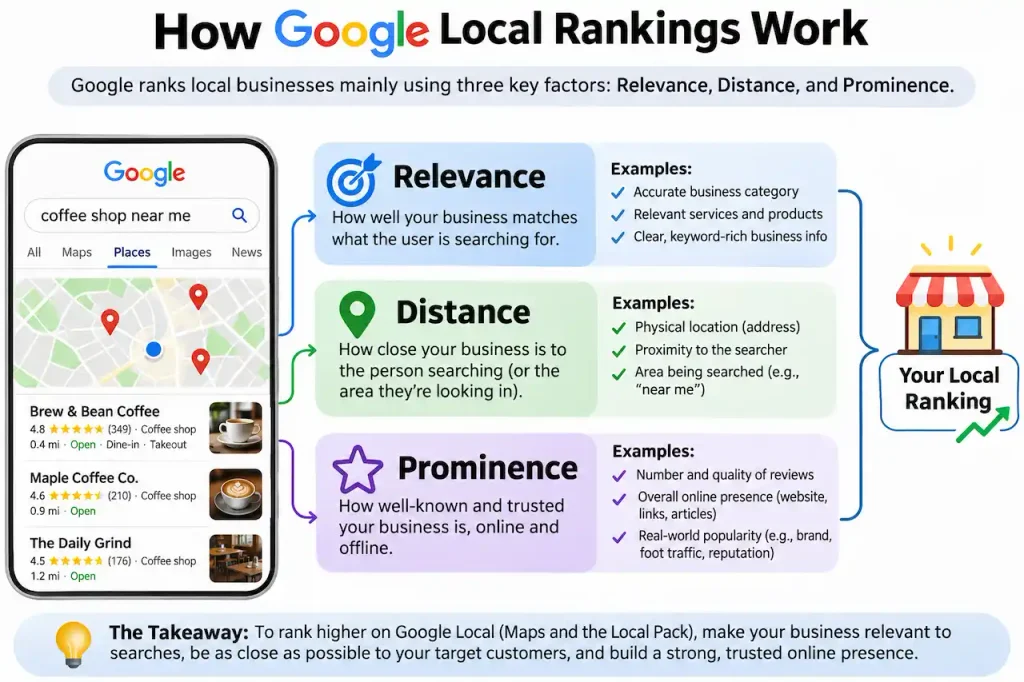
Google considers several factors when determining which businesses appear in local search results. Its published guidance identifies three main factors: relevance, distance, and prominence.
Relevance
Relevance measures how closely a business matches what someone is searching for. For example, a customer searching for “emergency AC repair” needs a business that provides that service, not simply any company in the home improvement industry.
Accurate business categories, service information, and relevant website content help clarify what a business offers.
Distance
Distance refers to how far a business is from the location used in the search. A business located closer to a searcher may have an advantage, although distance is not the only consideration. Businesses cannot overcome physical distance simply by adding more city names to their websites or Google Business Profiles.
Prominence
Prominence reflects how well-known and established a business appears. Google considers information from across the web, including relevant links and reviews, when evaluating local prominence. A strong online reputation can also influence whether customers feel confident contacting a business.
Local SEO does not guarantee a top-three Google Maps position. It helps businesses improve relevant information, website usefulness, and other factors they can influence.
The Role of Google Business Profile in Local SEO
Google Business Profile is an important starting point for eligible local businesses. It allows a business to manage information that customers may see in Google Search and Google Maps, including its name, services, hours, contact information, and customer reviews. A typical optimization process includes:
- Confirming that the business meets Google’s eligibility requirements.
- Selecting categories that accurately describe its operations.
- Adding genuine products or services where applicable.
- Keeping phone numbers, hours, and location details current.
- Adding relevant business photos.
- Responding professionally to customer reviews.
- Reviewing customer interactions and updating inaccurate information.
For example, a plumbing contractor should make its actual services clear rather than relying on a broad business description that tells customers very little. It is equally important not to add misleading addresses, services, or locations to attract extra searches. A properly maintained profile helps customers make informed decisions and gives Google more complete business information.
How Local SEO Services Optimize Business Information
Imagine finding a business on Google Maps, calling the listed number, and discovering that it no longer works. Or arriving at an office that moved several months ago. These problems frustrate customers and can lead to lost enquiries. Local SEO services help businesses maintain accurate information across their websites, Google Business Profiles, and relevant online listings.
Important details include the business name, address where publicly applicable, phone number, website, and opening hours. This work may include identifying old listings, correcting outdated contact details, and resolving duplicate records where appropriate.
Consistency does not mean publishing a private address everywhere. Service-area businesses should follow Google’s address-display and eligibility rules. The objective is simple: customers should receive reliable information wherever they discover the business.
Local Keyword Research and Targeting
Local keyword research identifies the phrases customers use when searching for businesses in a specific area. However, effective research begins with customer needs rather than keyword volume alone. Consider an HVAC company serving Phoenix. Potential customers might search for:
- AC repair Phoenix
- Emergency HVAC repair near me
- Air conditioning installation Phoenix
- HVAC maintenance company
- AC technician open now
These searches represent different customer situations. Someone searching for emergency AC repair may need immediate assistance, while someone researching installation services may be comparing providers and prices.
Local SEO services group searches according to their intent and match them with the most relevant website pages. A dedicated AC repair page should explain the service and how to request an appointment. A maintenance guide may answer common questions before customers decide to book. This prevents a business from relying on one generic homepage to answer every possible customer search.
Website Optimization for Local Search
A Google Business Profile can help customers discover a business, but its website often influences what happens next. A visitor may want to confirm service availability, understand pricing considerations, read customer feedback, or request an appointment. An effective local business website should provide:
- Clear descriptions of actual services.
- Accurate service areas and contact information.
- Mobile-friendly navigation and readable content.
- Fast and reliable page loading.
- Easy-to-find phone numbers and enquiry forms.
- Useful answers to customer questions.
- Relevant information about the company’s experience.
For example, an HVAC repair page should explain the repairs the business handles, common symptoms customers experience, and how to schedule service. It should not consist of repeated city names or generic promises. Businesses needing help with these improvements can explore professional local SEO services.
Practical Example: How Local SEO Helps an HVAC Company
Imagine an HVAC company operating in Phoenix, Arizona. The business provides AC repairs, maintenance, and installation. Its technicians have relevant experience, but the company receives fewer Google Maps enquiries than expected. Instead of assuming the problem is a lack of keywords, a local SEO specialist would investigate several possible causes.
Step 1: Check Google Business Profile Accuracy
The first step is to review the company’s business category, listed services, operating hours, phone number, and service areas. The specialist checks that the profile reflects what the company actually offers and that it follows Google’s guidelines.
Step 2: Review the Website’s Service Pages
The website may have one general HVAC page but little information about AC repairs. A useful improvement could be a dedicated AC repair service page explaining common repair needs, the locations genuinely served, and how customers can request help.
Step 3: Improve the Customer Review Process
The company can ask customers for honest feedback after completed jobs. It should request genuine reviews without offering incentives or pressuring customers to leave positive ratings. Professional responses to reviews can also help prospective customers evaluate the business.
Step 4: Correct Outdated Business Information
A local SEO audit may identify old phone numbers, inconsistent business details, or outdated directory listings. Correcting these issues makes it easier for customers to contact the company.
Step 5: Improve the Path to an Enquiry
Even if a potential customer reaches the website, an unclear booking form or hidden phone number could stop them from getting in touch. The company should make its contact options visible and test them on mobile devices.
Step 6: Track Meaningful Results
Finally, the business should monitor more than Google Maps rankings. Useful measurements include:
- Relevant organic search visits.
- Google Business Profile interactions.
- Phone calls and contact forms.
- Appointment bookings.
- Qualified customer enquiries.
These results help the company understand whether its local search improvements are supporting business goals. The lesson: Local SEO connects discoverability, useful business information, customer trust, and conversion opportunities. Improving one element without checking the others can leave important problems unresolved.
Reviews and Their Impact on Local SEO
Customer reviews can influence both local prominence and the decisions people make after discovering a business. For many customers, reviews offer insight into reliability, communication, professionalism, and service quality. A business with helpful responses to genuine customer feedback may appear more approachable than one that ignores customer concerns.
A practical review strategy involves asking customers for honest feedback, making the review process convenient, responding to reviews appropriately, and monitoring recurring complaints. Businesses should not purchase reviews, offer rewards in exchange for reviews, or selectively pressure customers to leave positive ratings. Reviews are valuable because they reflect real customer experiences.
Citations and Local Authority Building
Local citations are online references to a business and its identifying information. They may appear on business directories, industry platforms, local association websites, and navigation services. For example, an established plumbing company could have listings in relevant trade directories and regional business resources.
Local SEO services review these listings to correct inaccurate information and identify genuinely useful opportunities. However, more citations are not automatically better. A smaller number of accurate, relevant listings is more useful than creating hundreds of low-quality directory entries with little customer value.
Local authority building can also involve earning relevant mentions and links through legitimate business relationships, community participation, or useful industry resources.
Tracking Performance and Making Improvements
Local SEO is not a one-time setup. As customer behavior, services, and competing businesses change, a local SEO strategy may need to evolve. Performance tracking helps business owners understand whether their investment is producing useful results.
Important metrics include organic search clicks, relevant keyword visibility, Google Business Profile interactions, calls, forms, and booked appointments. These metrics answer different questions.
Search visibility indicates whether the business is being discovered. Website engagement shows how visitors interact with its content. Enquiries and bookings provide a clearer indication of commercial value. A business should also review the quality of the enquiries it receives.
Ten relevant service enquiries may be more valuable than hundreds of visits from people who do not need its services.
How Local SEO Services Support Long-Term Growth
Local SEO requires ongoing attention, but its benefits can extend beyond an individual campaign. Accurate business information, useful service pages, genuine customer reviews, and a well-organized website can continue helping customers discover and evaluate a company. Unlike paid advertising, organic search does not require a payment for every individual organic click. However, local rankings can change, competitors can improve, and business information can become outdated.
Regular monitoring helps identify these changes and prioritize improvements. For small businesses, the long-term value of local SEO comes from developing a reliable local presence that supports customer discovery and enquiries. It should complement the business’s wider marketing strategy rather than be treated as a guaranteed replacement for advertising.
Conclusion
Local SEO services help small businesses in the USA connect with customers who are searching for relevant products and services nearby. The process begins with understanding how customers search and whether the business provides clear, accurate information across Google and its own website.
From Google Business Profile optimization and local keyword research to reviews, service pages, citations, and lead tracking, each improvement supports a specific part of the customer journey. Successful local SEO is not about making quick ranking promises. It is about improving discoverability, making customer decisions easier, and measuring whether search visibility produces meaningful business opportunities.
Why Choose Dexora Digital
Dexora Digital helps small businesses across the United States improve their local search presence through practical, measurable SEO strategies. Our services include Google Business Profile optimization, local keyword research, website improvements, citation management, review strategy, and ongoing performance tracking.
With more than seven years of SEO and digital marketing experience, Dexora Digital focuses on connecting search visibility with the outcomes business owners care about, including qualified enquiries and customer acquisition. Explore our SEO services to learn how we support sustainable business growth.
Our approach begins with understanding your business, local competition, and the specific problems affecting your online presence. Rather than making guaranteed ranking promises, we focus on relevant improvements, clear communication, and measurable progress.
Not Getting Enough Customers From Google Maps?
Your business may be missing opportunities to connect with customers already searching for your services. Dexora Digital can review your Google Maps presence, website visibility, and important local SEO issues to help identify where improvements may be needed.
Request a free SEO and AI search audit and receive your written report within 24 hours.
Frequently Asked Questions
1. What are local SEO services for small businesses?
Local SEO services help businesses improve their presence in relevant location-based searches. They typically include Google Business Profile optimization, local keyword research, website improvements, business information management, and performance tracking.
2. How does local SEO work in the USA?
Local SEO helps search engines understand a business’s services, location, and relevance to nearby customers. The process involves optimizing business information, website content, customer reviews, and other appropriate online signals.
3. How long does local SEO take to show results?
Some improvements may become visible within weeks, but meaningful results often take several months. Competition, current website quality, business location, and the required work all influence the timeline. Specific rankings or results cannot be guaranteed.
4. Is Google Business Profile required?
A Google Business Profile is important for eligible businesses seeking visibility in Google Maps and local business results. A business can still have a website that appears in organic search without a Business Profile.
5. Can small businesses compete with large brands locally?
Yes. Small businesses can compete by providing relevant services, accurate local information, helpful website content, and positive customer experiences. Their success depends on the local market and competition.
6. Do reviews affect local rankings?
Google confirms that review signals can contribute to local prominence. Reviews also help potential customers evaluate a business before contacting it.
7. Is local SEO a one-time setup?
No. Local SEO usually requires ongoing monitoring, content updates, review management, and improvements as business details and competition change.
8. Does a website matter for local SEO?
Yes. A useful website explains the business’s services, locations, and contact options. It can also attract customers through relevant organic searches and support conversions.
9. What industries benefit most from local SEO?
Local SEO can benefit home service companies, healthcare practices, law firms, retail businesses, restaurants, and other businesses serving customers within defined geographic areas.
10. How does Google Maps ranking work?
Google primarily evaluates relevance, distance, and prominence when determining local search rankings. A complete Business Profile and credible online presence can help businesses communicate their relevance.
11. Are citations still important?
Accurate citations can help customers find consistent information about a business. Relevant directories may also provide useful referral traffic and business visibility.
12. How often should business profiles be updated?
Business Profiles should be updated whenever important details change, including services, hours, phone numbers, and locations. Regular reviews help prevent outdated information.
13. Does local SEO reduce advertising costs?
Local SEO can provide an additional source of customer enquiries and may reduce reliance on paid advertising in some circumstances. However, lower advertising costs or lead acquisition costs are not guaranteed.
14. Can service-area businesses rank locally?
Yes. Eligible service-area businesses can have Google Business Profiles and appear in relevant local results. They must follow Google’s eligibility, address-display, and service-area guidelines.
15. What causes local SEO rankings to drop?
Ranking changes may result from stronger competition, changes in search behavior, profile issues, website problems, algorithm changes, or differences in the searcher’s location. A diagnosis is necessary before selecting a solution.
16. Is mobile optimization important?
Yes. A mobile-friendly website helps customers read service information, navigate pages, and contact the business more easily from their phones.
17. How is local SEO success measured?
Useful measurements include relevant organic traffic, Google Business Profile interactions, phone calls, form submissions, appointments, and qualified leads.
18. Do backlinks help local SEO?
Relevant, trustworthy links can contribute to a business’s online prominence and help search engines discover useful website content. Link quality and relevance matter more than quantity.
19. Can local SEO scale with business growth?
Yes. As a business expands, its SEO strategy can accommodate additional genuine locations, services, and customer needs. Expansion should be supported by accurate business details and useful content rather than duplicate location pages.
20. What defines long-term local SEO success?
Long-term success means maintaining useful local visibility and generating relevant customer opportunities over time. Business owners should evaluate qualified enquiries and measurable outcomes alongside search rankings.