
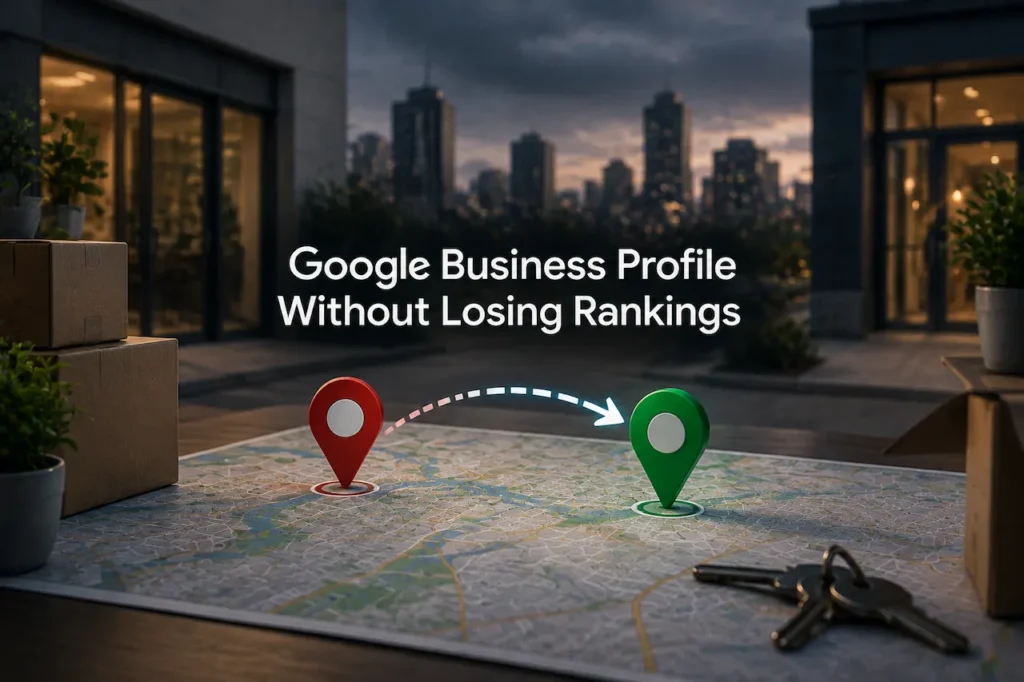
Moving a business location is a major decision, but many businesses underestimate the impact it can have on local search visibility.
A Google Business Profile address change is not just an administrative update. It can affect rankings, verification status, customer trust, citations, and how Google understands the relationship between your business and its service area.
I have seen businesses update their address without preparing their local SEO foundation first.
The result is often unnecessary ranking fluctuations, inconsistent business information, and confusion for both customers and search engines.
A location move can be managed successfully, but it requires a structured migration process that protects important signals built over years, including:
- Reviews
- Local authority
- Business information consistency
- Customer trust
- Search visibility
The goal is not simply changing an address.
The goal is helping Google understand that the same legitimate business has moved to a new location.
A successful migration requires planning before the address update, accuracy during the transition, and monitoring after the move.
Why Moving a Google Business Profile Can Impact Rankings

A Google Business Profile is connected to many local search signals.
When a business changes its address, Google needs to understand that the same legitimate company has moved from one location to another.
This process can create temporary ranking changes because Google must reevaluate several factors.
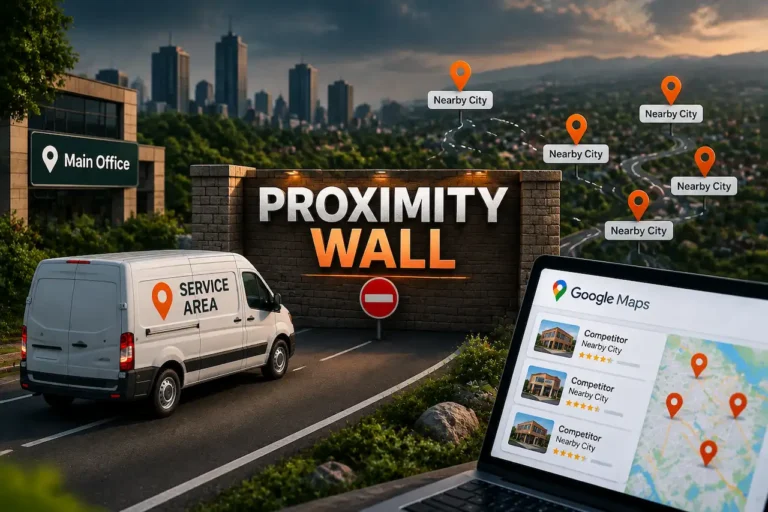
The most important factor affected by a move is proximity.
Google Maps is designed to show businesses that are relevant and accessible to users. When a business moves, its relationship with nearby searchers changes.
For example:
A company that previously ranked strongly in one neighborhood may experience ranking changes after moving because the distance between the business and customers has changed.
This does not mean the business will automatically lose rankings.
It means Google needs updated information to understand the new situation.
Other factors that can influence performance include:
- Website address information
- Business directory consistency
- Google Business Profile data
- Local authority signals
- Customer expectations
A location change also creates a trust challenge.
If customers find different addresses across the web, search engines may question which information is accurate.
This is why a successful move requires more than changing one address field.
The entire local SEO ecosystem needs to be updated.
Understanding Google Business Profile ranking factors helps businesses protect the signals that influence visibility before making location changes.
The strongest approach is preparation, not reaction.
What Changes When You Move a Business Location
A business location change affects more than the Google Business Profile.
Many online signals are connected to your physical location.
Your:
- Website
- Business directories
- Customer reviews
- Maps data
- Online references
all contribute to how search engines understand your company.
Before moving, businesses should understand that local SEO depends heavily on consistency.
If your Google Business Profile shows one address but important directories show another, search engines receive conflicting information.
This creates uncertainty.
A successful migration requires alignment between all important business references.
Your website should reflect the new location.
Your business information across trusted platforms should match.
Your customers should clearly understand the change.
A business move can also become an opportunity to improve local visibility.
Some businesses move closer to their target customers.
Others expand into new service areas.
The correct approach depends on the situation.
A move within the same city may create smaller ranking changes compared with moving into a completely different market.
For example:
Moving five minutes away may require simple updates.
Moving to another city may require a broader local SEO migration strategy.
The goal is not only updating information.
The goal is helping Google and customers understand the transition.
The Importance of Planning Before a Google Business Profile Move
Many businesses make the mistake of changing their address first and thinking about SEO later.
This creates unnecessary problems.
Before making any changes, businesses should understand what they are protecting.
A proper preparation phase helps document existing visibility and creates a baseline for measuring changes after migration.
Before moving, review:
- Current Google Maps rankings
- Important search terms
- Website location information
- Existing citations
- Customer reviews
- Competitor visibility
Without this information, it becomes difficult to determine whether ranking changes are temporary or require additional action.
Businesses should also review their online presence before migration.
Important questions include:
- Where does the old address appear online?
- Which directories need updates?
- Are all business details consistent?
- Does the website clearly represent the new location?
A complete local SEO guide helps businesses understand why consistency, authority, and accurate information are critical during location changes.
The preparation stage is where businesses protect the SEO value they have already built.
The Safe Google Business Profile Migration Process
A successful Google Business Profile move should be planned in three stages:
- Before the move
- During the migration
- After the update
Each stage protects different parts of your local search presence.
Many businesses only react after rankings drop.
A proactive migration approach creates a smoother transition because important information, rankings, and business signals have already been documented.
A safe migration process includes:
- Preparing existing SEO data before changing the address
- Updating the Google Business Profile accurately
- Completing any required verification process
- Updating important business references
- Monitoring rankings after the move
The goal is not forcing immediate rankings.
The goal is helping Google understand that the same legitimate business has moved to a new location.
A proper local SEO migration strategy helps businesses organize each stage of the transition and reduce unnecessary visibility loss.
During the Google Business Profile Address Change
The actual address update is only one part of the migration process.
Many businesses assume that changing the address inside Google Business Profile completes the move.
However, local SEO migration requires coordination across multiple signals.
During the migration, accuracy is critical.
The new business address should match the information displayed on:
- Your website
- Business directories
- Important online references
- Customer-facing materials
Any inconsistency can create confusion for both customers and search engines.
Google may also require reverification after an address change.
This is a normal security process because Google needs to confirm that the business is legitimate and operating from the updated location.
Businesses should be prepared with accurate documentation and avoid unnecessary changes during this period.
Important preparation may include:
- Confirming business ownership information
- Ensuring website details are updated
- Reviewing business citations
- Preparing verification requirements
The migration process should be controlled and consistent.
Making multiple unrelated changes at the same time can make it difficult to identify what caused ranking fluctuations.
How Address Changes Affect Google Maps Rankings
A Google Business Profile address change can affect rankings differently depending on the type of move.
A small relocation within the same area may create limited disruption because the business remains relevant for similar customers.
A major relocation can create bigger changes because the business is now competing in a different local market.
For example:
A company moving from one neighborhood to another may experience temporary ranking changes while Google updates its understanding of the new location.
A company moving to another city may need a broader local SEO strategy because competitors in that market already have established local signals.
The impact of a move depends on several factors, including:
- Competition in the new area
- Existing profile authority
- Citation consistency
- Website location signals
- Customer engagement
Businesses should not judge migration success immediately after changing the address.
Local search systems need time to process new information.
A proper recovery process involves monitoring:
- Google Maps rankings
- Organic visibility
- Website traffic
- Customer actions
- Search performance
Understanding Google Maps ranking factors helps businesses identify which signals influence visibility after a location change.
Preventing Suspension During GBP Migration
A legitimate business move should be handled carefully because Google reviews business information to protect search quality.
Incorrect updates, inconsistent information, or unclear business details can increase the risk of verification problems.
The safest approach is keeping every signal accurate and aligned.
Important practices include:
- Maintaining accurate business information across platforms
- Preparing verification details before updating the profile
- Ensuring website information matches the new location
- Reviewing important citations after migration
Businesses should also avoid shortcuts.
Creating fake locations or manipulating addresses may create temporary visibility, but it introduces serious risks.
A sustainable local SEO strategy is built on accurate information.
If a business experiences verification issues during migration, the recovery process should focus on identifying the cause, correcting information problems, and providing accurate business evidence.
A professional GBP suspension recovery process helps businesses understand what went wrong and rebuild trust with Google’s systems.
The priority should always be maintaining accuracy and long-term stability.
Updating Citations After a Business Move
Citations play an important role in helping search engines understand business information.
After moving, outdated citations can create confusion.
For example:
Your Google Business Profile shows a new address.
Your website shows the new address.
But several directories still display the old location.
This creates inconsistent signals.
A citation update process should identify:
- Important directories
- Industry platforms
- Local references
- Data sources showing old information
Businesses should prioritize accuracy instead of updating random listings without a plan.
The goal is creating a consistent digital footprint where customers and search engines see the same business information everywhere.
Proper citation management ensures that local search signals remain aligned after a location transition.
Monitoring Local SEO Recovery After Moving
A business move should not be considered complete immediately after the address update.
The recovery phase requires ongoing monitoring to understand how local search systems respond to the new location.
Businesses should compare performance before and after the move to identify:
- Ranking changes
- Visibility improvements
- Traffic fluctuations
- Customer actions
- Remaining information issues
A strong monitoring process includes:
- Tracking Google Maps rankings across important locations
- Reviewing organic search visibility for local pages
- Monitoring website traffic changes
- Checking citation consistency
- Measuring calls, leads, and customer inquiries
The purpose is identifying whether rankings are:
- Recovering naturally
- Remaining stable
- Requiring additional improvements
A geo-grid baseline is especially useful because local rankings can vary significantly depending on where the search is performed.
A business may appear strong from one location but weaker from another.
Tracking these changes provides a clearer picture of local visibility after migration.
A proper local SEO services approach helps businesses monitor performance and make data-driven improvements instead of reacting to temporary fluctuations.
Real World Example: Recovering Local Visibility After a Business Move
I worked with a business that needed to relocate its physical location while protecting years of local SEO progress.
The company had strong visibility before moving and was concerned about losing:
- Rankings
- Reviews
- Customer trust
- Local authority
The first step was documenting the existing performance.
We reviewed:
- Current Google Maps rankings
- Important search terms
- Website location information
- Business references across the web
- Local competitors
After the move, the business profile was updated with accurate information and the migration signals were aligned across important platforms.
The focus was not forcing immediate rankings.
The focus was helping Google understand that the same legitimate business had moved to a new location.
During recovery, rankings were monitored and citation inconsistencies were corrected.
The process showed an important lesson:
A business relocation does not have to destroy local visibility when the move is handled strategically.
The biggest risks usually come from:
- Poor preparation
- Inconsistent information
- Incorrect updates
- Trying to manipulate location signals
A structured migration protects the value a business has already built.
Why Choose Us
At Dexora Digital, we help businesses protect and recover local visibility during Google Business Profile changes through structured migration strategies and data-driven local SEO processes.
A location move is not just a profile update.
It is a transition that affects rankings, citations, customer trust, and how search engines understand your business.
Our approach focuses on protecting existing SEO value while creating a smooth migration process.
We help businesses with:
- Local SEO migration planning
- Google Business Profile updates
- Citation consistency checks
- Ranking monitoring
- Local visibility recovery
- Data-based performance analysis
Our strategies are built around accurate information and sustainable growth.
We do not use risky shortcuts.
We focus on helping Google and customers understand the real relationship between your business and its new location.
Conclusion
Moving a Google Business Profile requires more than changing an address.
A successful relocation protects existing SEO signals, maintains accurate business information, and gives Google clear evidence that the business has legitimately moved.
The biggest mistakes happen when businesses update only one platform and ignore the wider local search ecosystem.
With proper preparation, accurate updates, citation consistency, and ongoing monitoring, businesses can complete location changes without permanently damaging local visibility.
The goal is not avoiding every ranking fluctuation.
Some changes are normal.
The goal is ensuring that Google understands the transition and that customers continue finding the right business information.
FAQs
Will changing my Google Business Profile address destroy my rankings?
No.
A legitimate address change does not automatically destroy rankings.
However, temporary fluctuations can happen while Google processes the new location information and evaluates local relevance.
Do I need to verify my Google Business Profile after moving?
Google may require reverification after an address change.
This helps confirm that the business is legitimate and operating from the updated location.
How long does local SEO recovery take after moving?
Recovery time depends on several factors, including:
- Distance of the move
- Competition in the new area
- Citation consistency
- Existing authority signals
- Website updates
Some businesses recover quickly, while others require additional optimization.
Should I create a new Google Business Profile when moving?
Usually no.
A legitimate business moving locations should update its existing profile instead of creating a duplicate listing.
Creating duplicate profiles can create confusion and policy issues.
Can I move my business to another city and keep rankings?
A move to another city can affect rankings because proximity and competition change.
However, proper migration, accurate information, and local SEO improvements can help rebuild visibility.
Should I update my website before changing my Google Business Profile address?
Yes.
Planning website updates before the profile change helps maintain consistency and reduces confusion for customers and search engines.
What happens if my old address remains online after moving?
Old address information can create conflicting signals.
Businesses should identify important citations and update them so search engines receive consistent information.
How can I protect my reviews when moving locations?
Reviews are connected to your business profile, so maintaining the existing profile and following Google’s migration process is usually the safest approach.
Avoid creating unnecessary duplicate profiles.
Protect Your Local Rankings During a Business Move
A business relocation does not have to mean losing years of local SEO progress.
The key is treating a Google Business Profile move as a structured SEO migration instead of a simple address update.
Dexora Digital helps businesses manage location changes, protect rankings, improve local visibility, and create reliable migration processes.
Our team can help with:
- Google Business Profile migration planning
- Local ranking monitoring
- Citation updates
- Visibility recovery
- Local SEO strategy
If you are planning a business move and want to protect your local search performance, an SEO consultation can help identify risks and create a clear migration roadmap.