
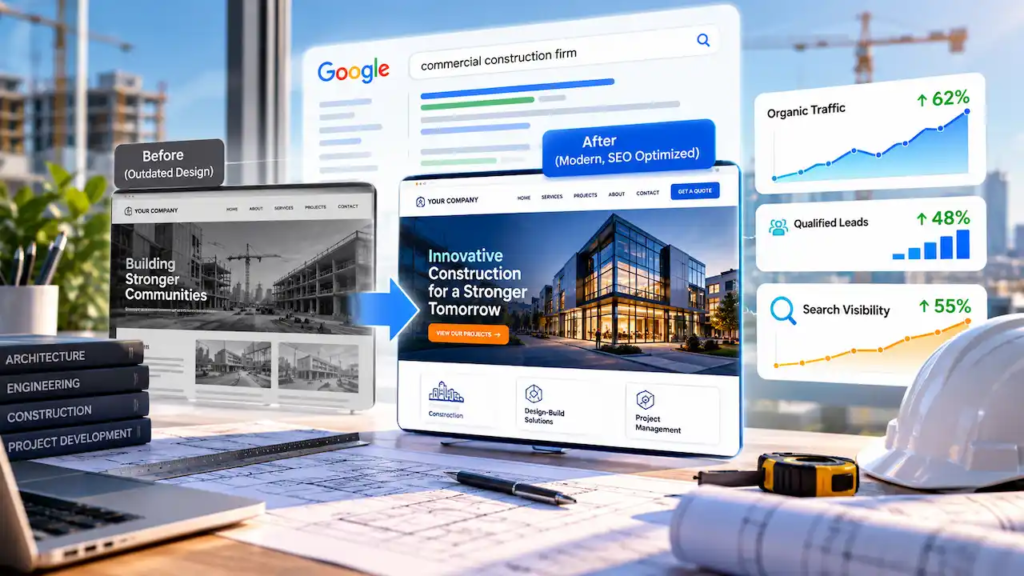
An architecture firm wants a more impressive portfolio. An engineering consultancy needs clearer service pages. A construction company wants its website to generate better project inquiries. All three may see a redesign as the solution, but changing a website without reviewing its existing search performance can introduce unnecessary risk.
Pages that currently attract qualified visitors may be removed, renamed, or rewritten during development. If those changes are poorly managed, the new website could look better while becoming harder to find. AEC website redesign SEO is about protecting valuable search visibility while improving how prospective clients discover services, evaluate project experience, and make contact.
Why AEC Website Redesigns Can Put Existing Search Visibility at Risk
Design Decisions Can Remove Pages That Already Generate Demand
AEC websites often contain valuable content that is easy to overlook during redesign planning. An engineering firm’s structural assessment page may receive relevant searches even if its design appears outdated. An architecture practice’s commercial project portfolio might help developers evaluate its experience. A contractor’s specialized service page may attract inquiries from buyers with defined project requirements.
Removing these pages simply to simplify navigation can weaken the website’s ability to attract suitable opportunities. Before approving a new sitemap, marketing directors should review which existing pages generate organic visits, appear for commercially relevant searches, and contribute to project inquiries. The broader website redesign and SEO migration checklist provides useful technical context, but AEC teams must also evaluate the commercial value of individual services and project pages.
A Better-Looking Website Is Not Automatically a Better Lead Generator
A redesigned homepage may feature striking architectural photography, animations, and simplified menus. However, visual improvements alone do not explain what a firm specializes in or why a prospective client should contact it.
For engineering firms, vague service descriptions can make technical capabilities difficult to evaluate. For contractors, burying project types beneath generic navigation can create friction for developers and property owners. The commercial risk is twofold: the redesign may disrupt existing organic visibility while failing to improve inquiry quality. That is why design approval should consider search demand, buyer navigation, and conversion paths alongside visual presentation.
A Pre-Launch SEO Checklist for AEC Website Redesigns
1. Inventory Existing URLs and Identify Valuable Pages
Start by exporting existing URLs from the website, XML sitemap, analytics platform, and Google Search Console. Review organic landing pages, search queries, internal links, backlinks, and available conversion data. Identify pages associated with important engineering specialties, construction services, geographic markets, and project experience.
Classify each URL as retain, improve, consolidate, redirect, or retire. Pages should not be removed solely because they receive limited traffic. A specialized service page may attract relatively few visitors but still support high value project inquiries.
2. Preserve Useful Content While Improving Its Presentation
An AEC redesign should strengthen important content rather than replace it with generic marketing language. Keep meaningful service explanations, technical capabilities, industry sectors, project responsibilities, and geographic information. Update outdated material, remove unnecessary repetition, and make the content easier to navigate.
For architecture practices, project pages should communicate building type, scope, design responsibilities, and relevant outcomes where disclosure is permitted. Engineering firms should make specialized disciplines and applications understandable to procurement teams. These improvements connect naturally with website design for engineering firms, where clarity about technical expertise matters as much as presentation.
3. Map Redirects Before Development Is Complete
If URLs change, create a documented mapping between old and new destinations. For example, an engineering firm’s existing /structural-engineering-services/ page should normally redirect to the most relevant replacement page, not automatically to the homepage.
Use permanent server-side redirects where appropriate, update internal links, and avoid redirect chains. Retain existing URLs when there is no compelling reason to change them. A structured website redesign SEO guide can support migration planning, but every redirect decision should reflect the content and purpose of the original page.
4. Improve Navigation and Project Inquiry Paths
Redesigns also create an opportunity to remove obstacles that prevent qualified buyers from contacting the firm. Review whether visitors can quickly identify:
- Relevant services, technical specialties, and project types.
- Evidence of completed work, capabilities, and applicable experience.
- A clear route to discuss a project, request a consultation, or submit an inquiry.
For construction firms, this may involve clearer commercial and specialty construction categories. Architecture firms may benefit from filtering portfolios by sector. Engineering firms may need distinct pathways for owners, contractors, and technical procurement teams. Effective website design services should support these buyer journeys without sacrificing the content that already earns search visibility.
5. Test the Staging Website Before Launch
An engineering website migration or construction website redesign SEO project needs technical validation before the new site becomes public. Check that important pages return successful responses, internal links work, metadata is retained or deliberately improved, and canonical URLs point to the correct destinations. Also review mobile usability, page performance, structured data, forms, and tracking.
Confirm that temporary staging restrictions will not carry into production. An accidental noindex directive or blocked crawl path can prevent important pages from appearing in search. Use a controlled launch checklist with named owners for technical fixes and final approval.
6. Monitor Search Performance and Inquiries After Launch
Once the new website is live, submit the appropriate sitemap, inspect important URLs, and monitor indexing and crawl issues. Compare organic landing page performance against a pre-launch baseline. Track search impressions, clicks, relevant queries, and qualified project inquiries. Some fluctuations may occur after significant changes, but sustained declines affecting important service pages require investigation.
If traffic drops, the website redesign traffic recovery guide can help frame the diagnosis. Do not assume every decline is caused by the redesign without examining technical changes, seasonality, and search demand.
Make the Redesign a Business Improvement, Not Just a Visual Upgrade
The strongest redesign decisions protect existing search assets while making the website more useful to prospective clients. AEC marketing directors should establish measurable goals before approving development: clearer service discovery, better portfolio navigation, more relevant project inquiries, and stable access to valuable organic landing pages.
Dexora Digital can help firms evaluate redesign requirements through coordinated SEO services, website strategy, and technical review. This connects search preservation with the commercial goals behind the redesign. A successful launch is not simply a new design going live. It is a controlled transition that maintains access to valuable content and gives qualified buyers a better path toward engagement.
Request an SEO review before redesign. If your AEC firm is planning a new website, contact Dexora Digital to assess existing search assets, proposed URL changes, technical launch risks, and opportunities to improve qualified project inquiries before development decisions become expensive to reverse.
Frequently Asked Questions
Can an AEC website redesign cause Google rankings to drop?
Yes. Rankings and organic traffic can decline when a redesign removes useful content, changes important URLs without appropriate redirects, introduces indexing problems, or alters internal linking. However, a redesign does not automatically cause ranking losses. Reviewing existing search performance and testing changes before launch can reduce avoidable risks.
Should engineering firms keep their existing URLs during a website redesign?
Generally, retaining relevant, functioning URLs is preferable when there is no strong reason to change them. If restructuring requires new URLs, map each important old page to its most relevant replacement and implement appropriate permanent redirects. This helps users and search engines find the new content.
How can construction companies improve lead generation during a redesign?
Construction firms should make project types, service areas, capabilities, and relevant experience easy to find. Clear project inquiry forms and visible contact options can reduce friction. Tracking qualified inquiries before and after launch helps determine whether the redesign improves business outcomes rather than merely increasing website interactions.
What should AEC firms check before launching a redesigned website?
Review the URL inventory, redirect map, page content, titles, meta descriptions, canonical tags, indexing directives, internal links, mobile usability, website performance, and inquiry forms. Confirm analytics and conversion tracking work correctly. Compare the staging site against approved requirements before allowing the new website to replace the existing one.
How long should an AEC firm monitor SEO performance after a redesign?
Begin monitoring immediately after launch, with particular attention to indexing, redirects, and important landing pages. Continue comparing performance over subsequent weeks and months, taking account of seasonality and normal search fluctuations. Significant technical errors should be addressed promptly rather than waiting for a reporting cycle to finish.