

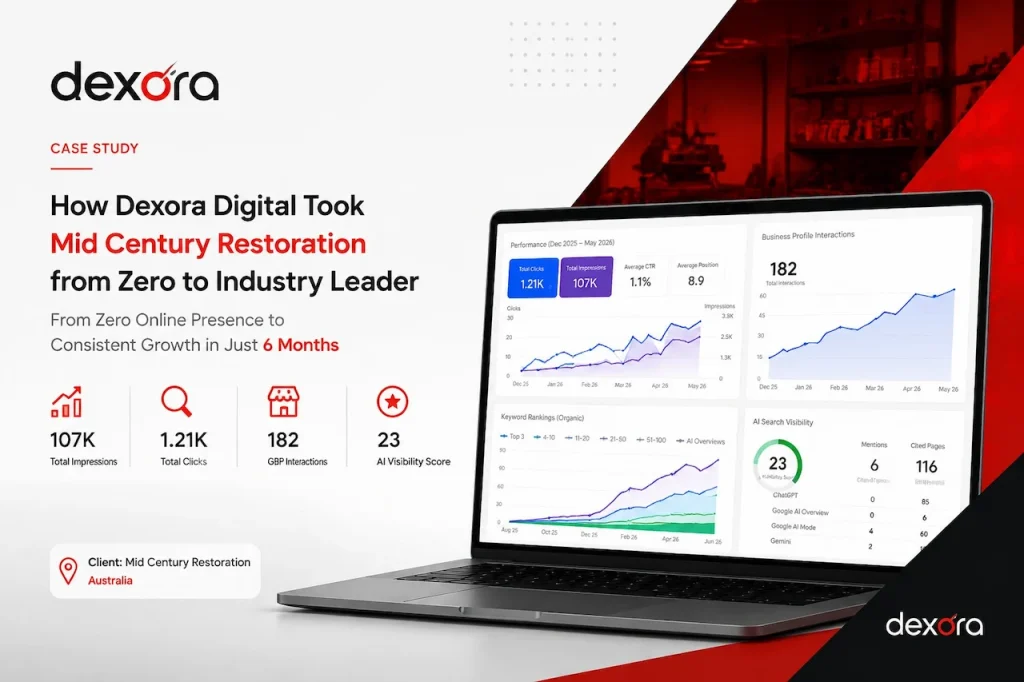
The Quick Numbers
| Metric | Starting Point | 6 Months Later |
| Website | Did not exist | Live, ranking, growing |
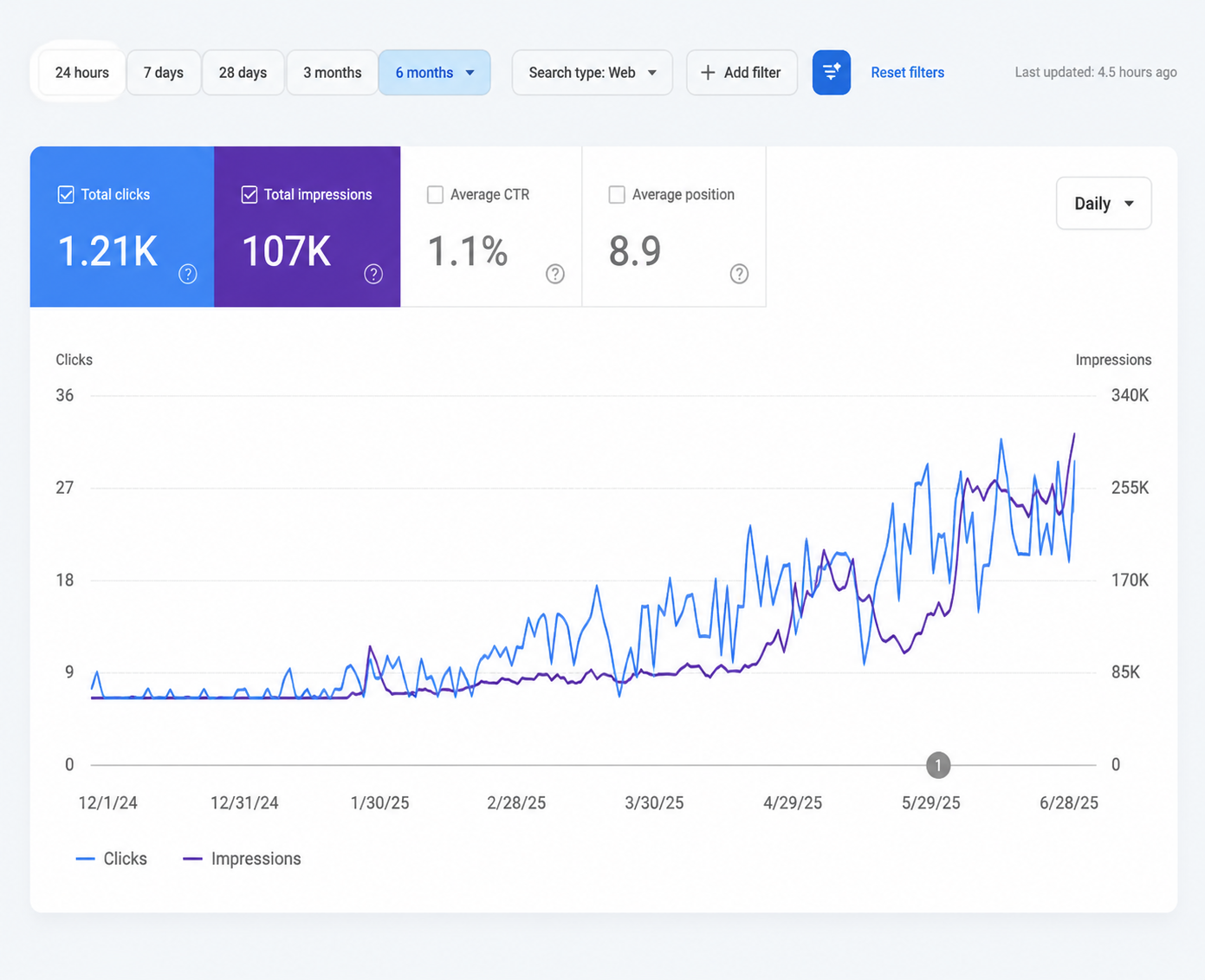
| Google Impressions | 0 | 107,000 |
| Organic Clicks | 0 | 1,210 |
| Average Position | N/A | 8.9 |
| Daily Impressions | 0 | 2,500 to 3,800 |
| GBP Interactions | 0 | 182 |
| Ranking Keywords | 0 | 91 to 121 tracked |
| AI Citations | 0 | 116 pages cited across AI platforms |
| Paid Advertising | $0 | $0 |
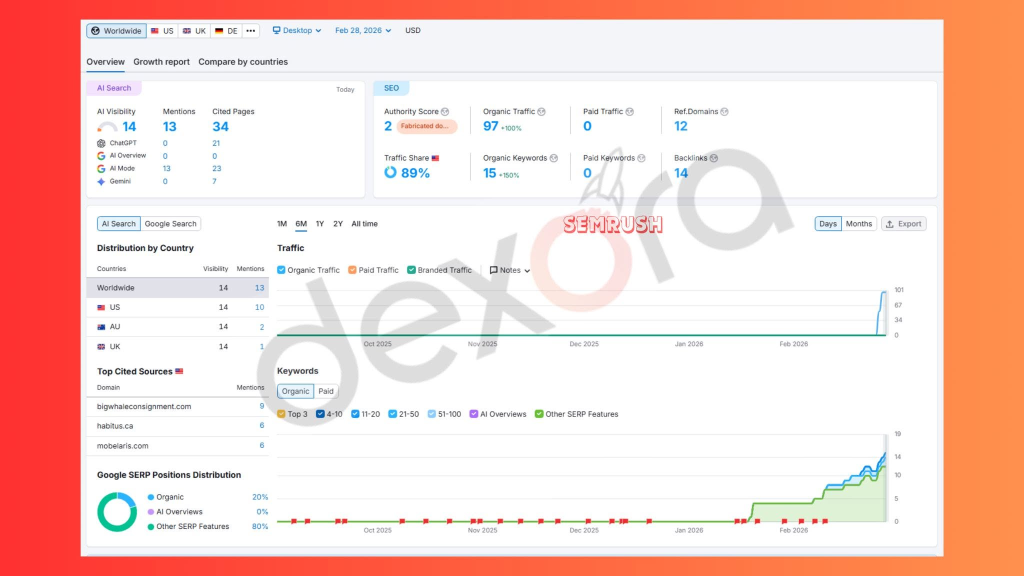
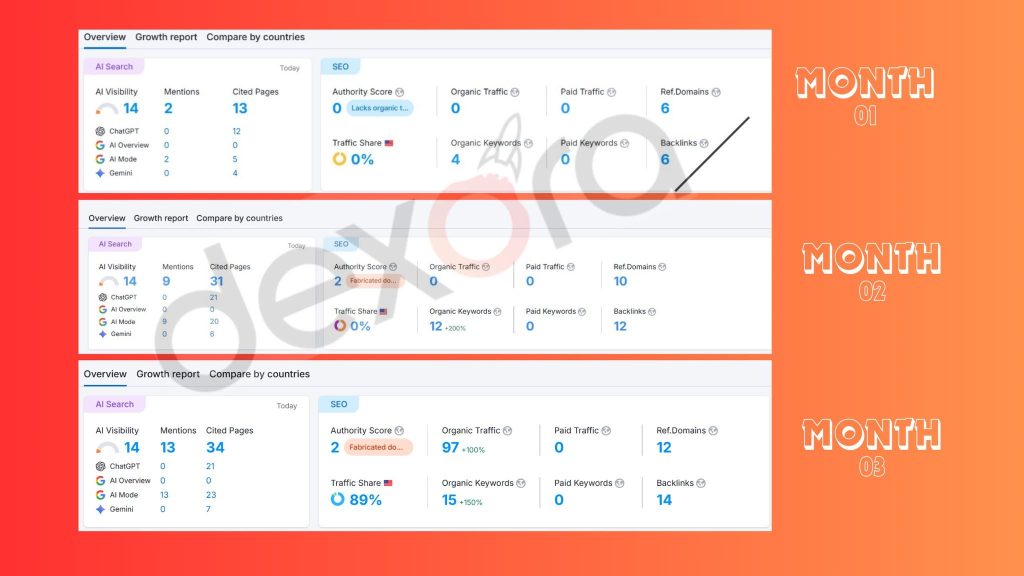
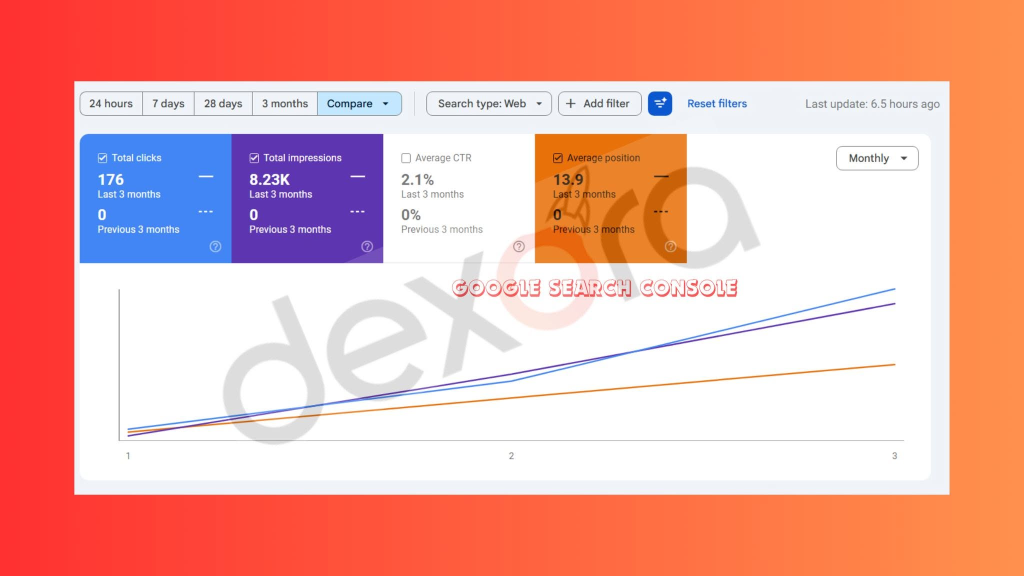
Zero to all of that in six months. No paid ads. No shortcuts. No existing domain authority to build on. A furniture restoration business in Melbourne with nothing online turned into a visible, growing, AI-cited digital asset before the six months mark.
This is the full story.
The Client and the Starting Point
Mid Century Restoration is a specialist furniture restoration business based in Melbourne, Australia. The business restores and refinishes mid-century modern furniture — a niche craft that requires years of hands-on expertise and serves a specific market of design-conscious homeowners, interior designers, and collectors across Melbourne.
The craftsmanship was exceptional. The digital presence was non-existent.
When they came to Dexora Digital in November 2025, the situation was as stark as it gets.
No website. No Google Business Profile. No presence on Google Maps. No indexed pages. No social presence. Zero organic visibility of any kind. If someone in Melbourne searched for furniture restoration services tonight, this business did not exist in their results.
That is not unusual for a local trade business in Australia. The pattern is common: exceptional hands-on skill, invisible online. The people who deserve to be found cannot be found. The customers who need them cannot find them.
We started from zero in November 2025.
What We Actually Built
Before the numbers make sense, the work needs to be understood. This was not an SEO campaign layered on top of an existing website. This was a complete digital build from nothing.
Website built from scratch. A fully optimized website designed from day one with search engine and AI system access in mind. Not a template. Not a page builder with no thought given to technical foundations. A website built with the correct technical architecture, mobile-first performance, schema markup implementation, and AI crawler access configured before the first page went live.
Google Business Profile created and optimized. The GBP did not exist. We created it, verified it, selected the correct primary and secondary categories, wrote the business description with local keyword integration, added service listings, uploaded optimized images, and set up Q&A responses covering the most common customer queries.
Full technical SEO foundation. LocalBusiness schema, Service schema, FAQPage schema on relevant pages, BreadcrumbList schema sitewide. robots.txt configured to allow all major search and AI crawlers including GPTBot, ClaudeBot, PerplexityBot, and Google-Extended. XML sitemap submitted to Google Search Console. Core Web Vitals optimized at launch. Canonical tags implemented correctly from day one.
On-page SEO and content strategy. Keyword research specific to the Melbourne furniture restoration market. Service pages built around the specific restoration services the business offers — mid-century modern furniture, timber restoration, upholstery, refinishing. Location signals built into the content naturally. Content written to answer the specific questions Melbourne customers ask before commissioning restoration work.
Local SEO targeting. NAP consistency across all citations from day one. Google Maps optimization. Local content signals targeting Melbourne suburbs where the target audience concentrates.
GEO and AI search optimization. FAQPage schema on all question-and-answer content. Entity signals consistent across the entire web presence. Content structured for AI extraction and citation eligibility from the moment the site launched.
The website went live in November 2025. Google Search Console showed near-zero activity in December 2025, as expected. New websites require time for Google to crawl, index, and begin assigning authority.
Then the compounding began.
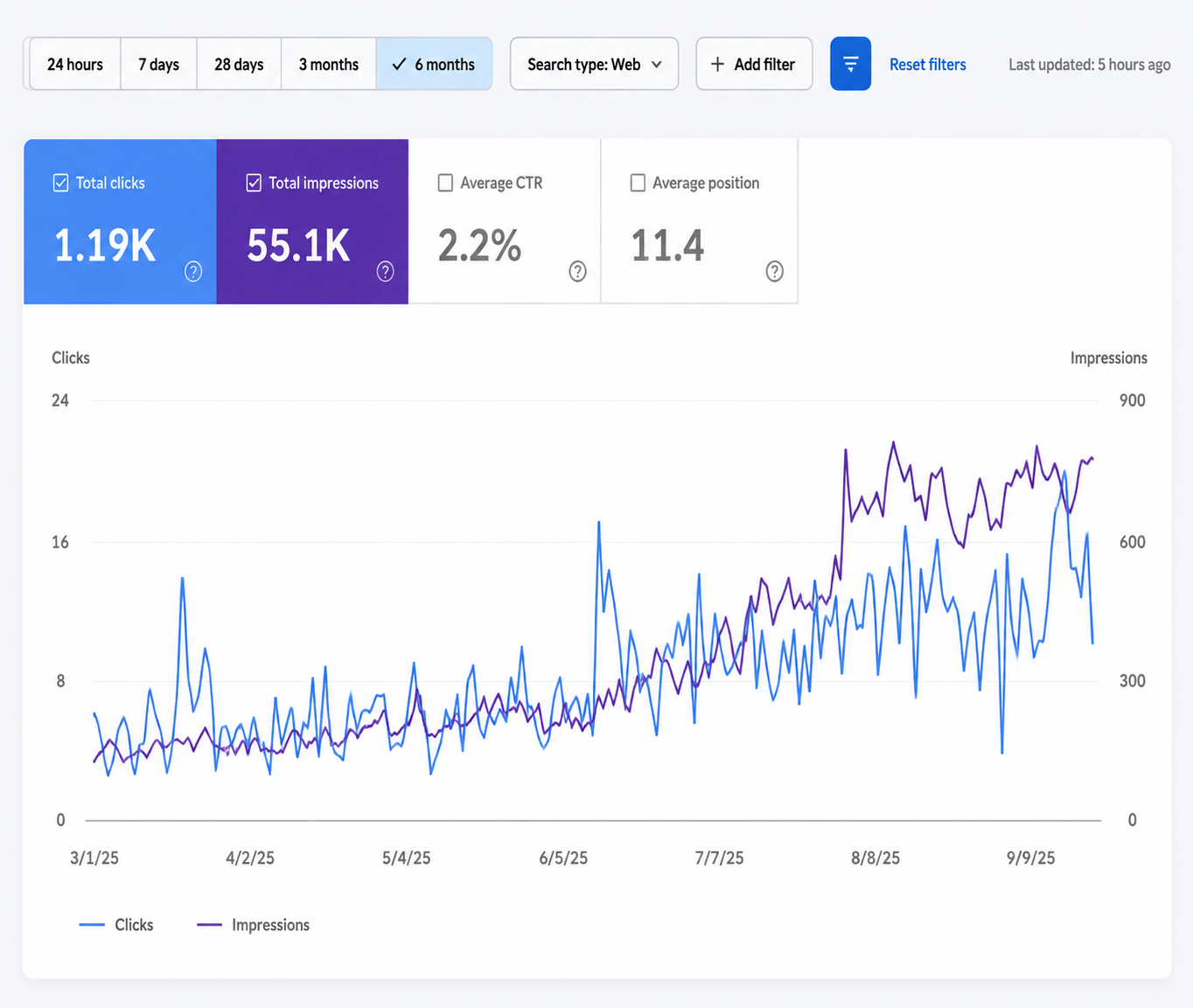
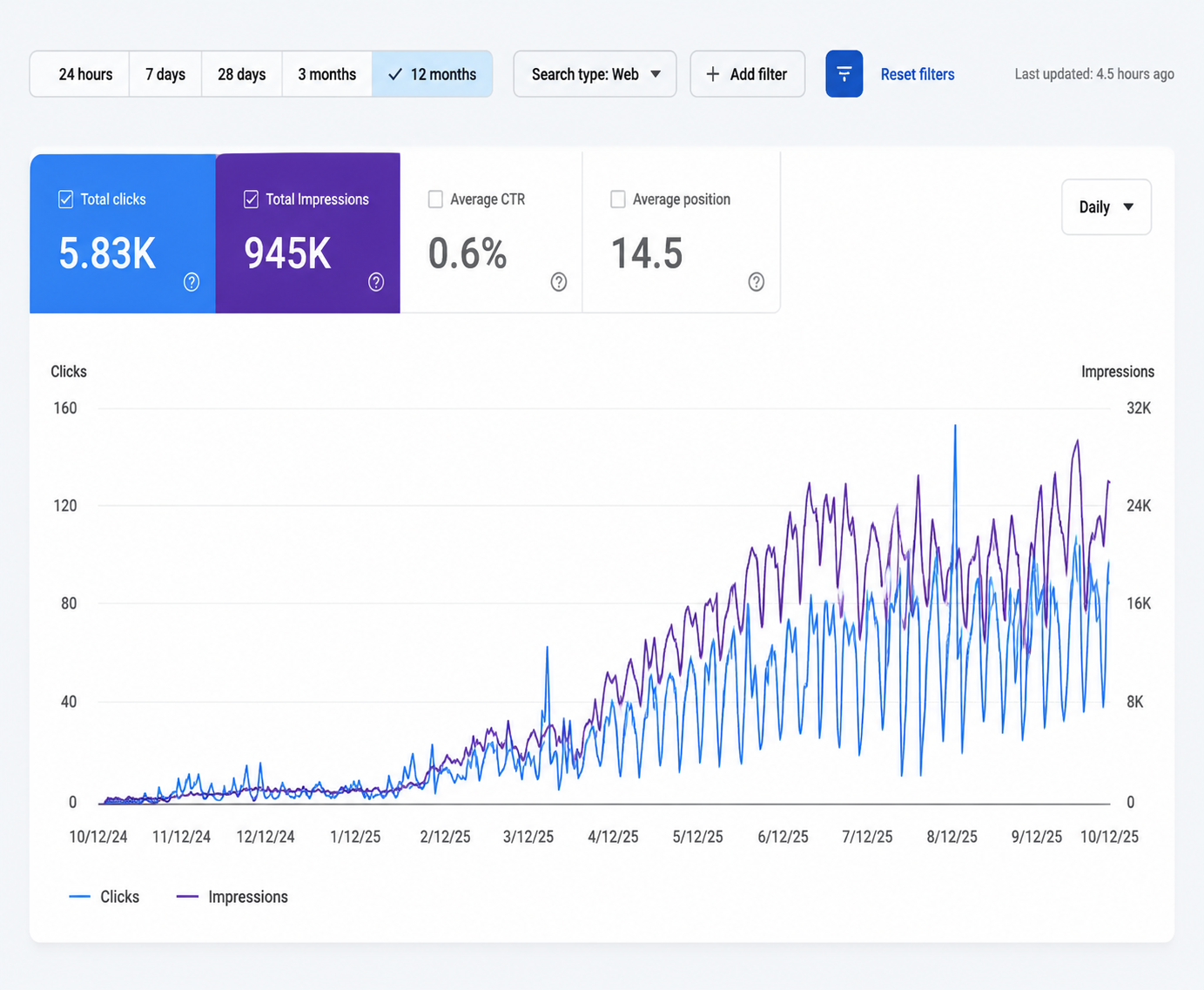
Google Search Console — 12 Month Results
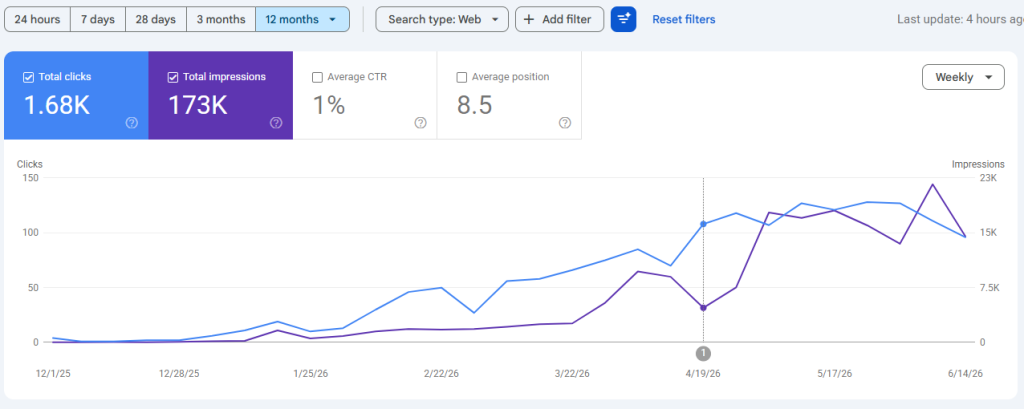
Total Impressions: 173,000
Total Clicks: 1,680
Average CTR: 1%
Average Position: 8.5
Monthly Impressions: 0 to 50K+ and growing
The GSC growth chart tells the story more clearly than any summary. December 2025: a flat line near zero. January 2026: the first signs of indexation. February 2026: the curve begins. March and April 2026: consistent upward movement. May 2026: both clicks and impressions trending sharply upward. The last 60 days of the six month period show the steepest growth, indicating momentum rather than a plateau.
107,000 impressions in six months for a local furniture restoration business in Australia is not a small result. The typical business in this niche has either no website or a website generating a few hundred impressions per month from branded searches alone. Reaching six-figure impressions in six months from a dead start, without paid traffic, represents a genuine market presence being established in real time.
An average position of 8.9 across all ranking keywords means the site is on page one for a significant portion of its impressions. That number will continue to improve as domain authority builds and the content cluster deepens.
The daily impression range of 2,500 to 3,800 is what makes this particularly interesting. This is not a site that had one strong month and plateaued. It is a site where the daily traffic ceiling is still being raised as the six month mark passes.
Keyword Rankings — Organic
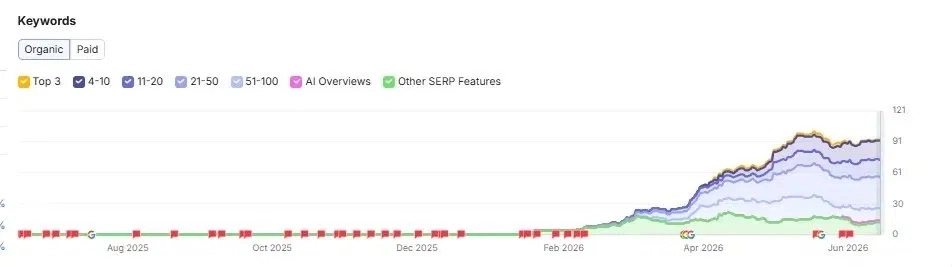
Total tracked keywords: 91 to 121 in the active range
Top 3 positions: Appearing from April 2026 onwards
AI Overview appearances: Present in SERP features
The ranking growth pattern matches the GSC data exactly. Flat from the build period through December 2025. First meaningful keyword appearances in January and February 2026 as Google’s crawl cycles caught up with the new site. Significant growth beginning February 2026. Explosive growth from April 2026 onwards, with top-three positions starting to appear.
Top-three position appearances for a local niche keyword represent the highest-value search real estate for a local business. The customers who click on position one, two, and three results are further along the decision journey than those browsing broadly. They have a specific need and they are ready to contact a service provider.
The ranking distribution shows strength across all position bands — Top 3 growing, positions 4 to 10 strong, positions 11 to 50 providing a solid and expanding base. This distribution indicates an organic, compound growth pattern rather than a spike-and-fade movement that often follows low-quality optimization.
Google Business Profile — 6 Month Interaction Data
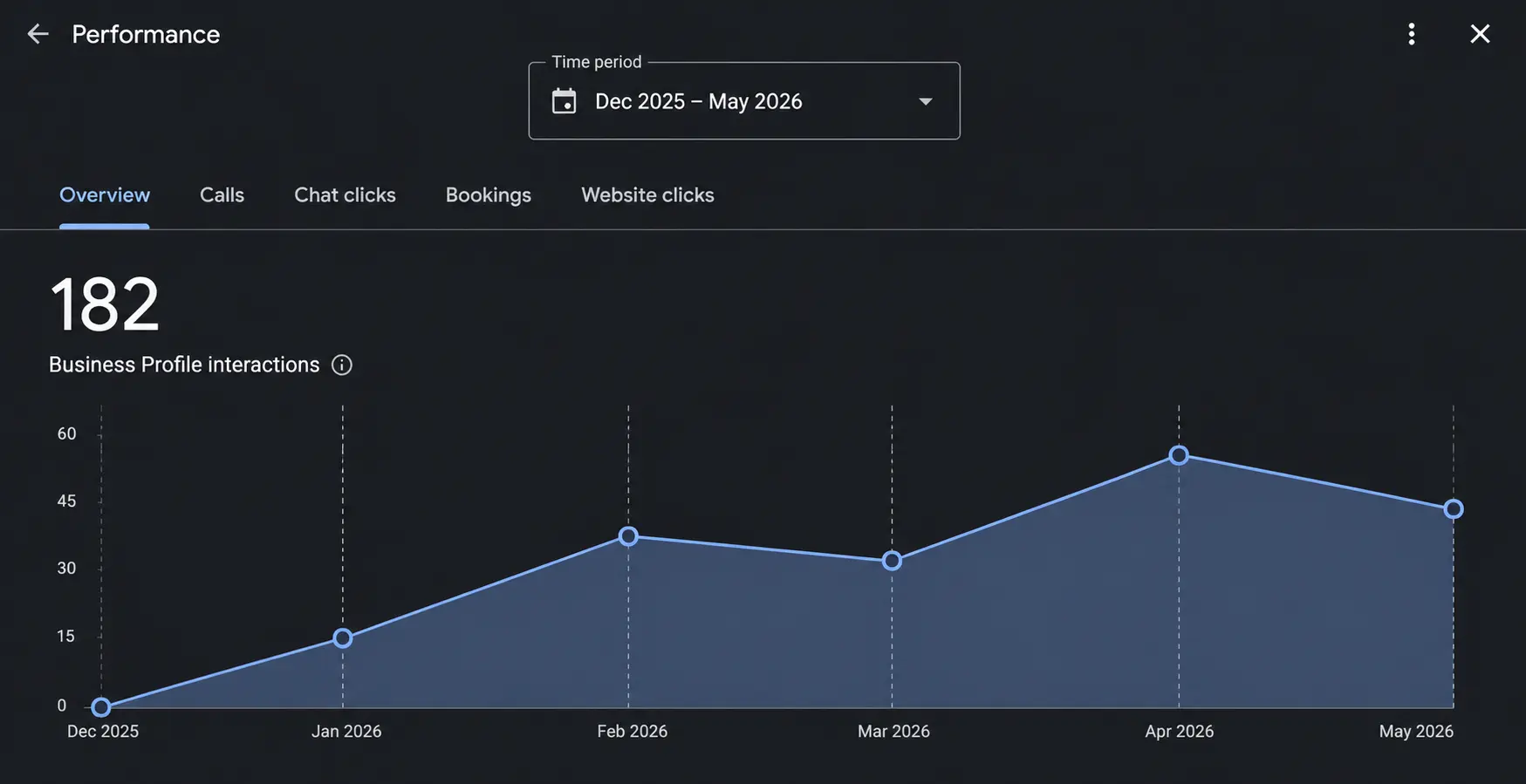
| Month | Interactions |
| December 2025 | 0 |
| January 2026 | 15 |
| February 2026 | 38 |
| March 2026 | 33 |
| April 2026 | 50 |
| May 2026 | 38 |
| Total | 182 |
The GBP data tells a different story from the GSC data and together, they tell the complete picture.
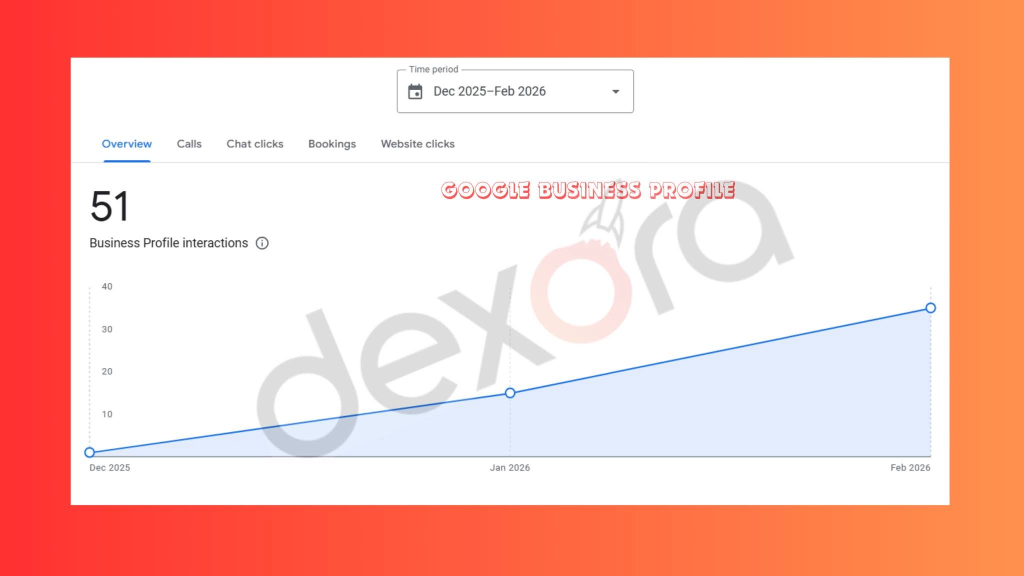
Zero interactions in December 2025. Fifteen by January. Thirty-eight by February. A peak of 50 interactions in April. Consistent every single month with no drop back to zero at any point.
GBP interactions are not vanity metrics. Each interaction represents a real person taking a real action — a phone call, a website click from the Maps listing, a booking request, a chat initiation, a direction request. These are customers who found the business on Google Maps and took a step toward making contact. For a local trade business in a city like Melbourne, these interactions are the direct pipeline to revenue.
The interaction types tracked calls, chat clicks, bookings, and website clicks span the full range of customer contact methods. The business was receiving enquiries through multiple channels simultaneously within two months of the GBP going live.
The April 2026 peak of 50 interactions in a single month followed by 38 in May indicates a stable, engaged level of map visibility rather than a one-off spike. The platform is working consistently and the interaction volume is building a floor that did not exist six months earlier.
AI Search Visibility — A 6-Month-Old Website Being Cited Across AI Platforms
This is the result that surprised us most when we reviewed the six months data.
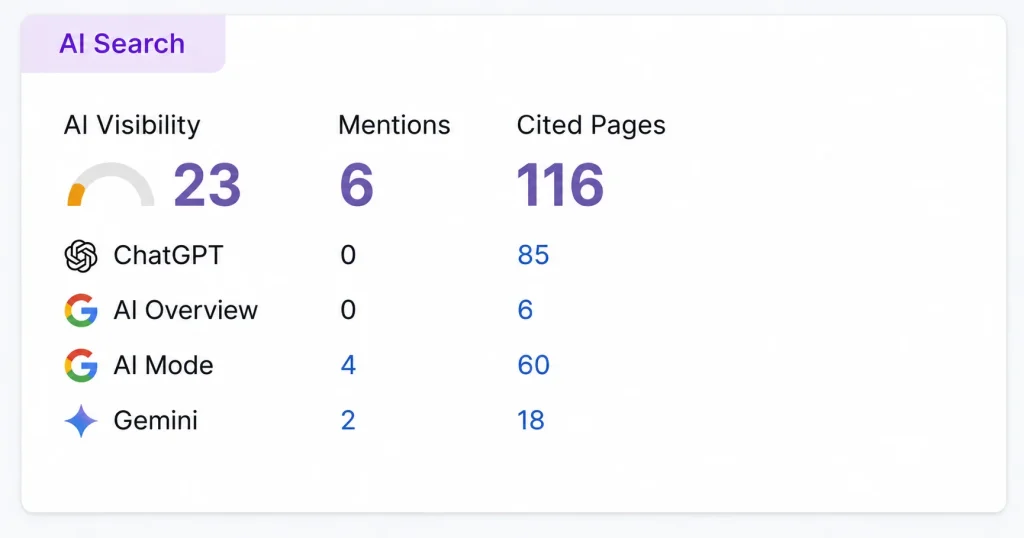
| Metric | Result |
| AI Visibility Score | 23 |
| Total Mentions | 6 |
| Total Cited Pages | 116 |
| Google AI Mode Mentions | 4 |
| Google AI Mode Cited Pages | 60 |
| Google AI Overview Cited Pages | 6 |
| Gemini Mentions | 2 |
| Gemini Cited Pages | 18 |
116 pages across AI platforms being cited for a website that was six months old at the time of measurement.
This result was not accidental. The technical foundation we built FAQPage schema on all relevant content, AI crawler access explicitly allowed in robots.txt, entity signals consistent across the entire web presence, content structured for direct factual answer extraction created the conditions for AI citation from launch. The results are the payoff of building correctly from day one rather than retrofitting AI optimization after the fact.
Google AI Mode is providing the strongest visibility with 4 active mentions and 60 cited pages. Gemini is adding 2 mentions and 18 cited pages. Google AI Overview has cited 6 pages directly. Combined, 116 pages from a six months old furniture restoration website in Australia are being pulled into AI-generated responses across multiple platforms.
When someone in Melbourne asks an AI system about furniture restoration services, this business is in the conversation. That is a first-mover advantage in a local niche that will compound with every month of continued operation.
Why This Result Is Significant
A furniture restoration business is not a SaaS company. It is not a technology brand with a large content team, a significant marketing budget, or years of accumulated domain authority. It is a local trade business serving a specific area with a specific craft skill.
This matters because it changes how most business owners think about what SEO can do for them.
The most common objection we hear from local trade businesses about investing in digital presence is that their industry is not digital — that their customers find them through word of mouth, through referrals, through existing relationships. That may have been true five years ago. It is demonstrably not true in 2026.
The Melbourne furniture restoration market in 2025 was a digital desert. Most businesses in the niche had either no website or a basic presence that had never been properly optimized. The competition for Google visibility in this specific local niche was not fierce. It was nearly absent.
That is the insight that shaped the entire strategy. When an underserved local niche meets a correctly built technical foundation, the compounding happens faster than in competitive markets because the competition for visibility is lower. You do not need to outrank established authorities. You need to be the first business in your niche to show up properly.
This business was that. From zero in November 2025 to the dominant digital presence in its Melbourne niche by May 2026. Not because we spent more than competitors. Because we built correctly from day one while most of the market had not built at all.
The Strategic Decisions That Drove the Results
Decision 1: Build the technical foundation before the content.
The website was not launched and then optimized. It launched with the optimization already in place. Schema markup, AI crawler access, Core Web Vitals, canonical tags, and sitemap configuration were all live on day one. This meant Google and AI systems could immediately access, index, and begin evaluating the site correctly without waiting for a technical audit to identify problems.
Decision 2: Treat local SEO and AI search as a unified system.
We did not run a local SEO campaign and then separately consider AI search. We built both simultaneously using the same underlying signals — entity consistency, schema markup, content structure, and crawl access — because the technical requirements overlap significantly. The AI search results at six months reflect this integrated approach.
Decision 3: Optimize for the niche, not just the geography.
Melbourne is a large city with significant search volume for many service categories. Furniture restoration is a niche within that city. We targeted the specific intersection of niche and geography — mid-century modern furniture restoration in Melbourne’s design-conscious suburbs — rather than broad service category terms. This specificity produced faster ranking progress and more relevant traffic.
Decision 4: Make the GBP as complete as possible from day one.
Many businesses create a GBP and leave it incomplete. We treated it as a primary digital asset requiring the same attention as the website. Complete business information, optimized categories, service listings, image upload, Q&A responses, and review generation strategy implemented from launch. The result: 15 interactions in the first full month of operation.
What the Client Said
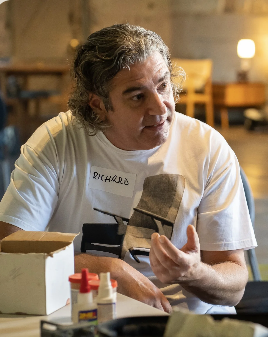
Richard Lloyd provided a video testimonial following the six-month results review. The core of his feedback: the website had produced real customer enquiries, real business conversations, and real restoration projects that came directly through Google and the GBP.
For a craftsman with 30 years of hands-on expertise who had never had a digital presence, the experience confirmed something he had suspected but not tested: the customers were already searching for exactly what he offered. They just could not find him. Once they could, they contacted him.
That is the simplest summary of what local SEO accomplishes when it is done correctly. It does not create demand. It captures demand that already exists and routes it to the right business.
The Timeline at a Glance
November 2025: Website built, GBP created, full technical SEO foundation implemented. Site launched with schema, AI crawler access, and Core Web Vitals optimized on day one.
December 2025: Near-zero GSC activity. Google crawling and indexing the new site. Zero GBP interactions. The invisible period that every new site goes through regardless of build quality.
January 2026: First keyword rankings appearing. GSC shows the initial curve beginning. 15 GBP interactions — the first real customer contacts.
February 2026: Ranking growth accelerates. 38 GBP interactions. Both organic and local signals compounding.
March 2026: Continued organic growth. 33 GBP interactions. Rankings spreading across the position 4 to 20 band.
April 2026: Top 3 position rankings begin appearing. 50 GBP interactions in peak month. Keyword growth accelerating sharply.
May 2026: 107,000 total impressions to date. 1,210 total clicks. 182 total GBP interactions. Daily impressions reaching 2,500 to 3,800. AI citations confirmed across Google AI Mode, Google AI Overviews, and Gemini. The six months review reveals a business that is now the dominant digital presence in its Melbourne niche.
What This Means for Local Trade Businesses
Most local trade businesses in Australia and across the USA, UK, and Europe are sitting in the same position Richard Lloyd was in November 2025. Excellent at the work. Invisible online. Losing customers every day to businesses that are less skilled but better ranked.
The data from this case study makes the opportunity explicit.
A niche local business in a market with limited digital competition can go from zero to six figures Google impressions in six months. It can establish AI search citations in less than six months. It can generate consistent, monthly growing Google Maps interactions from the first month of operation.
None of this requires paid advertising. None of this requires an existing audience or domain authority. It requires building correctly from the start and maintaining the technical foundation as the site grows.
The window for this specific opportunity — building a local digital presence while the niche competition has not yet done so it closes gradually as more businesses invest in SEO. The businesses that build now compound their advantage through every month of domain age, content depth, and review accumulation. The businesses that wait lose ground every month they delay.
Frequently Asked Questions
Q: How quickly can a new website start ranking on Google?
A new website built with proper technical SEO foundations typically starts showing initial rankings within 4 to 8 weeks of launch. The Mid Century Restoration website built with full technical foundations on day one showed first keyword appearances within 6 to 8 weeks. Significant ranking growth typically begins between months 2 and 4 as Google builds confidence in the new domain. For a detailed explanation of the timeline see our guide on how long SEO takes.
Q: Is this result typical for local trade businesses?
The specific numbers depend on niche competition and market size. A local furniture restoration business in Melbourne in a niche with minimal digital competition will compound faster than a business in a highly competitive local service category. The pattern — strong foundation producing strong compound growth in an underserved niche — is repeatable. The exact numbers vary. For context on what drives these outcomes see our Local SEO Guide.
Q: What is a Google Business Profile interaction and why does it matter?
A GBP interaction is a measurable action taken by a Google Maps user on your business listing — a phone call, website click, booking request, direction request, or chat initiation. Each one represents a real person taking a step toward contacting your business. 182 interactions in six months for a new GBP listing in a niche trade category means real customer enquiries that would not have existed without the listing. For the full local SEO strategy see our Local SEO Services page.
Q: Why is the AI search visibility significant for a local business?
AI search systems including ChatGPT, Google AI Mode, and Gemini are increasingly where customers ask service-related questions before making contact decisions. A business appearing in AI recommendations for relevant queries in its local market has a visibility advantage that most competitors in local niches have not yet established. Getting 116 pages cited across AI platforms in six months is a first-mover advantage that builds with every additional month of domain age and content depth. For the technical foundation behind AI visibility see our AI Search SEO Services.
Q: What would you have done differently or what comes next for this client?
The foundation is working. The priority for the next six months is deepening the content cluster — more specific service pages, more location-specific content targeting Melbourne suburbs, more FAQ content to extend AI citation coverage. The 8.9 average position has room to move toward position 4 to 5 as domain authority builds, which would significantly increase the click-through rate from existing impressions. The GBP review acquisition strategy continues to push toward the 50-plus reviews mark that typically unlocks sustained local pack presence.
Run a Free Audit of Your Website
If you run a local trade or service business and your customers cannot find you on Google, the situation is fixable.
The first step is understanding exactly where your website stands right now.
Run a free complete audit at allinoneseoaudit.com — it covers seven dimensions including technical SEO, Core Web Vitals, local SEO, AI search visibility, and schema markup in 60 seconds.
If you want to understand what the same approach could produce for your specific business, book a free 30-minute strategy call at dexoradigital.com/consultation.
Related Case Studies and Reading
Keentel Engineering — 81 to 718 Keywords and 8,119 AI Citations — The full story of a technical standards company outranking NERC.com and IEEE.org in 15 months.
56% Click Increase in 28 Days From Technical Fixes Alone — What pure technical SEO implementation produces without any new content.
Awayzing.no — From 7 to 79 Referring Domains With AI Citations — How a Norwegian travel platform established AI search visibility across three platforms.
Local SEO Guide — The complete strategic framework behind every local SEO engagement.
How to Rank on Google Maps 2026 — The specific GBP and local signal strategy that drove 182 interactions in 6 months.
Local SEO Services — Our full service offering for local businesses.
Technical SEO Services — The technical foundation behind every result in this case study.
Taqweem Ahmad is the Founder of Dexora Digital, a full-stack SEO and AI search optimization agency serving businesses across the USA, UK, Australia, and Europe. 500+ SEO audits delivered. 100+ US businesses ranked on Google Maps. Top Rated on Upwork with 100% Job Success Score.
Free audit: allinoneseoaudit.com | Strategy call: dexoradigital.com/consultation | AI checker: aiagentchecker.net