


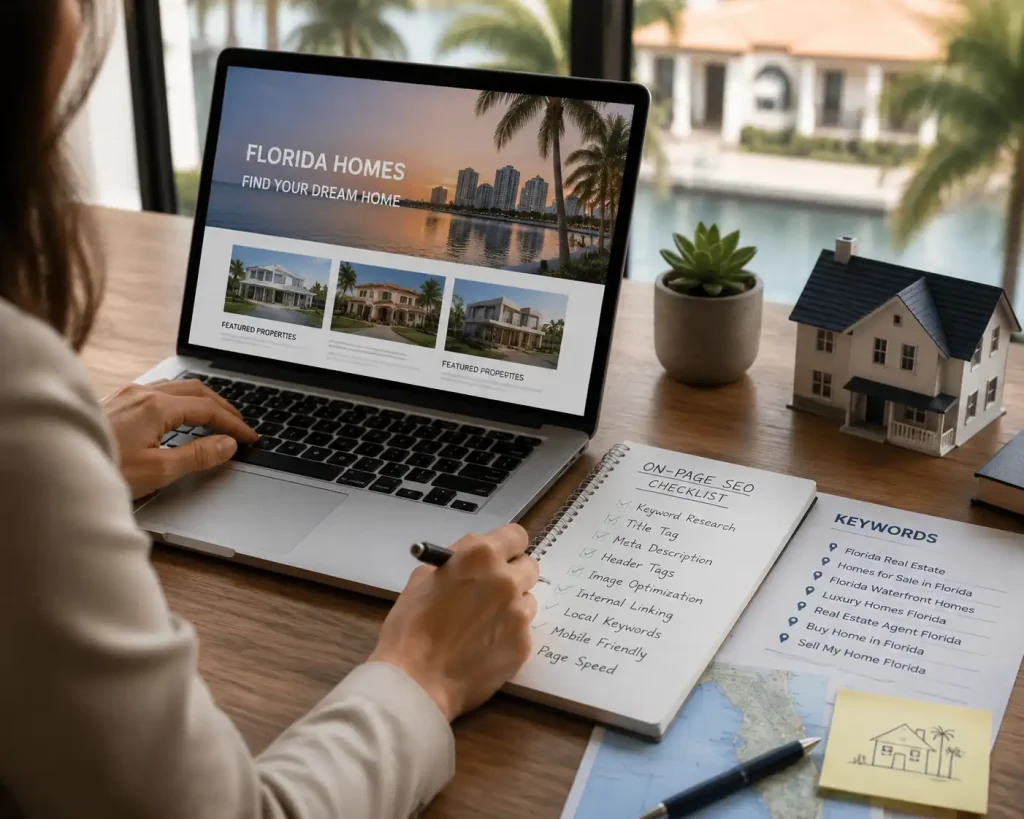
We optimize the content and structure of your real estate website so every page targets the right keywords and matches what buyers and sellers are actually searching for.
What On-Page SEO Means for Real Estate Websites
On-page SEO is the process of optimizing individual pages on your website, including content, headings, meta tags, and internal links, so they rank for the specific keywords your clients search. For real estate agents, this means neighborhood and listing pages built around real search intent rather than generic descriptions.
We have seen firsthand that real estate websites with strong technical performance and citations still underperform when their actual page content fails to match what buyers and sellers are searching for. A page that doesn’t directly answer a client’s question, even one that loads fast and is properly indexed, struggles to rank against competitors with sharper, more targeted content.
Why On-Page SEO Matters for Florida Real Estate Agents
Florida has strong competition for real estate searches across Miami, Tampa, and Orlando. Generic pages that simply list “homes for sale” without targeting specific neighborhood keywords lose visibility to competitors with pages built around exact buyer and seller search terms.
We prioritize a strategy that aligns every page’s content, headings, and structure with the specific keywords and questions clients use, rather than writing broad content and hoping it ranks. Our how to write SEO content that ranks guide covers the core principles behind this approach.
On-page SEO directly affects:
- Whether your pages match the specific search intent behind buyer and seller queries
- How clearly Google understands what each page is about
- Click-through rates from search results based on meta titles and descriptions
- Internal linking structure that distributes ranking authority across your site
Core On-Page SEO Services We Provide

Our approach addresses every element that affects how well individual pages perform in search. Our how to write SEO content that ranks guide reflects the content principles we apply to every page we optimize.
- Keyword Research and Mapping — Identifying the exact terms buyers and sellers use and assigning them to the right pages
- Content Optimization — Rewriting or restructuring page content to directly address search intent
- Meta Title and Description Optimization — Crafting click-worthy, keyword-aligned meta tags for every page
- Header Structure and Formatting — Organizing content with clear H1, H2, and H3 tags that improve readability and relevance
- Internal Linking Strategy — Connecting related pages to strengthen topical authority and crawlability
How We Approach On-Page SEO for Real Estate Websites
Real estate websites often have neighborhood pages written years ago that no longer reflect how buyers and sellers actually search today. We start by mapping the keywords clients currently use against your existing pages to identify gaps and outdated content.
This process often reveals pages targeting the wrong keywords entirely, or pages competing against each other for the same search terms. Our long-tail keywords guide explains why targeting more specific phrases often outperforms broad, generic terms for real estate searches.
Practical Steps We Take Before Optimization
Before rewriting any content, we always advise clients to complete a full content audit. This step prevents wasted effort on pages that need restructuring versus a complete rewrite.
- Mapping current keyword rankings against actual search intent
- Identifying thin or outdated content across neighborhood pages
- Reviewing meta titles and descriptions for keyword alignment
- Checking internal linking structure between related pages
This groundwork determines whether a page needs minor adjustments or a complete content rebuild, which significantly affects timeline and resource allocation.
Common On-Page SEO Mistakes Real Estate Websites Make
Many real estate websites make on-page mistakes that quietly limit their ranking potential.
- Writing generic neighborhood descriptions instead of content targeting specific keywords
- Missing or duplicate meta titles and descriptions across pages
- Poor header structure that confuses both readers and search engines
- Weak internal linking that fails to connect related neighborhood pages
- Targeting broad keywords instead of specific, high-intent search phrases
We always advise clients to fix these foundational content issues first, since strong technical performance cannot fully compensate for pages that don’t match what buyers and sellers are actually searching for.
Why Choose Dexora Digital
We focus on building on-page SEO strategies that get Florida real estate pages ranking for the searches that actually drive leads.
- Deep experience writing and optimizing content for real estate agents
- Keyword strategy built around real buyer and seller search behavior
- Transparent reporting on keyword rankings and page performance
- Proven content frameworks that balance SEO and readability
- A strategy built around your actual service areas, not generic templates
FAQs
How Long Does On-Page SEO Take to Show Results for a Real Estate Website?
Most real estate websites see measurable ranking improvements within 60 to 90 days of content optimization, with continued gains as Google fully reindexes updated pages. Active market seasons often accelerate visibility gains.
Does On-Page SEO Matter if My Website Already Ranks for Some Keywords?
Yes. Even ranking pages often have room for improvement, and refining content can help you move from page two to page one, or from the bottom of page one to the top.
How Many Keywords Should Each Neighborhood Page Target?
Each page should focus on one primary keyword along with a small set of closely related terms. Trying to target too many unrelated keywords on one page typically weakens its relevance for all of them.
Will Rewriting My Content Hurt My Existing Rankings?
When done correctly, content optimization improves rankings rather than hurting them. We carefully preserve what’s working while improving the elements that are holding pages back.
Is On-Page SEO Different From Technical SEO?
Yes. On-page SEO focuses on content, keywords, and page structure, while technical SEO addresses site speed, crawlability, and backend performance. Both work together for full ranking potential.
Ready to Optimize Your Pages for Real Search Intent
On-page SEO determines whether your pages actually match what buyers and sellers are searching for. We build content around real search intent, not generic templates. The result is stronger rankings, more relevant traffic, and more leads across Florida.
Get your free SEO audit or book a call at calendly.com/dexora/30min.