



Most local SEO advice online is written for the US market and applied everywhere else without a second thought. We see this constantly with Australian and Canadian clients who arrive having already tried a US-focused checklist that quietly underperformed.
The tactics are not wrong. They are just incomplete once you cross the border. Below is what we have found actually changes when we run local SEO for Australia and Canada, and why treating either market as a smaller version of the US costs businesses visibility they should already have.
Why “Local SEO Australia” Is not Just US Local SEO With a New Flag
The core mechanics of Google’s local algorithm proximity, relevance, and prominence are the same everywhere. What changes is the data Google trusts to establish those signals, and that data looks different once you leave the US.
We prioritize a strategy that starts with the local search ecosystem itself, not the tactic list. Directory authority, review platform behavior, and even how addresses are formatted all shift country to country, and each one feeds directly into how Google ranks a business locally.
Ignore that shift and a fully optimized-by-US-standards profile still underperforms, simply because the signals it relies on carry less weight in the market it’s actually competing in. This is the exact gap our local SEO services are built to close for businesses outside the US.
Google Business Profile: Small Differences That Change Outcomes
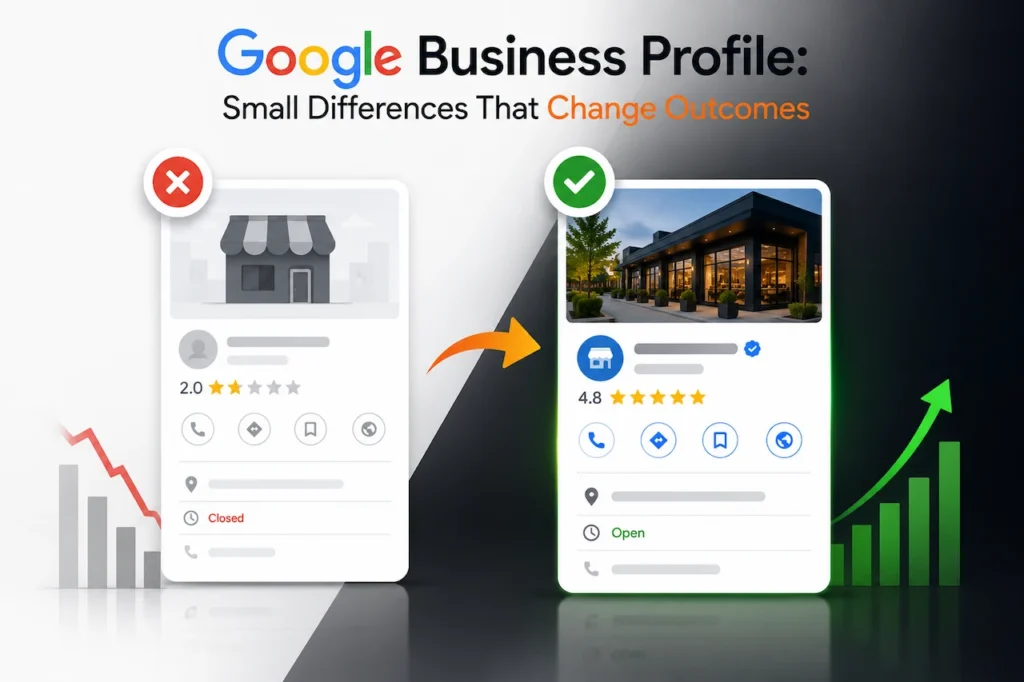
Google Business Profile is the same platform in every country, but the details businesses get wrong are consistently market-specific.
- Category selection matters more in smaller markets. With fewer competitors per category in most Australian and Canadian cities, an imprecise primary category has an outsized effect on which searches a profile even surfaces for.
- Service area setup needs to match real coverage, not ambition. We have seen firsthand how Australian trades businesses list service areas covering entire states when actual delivery is limited to two or three metro regions this dilutes relevance rather than expanding it.
- Bilingual profiles in Canada require deliberate setup. Businesses operating in Quebec, or serving bilingual audiences elsewhere in Canada, need French-language business descriptions and posts configured correctly rather than left to auto-translation.
- Phone number formatting affects trust signals. Australian and Canadian number formats differ from US formatting, and inconsistency between the website, GBP listing, and directories weakens the NAP (Name, Address, Phone) consistency Google checks for.
Getting these details right is not optional polish. In lower-competition local markets, they are often the difference between ranking in the map pack and not appearing at all.
Local Citations & Directories That Actually Move Rankings
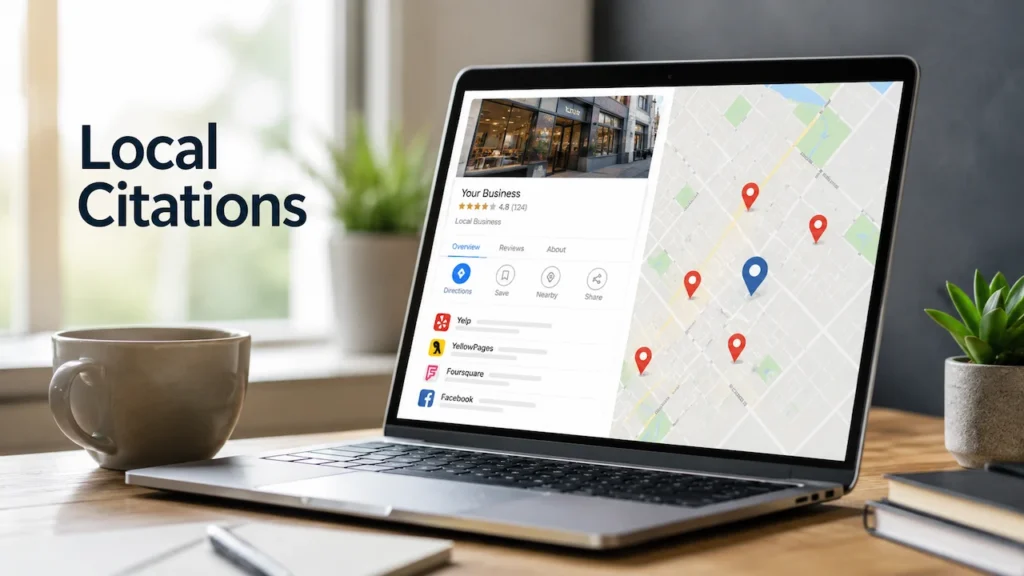
US local SEO leans heavily on directories like Yelp and the Better Business Bureau. Neither carries the same weight in Australia or Canada, and building citations there instead of on the directories that actually matter locally wastes budget without moving rankings.
For Australian businesses, we always advise clients to prioritize:
- True Local and Yellow Pages Australia, which remain trusted citation sources for Google’s local algorithm
- Local Chamber of Commerce listings, particularly for regional and suburban businesses
- Industry-specific Australian directories relevant to the business category
For Canadian businesses, the priority list looks different again:
- Yelp Canada, which carries genuine local authority north of the border unlike its declining influence in parts of the US
- Canada411 and Yellow Pages Canada for baseline NAP consistency
- Provincial and municipal business directories, which matter more in Canada’s more regionally fragmented market
The underlying principle is the same in both markets: citation quality beats citation quantity, and quality means the directories real local customers and Google both already trust. We applied this exact citation-first approach for an Australian digital agency we helped scale through organic search, where local authority mattered more than volume.
Map Pack Competition Looks Nothing Like the US
US local SEO case studies often describe fighting for map pack visibility against dozens of established competitors in the same category. That level of saturation is rare outside major Australian and Canadian metro areas.
This changes strategy in a real way. In many regional Australian towns and mid-sized Canadian cities, ranking in the top three map pack results is achievable with a fraction of the review volume and backlink profile a comparable US business would need. We saw this play out directly with a Melbourne renovation business we ranked in the local map pack, where a much leaner citation and review profile than a comparable US market would require was enough to secure top positions.
The tradeoff is that fewer total searches means less room for error. A poorly optimized profile in a low-volume market can sit invisible for months with no signal that anything is wrong, because there simply isn’t enough search volume to expose the problem the way a high-volume US market would.
Language, Spelling & Cultural Signals Google Actually Reads
Search intent language differs enough between the US, Australia, and Canada that content built around US spelling and terminology underperforms for local queries in the other two markets.
Australian English uses “organise,” “colour,” and “centre” where US content defaults to “organize,” “color,” and “center.” Canadian English mixes both conventions depending on region and industry, which means content needs to match what the target audience not a style guide actually searches and reads.
Beyond spelling, service terminology itself shifts. What’s marketed as a “realtor” in the US is more commonly a “real estate agent” in Australia. A “contractor” doing home renovation work is frequently called a “tradie” in Australian search behavior and industry content. Content that ignores this mismatch reads as foreign to the exact local audience it’s meant to convert and Google’s relevance signals pick up on that disconnect too.
Common Mistakes We See When US Tactics Get Applied to AU & CA
The same handful of errors show up across nearly every Australian and Canadian business that has previously worked with a US-focused agency or DIY approach:
- Building citations on high-authority US directories that carry little to no local ranking weight in AU or CA markets
- Leaving Canadian bilingual requirements unaddressed, particularly for businesses operating in or near Quebec
- Using US spelling and terminology across website copy and GBP descriptions, which reads as inauthentic to local searchers
- Underestimating how achievable map pack rankings are in lower-competition regional markets, and under-investing as a result
- Formatting addresses and phone numbers inconsistently across the website and directory listings, weakening NAP trust signals
None of these are difficult to fix individually. Left unaddressed together, they compound into a local SEO strategy that looks complete on paper but never earns the visibility it should in its actual market.
What This Means for Your Business
If your local SEO strategy was built or reviewed using US-centric guidance, it’s worth checking whether your GBP categories, citation sources, and content language actually match how your local market searches — not how a generic checklist assumes it does.
Our local SEO services are built specifically around Australian and Canadian search behavior, from citation strategy through to map pack optimization, rather than adapted from a US playbook after the fact. You can explore how we structure this work across other regions and industries in our industries and locations hub.
Why Choose Dexora Digital for Local SEO in Australia & Canada
We build local SEO strategy around how Australian and Canadian search markets actually behave, not a US template with the currency symbol changed.
- Citation strategy built on the directories that carry real local authority in AU and CA, not US defaults
- Bilingual GBP and content setup for Canadian businesses operating in French-speaking or mixed-language markets
- Map pack strategy calibrated to the competition level of your specific city or region, not a saturated US metro
- Content written in the spelling, terminology, and tone your local audience actually searches with
- Direct access to the team executing the work, with reporting tied to local visibility and lead volume
Conclusion
Local SEO for Australia and Canada shares its foundations with the US, but the details that actually move rankings citation sources, bilingual requirements, spelling, and competition levels are different enough that a copied US strategy consistently underdelivers. Businesses that adjust for these differences see faster, more consistent map pack visibility. If your current strategy hasn’t accounted for any of this, book a free local SEO audit and we’ll show you exactly where the gap is.
Frequently Asked Questions
Is local SEO in Australia the same as local SEO in the United States?
The core ranking factors remain proximity, relevance, and prominence. However, the directories, citation sources, language signals, and local data Google trusts are different in Australia.
Why can a US-focused local SEO strategy underperform in Australia or Canada?
A US-based checklist may overlook country-specific directories, address formats, phone number structures, spelling, and bilingual requirements. These missing local signals can reduce visibility even when the strategy appears complete.
Why is Google Business Profile category selection important in Australia and Canada?
In smaller local markets, an inaccurate primary category can significantly limit the searches for which a business appears. Choosing the most relevant category helps Google understand the business more precisely.
Should a service-area business list an entire state or province?
No. Service areas should reflect the locations the business genuinely serves. Listing overly broad regions can weaken local relevance instead of helping the business rank across more locations.
Do Canadian businesses need French content in their Google Business Profile?
Businesses operating in Quebec or serving bilingual audiences should add properly written French descriptions and posts. Relying only on automatic translation may produce inaccurate or unnatural content.
Why does phone number formatting matter for local SEO?
The phone number should use the correct Australian or Canadian format across the website, Google Business Profile, and directories. Inconsistent formatting can weaken NAP trust signals.
Which directories are important for Australian local SEO?
Australian businesses should prioritise True Local, Yellow Pages Australia, local chambers of commerce, and relevant industry-specific directories. These sources carry stronger local authority than many US-focused platforms.
Which citation sites matter for Canadian businesses?
Canadian businesses should focus on platforms such as Yelp Canada, Canada411, Yellow Pages Canada, and relevant provincial or municipal directories. The strongest citation sources are those trusted within the local market.
Is citation quality more important than citation quantity?
Yes. A smaller number of accurate listings on trusted local and industry directories is more valuable than many citations on irrelevant US platforms.
Is it easier to rank in the map pack in regional Australian or Canadian markets?
Regional towns and mid-sized cities often have fewer established competitors than major US or metropolitan markets. This can make top-three map pack visibility achievable with a smaller review and citation profile.
Why can low search volume make local SEO problems harder to detect?
In smaller markets, a poorly optimised profile may remain invisible for months without generating enough data to reveal the problem. Lower search volume leaves less room for incorrect categories, weak citations, or inconsistent business information.
Does Australian spelling matter in local SEO content?
Using terms such as “organise,” “colour,” and “centre” helps content match how Australian audiences search and read. US spelling may feel less relevant and can weaken engagement and conversion performance.
Does Canadian English require a different content approach?
Canadian English may use a mixture of British and American spelling depending on the region and industry. Content should follow the language the target audience actually uses rather than applying one fixed style.
Why should local SEO content use country-specific terminology?
Customers in Australia and Canada may search using different terms from US audiences. For example, Australians commonly use “real estate agent” and “tradie,” so locally familiar wording improves relevance and trust.
What are the most common local SEO mistakes in Australia and Canada?
Common mistakes include using US citation sites, ignoring Canadian bilingual requirements, applying US spelling, targeting overly broad service areas, and publishing inconsistent address or phone details.

Local SEO and AI Search (AEO & GEO) Specialist.
Building search visibility that converts into qualified demand.
Today, businesses need visibility on Google Maps and AI powered search and websites that actually convert visitors into leads. I am a Local SEO, AI Search & Conversion Rate Optimization (CRO) Specialist with 5+ years of hands on experience helping businesses turn underperforming websites into high converting growth engines. My work combines Local SEO, Technical SEO, Semantic SEO, GEO/AEO, and conversion focused landing page optimization to ensure brands are discoverable and profitable.
My Experience
I have delivered SEO and web growth projects across the US, UK, Australia, Canada, Finland, Germany, and the Czech Republic, working in industries such as local businesses (electrician, hvac, cleaning, Real estate, healthcare, B2B, eCommerce, SaaS, and environmental services.
Some Results
>> 200+ websites audited globally
>> specifically worked with 100+ local business (80% from USA)
>> 80+ websites improved through technical SEO & schema fixes
>> 20+ businesses featured in Google AI Overviews (SGE)
>> Multi million impression growth for eCommerce & SaaS brands
Book Free Consultation: calendly.com/dexora/30min