
The website you have right now is leaking traffic. We’ll show you exactly where.
Most businesses don’t have a ranking problem. They have a visibility problem they can’t see.
Broken redirects. Thin content sitting where authority content should be. Pages that load too slow for Google to bother waiting around. Schema markup that’s missing, malformed, or just gone. And now, a whole new layer: pages that AI search engines can’t read, can’t trust, and won’t cite.
An SEO audit finds every one of those problems before they cost you another lead. We do it for free, in 24-48 hours, and we don’t stop at the technical stuff we check whether your site is ready for Google, and whether it’s ready for ChatGPT, Gemini, and AI Overviews too.
What Is an SEO Audit?
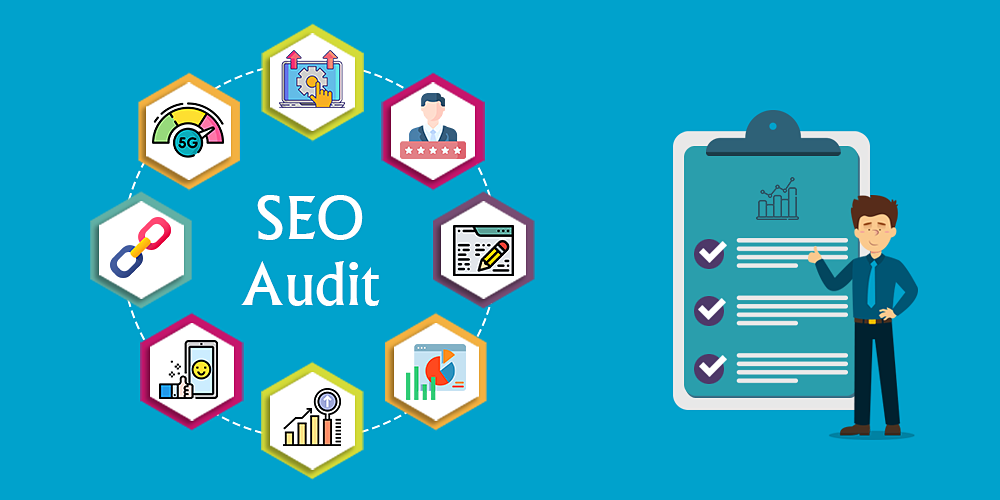
An SEO audit is a complete inspection of your website’s ability to be found, crawled, understood, and ranked by search engines — and increasingly, by AI search systems.
It looks at four layers:
- Technical health — can search engines crawl and index your site without friction?
- On-page quality — does each page clearly answer a real search query?
- Off-page authority — does the rest of the internet trust your domain?
- AI search readiness — can large language models extract, understand, and cite your content?
A good audit doesn’t just list problems. It ranks them by impact, tells you which ones are costing you traffic right now, and gives you a sequence to fix them in. That last part is the one most “free audit tools” skip entirely — they hand you a 40-page PDF and leave you to figure out what matters.
We don’t do that. Every audit ends with a prioritized action plan, not a dump of data.
Why Your Business Needs One (Even If Rankings Look “Fine”)
Rankings can look stable while traffic quietly erodes. Here’s how that happens:
- A core update shifts what Google trusts, and pages that used to rank for thin reasons start sliding — slowly enough that nobody notices until Q3 numbers come in.
- AI Overviews answer the question before the click happens. Your page might still rank #3, but if Google’s AI summary already gave the answer, that click never comes.
- Competitors fix their technical foundation while you don’t. SEO is relative. You don’t need to get worse to lose ground — you just need to stand still while someone else moves.
- Content rots. Statistics go stale, screenshots show old UI, “2024” sits in a title tag in the middle of 2026. Search engines notice. Users notice faster.
If you’ve never run a full audit, you’re flying on assumptions. If it’s been more than six months since your last one, you’re flying on outdated assumptions — which is worse.
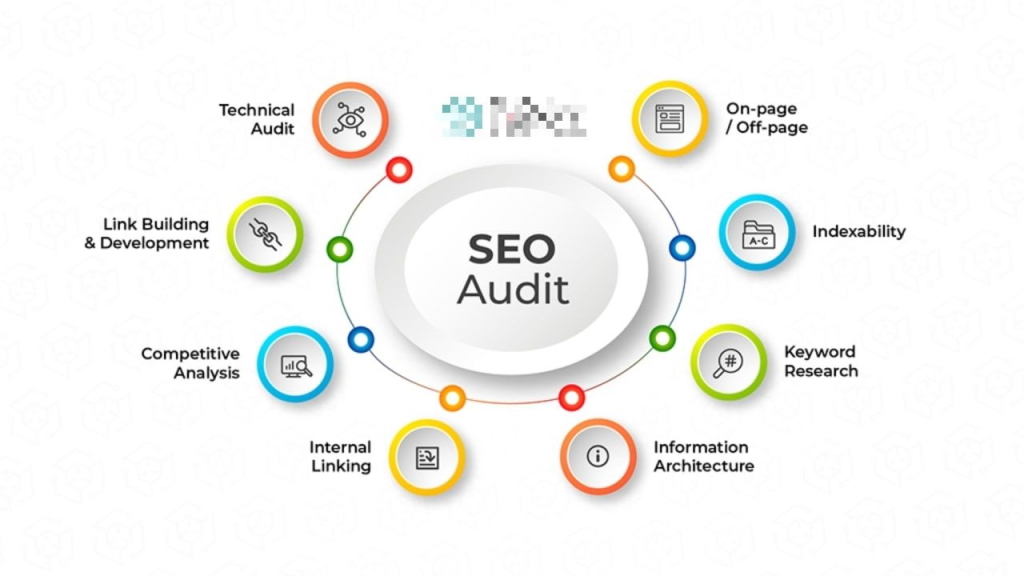
What’s Included in a Dexora SEO Audit
We don’t run one generic checklist and call it a day. Every audit covers:
Technical SEO
Crawlability, indexation status, XML sitemap accuracy, robots.txt issues, canonical tag conflicts, redirect chains, HTTPS/security setup, Core Web Vitals (LCP, INP, CLS), mobile usability, JavaScript rendering issues, and structured data validation.
On-Page & Content
Title tags, meta descriptions, heading structure, keyword targeting and cannibalization, content depth versus top-ranking competitors, internal linking architecture, image optimization, and content gaps competitors are exploiting that you aren’t.
Off-Page Authority
Backlink profile health, toxic link exposure, domain authority trajectory, brand mention coverage, and competitive link gap analysis.
Local SEO (When Applicable)
Google Business Profile optimization, citation consistency (NAP), local landing page coverage, review profile health, and Google Maps 3-pack ranking factors.
AI Search & GEO Readiness
This is the layer most agencies still ignore. We check whether your content is structured for extraction by ChatGPT, Perplexity, Gemini, and Google’s AI Overviews — schema markup, answer-first formatting, entity clarity, llms.txt setup, and citation-worthiness of your highest-value pages.
Types of SEO Audits We Perform
Different businesses need different depth. Here’s how we tailor the audit to you.
Technical SEO Audit
A deep infrastructure review for sites where the foundation itself is in question — crawl budget waste, indexation bloat, rendering problems, Core Web Vitals failures, and architecture issues that block growth no matter how much content you publish.
→ Read the complete technical SEO audit checklist
Local SEO Audit
For service businesses and multi-location brands competing on Google Maps and “near me” search. We check Google Business Profile health, citation accuracy, local landing page structure, and proximity ranking factors.→ See the full local SEO audit guide
Ecommerce SEO Audit
Built for stores with category pages, faceted navigation, product schema, and the duplicate-content traps that come with them. We check crawl budget waste from filtered URLs, product page templates, and conversion-blocking technical issues.
→ Explore the ecommerce SEO audit guide
Enterprise SEO Audit
For sites with thousands of pages, multiple subdomains, or international/multilingual setups. The priority shifts from individual page fixes to architecture-level decisions: crawl budget allocation, hreflang accuracy, and content governance at scale.
→ View the enterprise SEO audit guide
White Label SEO Audit (For Agencies)
Run your own agency and need audit capacity without hiring? We deliver fully white-labeled audits and reports under your brand your client never sees Dexora.
→ See how white label SEO audits work
AI SEO / GEO Audit
The newest layer, and the one growing fastest. We evaluate whether your content can be retrieved, understood, and cited by AI search systems separate from, but built on top of, traditional SEO fundamentals.
→ Read the AI SEO audit guide for 2026
Content Audit
For sites where the technical foundation is solid but the content isn’t pulling its weight. We map every page against search intent, identify cannibalization, and flag what to update, merge, or remove.
→ Learn the content gap analysis process
Our SEO Audit Process
Step 1 — Crawl & Data Collection We crawl your entire site using Screaming Frog, pull data from Google Search Console and Analytics, and run Core Web Vitals diagnostics.
Step 2 — Technical Diagnosis We identify every indexation, crawlability, and performance issue — then rank them by how much organic traffic they’re costing you.
Step 3 — Content & Keyword Mapping We compare your existing content against what’s actually ranking for your target keywords, including what AI Overviews are pulling answers from.
Step 4 — Competitive Benchmarking We pull the same data for your top 3-5 organic competitors so you know exactly what you’re up against, not just what’s wrong with your own site.
Step 5 — Prioritized Action Plan You get a report ranked by impact and effort — what to fix this week, what to schedule next month, and what can wait. No 60-page PDF with no order of operations.
Step 6 — Strategy Call We walk you through the findings live, answer questions, and outline what working together would actually look like — with zero obligation to continue.
What You Get: The Audit Report
Every Dexora SEO audit report includes:
- A prioritized issue list, ranked by traffic impact and fix effort
- Core Web Vitals scores with specific causes, not just numbers
- A full technical issue breakdown (crawl errors, indexation, redirects, schema)
- Content gap analysis against your top competitors
- Backlink profile summary and toxic link flags
- AI search readiness score — how citable your content is right now
- A 30/60/90-day action roadmap, not just a list
→ See a sample SEO audit report
SEO Audit Cost: What to Expect
Pricing depends on site size, complexity, and depth required. As a general guide:
- Small business sites (under 50 pages): Free initial audit, paid deep-dive audits typically start in the low hundreds of dollars
- Mid-size sites (50-500 pages): Mid-range pricing based on technical complexity and number of templates involved
- Enterprise sites (500+ pages, multi-region, or multilingual): Custom scoped pricing based on architecture complexity
We never charge for the initial audit. You see exactly what’s wrong with your site before you spend a dollar. → Read the full SEO audit cost and pricing guide
Who We Audit
Small businesses — service businesses, local shops, and growing brands that need to know what’s actually fixable with a limited budget.
→ SEO audit guide for small business
Law firms — a niche with its own compliance and trust-signal requirements.
Agencies — white-labeled audits that let you offer enterprise-grade diagnostics without building the capability in-house.
Enterprises — architecture-level audits for sites where one wrong template decision affects ten thousand pages.
Tools We Use
We don’t rely on a single tool’s opinion. Every audit cross-references:
- Screaming Frog for full-site crawling and technical diagnostics
- Google Search Console for real indexation and query data, straight from Google
- Semrush & Ahrefs for backlink analysis and competitive benchmarking
- PageSpeed Insights / CrUX data for real-world Core Web Vitals
- AI search testing across ChatGPT, Perplexity, and Google AI Overviews to check actual citation behavior, not theoretical readiness
→ Screaming Frog technical SEO audit walkthrough → Try our free all-in-one SEO audit tool
Real Results From Real Audits
Keentel Engineering came to us after a paid-ads strategy stopped scaling profitably. The audit found a technical foundation that was actively working against their content. After fixing it and building on top: a 92% increase in organic traffic, and keyword visibility climbing from 81 tracked terms to 718.
That’s not a fluke. That’s what happens when you fix the foundation before you build on top of it.
Start With a Free Audit
You don’t need to commit to anything to find out what’s wrong with your site. We’ll crawl it, diagnose it, and hand you a prioritized plan — free, in 24-48 hours.
Frequently Asked Questions
What is an SEO audit?
An SEO audit is a complete review of your website’s technical health, content quality, backlink profile, and — now — its readiness for AI search systems. It identifies what’s blocking your rankings and ranks those issues by impact.
How do I do an SEO audit?
Start by crawling your site with a tool like Screaming Frog, pull indexation and query data from Google Search Console, check Core Web Vitals, and compare your top pages against what’s actually ranking for your target keywords. Most businesses get further with a professional audit, since prioritizing dozens of issues correctly takes experience most in-house teams don’t have time to build.
How much does an SEO audit cost?
Our initial audit is free. Paid deep-dive audits vary based on site size and complexity — see our SEO audit pricing guide for specifics.
How long does an SEO audit take? We deliver the initial audit in 24-48 hours. Deeper enterprise audits with custom architecture review can take 1-2 weeks depending on site size.
What’s the difference between a technical SEO audit and a regular SEO audit?
A technical SEO audit focuses specifically on crawlability, indexation, site speed, and infrastructure. A full SEO audit also covers on-page content, backlinks, and increasingly, AI search readiness. Technical is one layer inside the full audit.
What’s the difference between technical SEO, on-page SEO, and off-page SEO?
Technical SEO is your site’s infrastructure — crawlability, speed, security, schema. On-page SEO is individual page optimization — keywords, headings, content quality. Off-page SEO is external trust signals — backlinks, mentions, reviews. Technical is the foundation the other two depend on.
Do I need an SEO audit if my rankings look fine?
Yes. Rankings can hold steady for months while traffic quietly declines underneath them — especially with AI Overviews now answering queries before a click happens. An audit catches problems before they show up in your traffic numbers.
What is a local SEO audit?
A local SEO audit reviews your Google Business Profile setup, citation consistency, local landing page coverage, and Maps ranking factors — specifically for businesses competing in local or “near me” search.
What is an ecommerce SEO audit?
An ecommerce SEO audit reviews category page structure, faceted navigation and filter URLs, product schema, duplicate content risks, and crawl budget allocation across large product catalogs.
What is an enterprise SEO audit?
An enterprise SEO audit addresses architecture-level issues across large sites — thousands of pages, multiple subdomains, international/multilingual setups — where the fixes are structural decisions, not individual page edits.
What is a white label SEO audit?
A white label SEO audit is performed by an outside provider (like Dexora) but delivered under your agency’s brand, so your clients never know it wasn’t done in-house.
What is an AI SEO audit?
An AI SEO audit checks whether your content can be found, extracted, and cited by AI search systems like ChatGPT, Perplexity, and Google AI Overviews — covering schema markup, answer-first content structure, entity clarity, and llms.txt configuration.
What’s the difference between an AI SEO audit and a regular SEO audit?
A regular SEO audit optimizes for ranking in a list of links. An AI SEO audit optimizes for being extracted and cited inside a generated answer. The technical foundation overlaps, but the content and structure requirements are different — AI systems need clear, quotable, well-attributed content more than they need keyword density.
What is a content audit?
A content audit maps every page on your site against search intent and performance data, identifying which pages to update, merge, consolidate, or remove — and where competitors are covering topics you aren’t.
What is an on-page SEO audit?
An on-page SEO audit reviews title tags, meta descriptions, heading structure, keyword targeting, internal linking, and content depth on a page-by-page basis.
Can I get a free SEO audit?
Yes. We provide a free initial audit for every business that requests one, delivered within 24-48 hours, with no obligation to continue working with us.
What tools do you use for SEO audits?
Screaming Frog for crawling, Google Search Console for indexation and query data, Semrush and Ahrefs for backlink and competitive analysis, PageSpeed Insights for Core Web Vitals, and direct AI search testing for GEO readiness.
How often should I run an SEO audit?
At minimum, every six months. If you’re in a competitive market, after every major Google core update, or any time you notice an unexplained traffic shift, run one sooner.
Do you offer white label SEO audits for agencies?
Yes. We deliver fully white-labeled audits and reports your agency can present as your own work.
See our white label SEO audit guide for details.
What’s included in your SEO audit report?
A prioritized issue list ranked by impact, Core Web Vitals diagnostics, full technical issue breakdown, content gap analysis, backlink summary, AI search readiness score, and a 30/60/90-day action roadmap.
Will an SEO audit tell me why my traffic dropped?
In most cases, yes. Traffic drops are almost always tied to a specific cause — a core update, a technical regression, lost backlinks, or content cannibalization. An audit isolates which one (or combination) is responsible.
Is a free SEO audit actually useful, or just a sales pitch?
A good one is genuinely useful on its own — you should walk away with real, actionable findings even if you never hire the agency that ran it. If a “free audit” only tells you to “contact us for more details,” it wasn’t a real audit.
Ready to see what’s actually happening on your site?

Local SEO and AI Search (AEO & GEO) Specialist.
Building search visibility that converts into qualified demand.
Today, businesses need visibility on Google Maps and AI powered search and websites that actually convert visitors into leads. I am a Local SEO, AI Search & Conversion Rate Optimization (CRO) Specialist with 5+ years of hands on experience helping businesses turn underperforming websites into high converting growth engines. My work combines Local SEO, Technical SEO, Semantic SEO, GEO/AEO, and conversion focused landing page optimization to ensure brands are discoverable and profitable.
My Experience
I have delivered SEO and web growth projects across the US, UK, Australia, Canada, Finland, Germany, and the Czech Republic, working in industries such as local businesses (electrician, hvac, cleaning, Real estate, healthcare, B2B, eCommerce, SaaS, and environmental services.
Some Results
>> 200+ websites audited globally
>> specifically worked with 100+ local business (80% from USA)
>> 80+ websites improved through technical SEO & schema fixes
>> 20+ businesses featured in Google AI Overviews (SGE)
>> Multi million impression growth for eCommerce & SaaS brands
Book Free Consultation: calendly.com/dexora/30min