

Search is experiencing its biggest transformation since Google became the dominant search engine.
For more than two decades, businesses followed a simple SEO formula:
Create content → Rank higher → Receive clicks → Generate traffic → Convert visitors
However, AI-powered search experiences are changing this model.
Google AI Overviews, AI Mode, and other generative search experiences now provide users with direct answers inside search results. Instead of clicking multiple websites, users can often understand a topic without leaving Google.
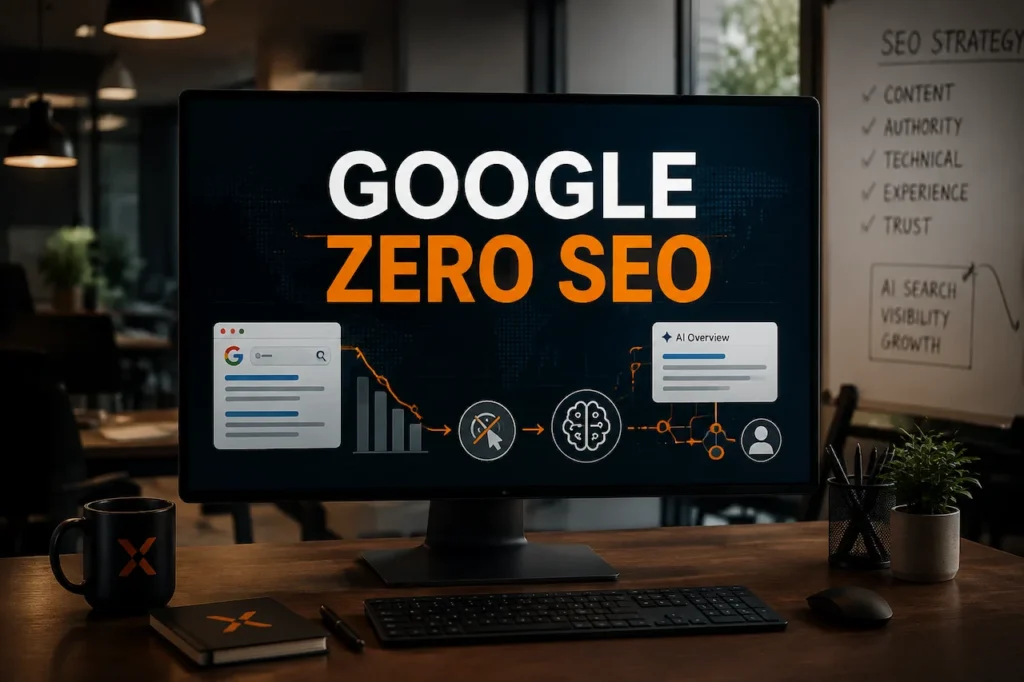
This change has created a new challenge called Google Zero SEO.
Google Zero SEO describes the shift from traditional search traffic toward AI-powered search visibility, where businesses compete not only for clicks but also for mentions, citations, and recommendations inside AI-generated answers.
This does not mean SEO is disappearing.
SEO is becoming broader.
Businesses now need visibility across:
- Traditional Google results
- AI Overviews
- AI search platforms
- Answer engines
- Brand recommendation systems
Modern businesses need strategies like AI Search Optimization to improve how search engines and AI systems understand, interpret, and present their information.
Google has confirmed that AI Overviews and AI Mode rely on existing Search systems. Pages must be indexed and eligible for normal Search results before they can appear as supporting sources in AI experiences. Google also states that traditional SEO fundamentals remain important, including crawlability, internal links, helpful content, and strong page experience.
The future question is no longer:
“How do we rank number one?”
The new question is:
“How do we become one of the trusted sources that Google and AI systems recommend?”
This guide explains what Google Zero SEO means, why AI Overviews are changing search behavior, what competitors are covering, and how businesses can prepare for the AI search era.
What Is Google Zero SEO?
Google Zero SEO is the evolution of SEO caused by AI-generated answers reducing traditional website clicks while increasing the importance of search visibility, authority, and AI citations.
The term “Google Zero” describes a possible future where some searches produce almost no organic clicks because users receive complete answers directly within Google’s interface.
This shift is mainly caused by:
- AI Overviews
- AI Mode
- Featured snippets
- Knowledge panels
- Direct answers
- Generative search experiences
Previously, the search journey looked like:
User searches → Google displays websites → User clicks a website
Today, it increasingly looks like:
User searches → Google generates an answer → User decides whether additional sources are needed
For example:
A user searches:
“What is the future of SEO with AI?”
Previously:
- User opens 5–10 articles
- Compares information
- Forms an opinion
With AI search:
- Google summarizes the topic
- Provides key points
- Shows supporting sources
This means businesses must optimize beyond rankings.
They need to become:
- Trusted information sources
- Recognized entities
- Citable brands
- Experts in their industry
How Google Zero Works
To understand Google Zero SEO, we need to understand how search has evolved.
Traditional Google Search
Traditional SEO works around ranking webpages.
The process:
Search query → Search results → Website visit → Conversion
Businesses focused on:
- Keyword optimization
- Rankings
- Click-through rates
- Organic traffic
Zero-Click Search
Zero-click searches existed before AI.
Google already provided answers through:
- Featured snippets
- Knowledge panels
- Calculator results
- Weather results
- Local business information
The user receives information without visiting a website.
AI Overview Search
AI Overviews expand this concept.
Instead of displaying one answer box, Google creates an AI-generated summary using information from different sources.
For example:
Search:
“How can businesses improve AI visibility?”
An AI Overview may provide:
- Definition
- Recommended steps
- Industry examples
- Supporting websites
Google explains that AI Overviews are designed to help users understand complex topics faster while still connecting them with relevant web sources.
This creates a new SEO opportunity:
A website may not receive every click but can still gain:
- Brand exposure
- Authority
- Citations
- Qualified visitors
Why AI Overviews Are Changing SEO
AI Overviews are changing how businesses measure search success.
The old SEO measurement model:
- Rankings
- Traffic
- Clicks
The new visibility model:
- AI mentions
- Citations
- Brand searches
- Search presence
- User trust
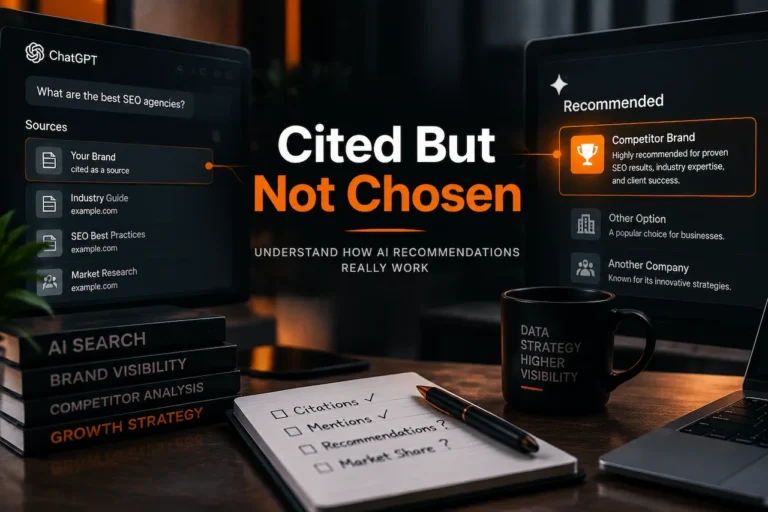
A page ranking well but never being selected by AI systems may lose visibility opportunities.
This is why businesses need to understand Generative Engine Optimization (GEO) — the process of improving how brands appear in AI-generated responses across modern search experiences.
Impact on Publishers and Informational Websites
The biggest early impact is being seen on websites dependent on informational search traffic.
Examples:
- News websites
- Affiliate websites
- Recipe websites
- Educational blogs
Industry reports have highlighted concerns that AI-generated summaries can reduce referral traffic because users may receive answers directly inside search results. Google argues that AI search experiences can also create higher-quality visits when users choose to explore source websites.
However, the impact depends on the business model.
A publisher relying only on informational clicks faces a different challenge than a local service business building customer relationships.
Google Zero SEO vs Traditional SEO
The biggest change in search is that businesses are no longer competing only for rankings.
They are competing for visibility across multiple search experiences.
Traditional SEO focused on:
- Ranking positions
- Organic clicks
- Keyword rankings
- Website traffic
Google Zero SEO focuses on:
- Being selected as a trusted source
- Appearing in AI-generated answers
- Building brand authority
- Earning citations
| Traditional SEO | Google Zero SEO |
|---|---|
| Rank a webpage | Become a trusted information source |
| Target individual keywords | Build topic and entity authority |
| Measure clicks and traffic | Measure visibility and citations |
| Optimize for search results | Optimize for search + AI answers |
| Focus on rankings | Focus on recommendation potential |
This does not mean traditional SEO is no longer important.
Google has confirmed that AI Overviews and AI Mode continue to rely on existing Search systems. Strong technical SEO, helpful content, indexing, internal linking, and clear information architecture remain important foundations.
Businesses should think of modern search as:
SEO + AI Search Optimization + Generative Engine Optimization
How Google AI Overviews Choose Sources
One of the biggest questions businesses have is:
Why does Google AI Overview cite my competitor but not my website?
The answer is that AI Overview visibility is not only about ranking position.
Google AI Overviews use information from Google’s Search index and combine multiple sources to generate responses. Pages must already be indexed and eligible for Google Search to become potential supporting sources.
To improve your chances of being selected, your content needs several important qualities.
1. Your Content Must Be Indexed and Accessible
Before worrying about AI visibility, businesses need a strong technical foundation.
A page cannot appear in AI-generated answers if Google cannot properly crawl, understand, and index it.
Common technical problems that limit visibility:
- Noindex tags
- Poor internal linking
- Crawl issues
- Duplicate content
- Slow pages
- Weak site structure
Businesses should regularly perform a detailed SEO audit to identify technical problems that prevent important pages from gaining visibility.
2. Content Must Answer Questions Clearly
AI systems need information that is easy to understand.
Compare these examples.
Weak:
Search engines have changed significantly because of technological advancements.
Strong:
Google Zero SEO describes the reduction of organic clicks caused by AI-generated answers appearing directly in search results.
The second example gives AI systems a clear definition they can understand and connect with the user’s query.
AI Overview-focused content commonly performs better when it uses:
- Clear definitions
- Direct answers
- Question-based headings
- Structured sections
- Supporting examples
3. Build Topic Authority Instead of Single Articles
A single article rarely creates strong topical relevance.
Google and AI systems understand relationships between:
- Topics
- Entities
- Brands
- Supporting content
For example, a website discussing AI search should not only publish one article about Google Zero.
It should also cover:
- AI Search
- GEO
- AI Overviews
- LLM optimization
- Semantic search
- Search behavior changes
This connected approach is known as topical authority SEO.
A strong topical cluster helps search engines understand:
“What does this website actually specialize in?”
What Content Gets Cited in AI Overviews?
Competitors that appear in AI-generated answers usually cover topics more completely.
They do not only explain:
“What is Google Zero?”
They also answer:
- How does Google Zero work?
- Why are clicks declining?
- How do AI Overviews choose sources?
- How can businesses appear in AI answers?
- What is the future of SEO?
- How does GEO improve AI visibility?
AI systems need complete context.
1. Answer-First Content Structure
AI systems prefer content that provides useful information quickly.
A strong structure:
Question
What is Google Zero SEO?
Direct Answer
Google Zero SEO describes how AI-powered search experiences reduce traditional clicks while increasing the importance of visibility and citations.
Explanation
Detailed supporting information.
This format helps both users and search systems understand the page.
2. Original Research and Data
Generic explanations are easy to reproduce.
Original insights create stronger authority.
Examples:
- Industry research
- Case studies
- Customer examples
- First-hand observations
- Expert analysis
Google’s guidance for generative AI search emphasizes creating unique, helpful content that provides value beyond information already available online.
3. Structured Content
AI systems need clear relationships between information.
Useful formats include:
- Comparison tables
- Step-by-step frameworks
- Lists
- FAQs
- Definitions
However, structure alone does not guarantee AI visibility.
The foundation is still:
- Helpful content
- Strong SEO
- Expertise
- Trust
Google Zero SEO and Generative Engine Optimization (GEO)
Google Zero SEO is closely connected with Generative Engine Optimization (GEO).
Traditional SEO asks:
How do we rank higher in search results?
GEO asks:
How do we become a trusted source that AI systems recommend?
Modern AI search includes:
- Google AI Overviews
- ChatGPT Search
- Gemini
- Perplexity
- Other AI answer engines
Businesses need content that AI systems can:
- Understand
- Retrieve
- Trust
- Recommend
SEO vs GEO vs AEO: Understanding the Difference
Many businesses confuse these concepts.
SEO
Optimizes websites for traditional search engines.
Goal:
Get rankings and organic traffic.
AEO (Answer Engine Optimization)
Focuses on getting direct answers into search features.
Examples:
- Featured snippets
- Question answers
- Voice search
GEO (Generative Engine Optimization)
Focuses on visibility inside AI-generated responses.
Examples:
- AI citations
- Brand recommendations
- AI summaries
Understanding the difference between these approaches helps businesses build a complete AI search strategy through AEO vs GEO vs SEO.
How Businesses Can Optimize for Google Zero SEO
1. Create AI-Friendly Content
Businesses should create content that:
- Answers questions directly
- Covers topics completely
- Uses clear headings
- Includes real examples
- Provides expert insights
Avoid:
- Generic summaries
- Keyword stuffing
- Low-value AI-generated content
2. Strengthen E-E-A-T Signals
Experience, Expertise, Authority, and Trust are becoming more important.
Businesses should improve:
Author credibility
Add:
- Author bios
- Qualifications
- Experience
Brand trust
Add:
- Reviews
- Case studies
- Client results
First-hand experience
Include:
- Real examples
- Original analysis
- Industry insights
3. Improve Technical SEO Foundation
AI visibility starts with a technically healthy website.
Important areas:
- Crawlability
- Indexing
- Site speed
- Mobile experience
- Internal linking
- Structured information
A strong technical SEO service strategy ensures search engines can properly access and understand important content.
4. Build Strong Internal Linking Networks
Internal linking helps Google understand:
- Which pages are important
- How topics connect
- What your website specializes in
For AI-focused content, connect related pages together.
Example AI Search Cluster:
Google Zero SEO
↓
AI Search Optimization
↓
GEO
↓
LLM SEO
↓
AI Visibility Audit
A strong internal linking strategy helps create clearer relationships between content assets.
5. Use Structured Data Correctly
Schema markup helps search engines understand content.
Useful schema types:
- Article
- Organization
- Person
- FAQ
- Service
Businesses should implement schema markup for SEO as part of a complete optimization strategy.
Important:
Schema does not guarantee AI Overview placement.
It supports understanding.
6. Optimize for LLM Understanding
AI systems need content that is:
- Clear
- Accurate
- Contextually complete
This is where LLM SEO becomes important.
LLM SEO focuses on improving how large language models understand:
- Your brand
- Your expertise
- Your topics
- Your content relationships
Who Will Be Affected Most by Google Zero SEO?
Google Zero will not impact every website equally.
The level of impact depends on:
- Search intent
- Business model
- Content type
- Brand authority
- Customer journey
Some websites depend heavily on informational clicks, while others rely more on trust, reputation, and direct conversions.
1. Publishers and Informational Websites
These websites face the highest risk because their business models often depend on large volumes of organic traffic.
Examples:
- News websites
- Affiliate websites
- Recipe websites
- Educational blogs
- How-to content websites
A user searching:
“How to fix a leaking faucet”
may receive a complete AI-generated answer without visiting multiple websites.
For these businesses, the challenge is moving from:
“Getting clicks”
to:
“Becoming the source AI systems trust.”
2. Ecommerce Websites
Ecommerce websites may experience mixed effects.
AI search can reduce clicks for:
- Product comparisons
- Basic product information
- Buying guides
However, users still need websites for:
- Purchasing decisions
- Reviews
- Product details
- Brand trust
- Checkout
Ecommerce businesses should focus on:
- Strong product information
- Reviews
- Structured data
- Brand authority
- Unique customer experience
3. Local Service Businesses
Local businesses may have a significant opportunity.
Industries such as:
- Dentists
- Lawyers
- HVAC companies
- Roofers
- Plumbers
- Contractors
still depend heavily on trust.
Users searching:
“Best dentist near me”
or:
“Emergency plumber in Austin”
need:
- Reviews
- Location information
- Service details
- Business credibility
This means local businesses should continue investing in strong SEO services while also preparing for AI search visibility.
4. SaaS and Technology Companies
SaaS companies face increasing competition because AI can summarize:
- Software comparisons
- Feature explanations
- Industry guides
To remain visible, SaaS companies need:
- Original research
- Product expertise
- Case studies
- Strong brand positioning
AI systems are more likely to recommend companies that demonstrate real expertise rather than generic content.
How Businesses Should Measure Success in the Google Zero Era
Traditional SEO reporting focused on:
- Keyword rankings
- Organic traffic
- Clicks
These metrics remain important, but they are no longer enough.
Businesses should also monitor:
AI Visibility
Questions:
- Does AI mention my brand?
- Is my content being cited?
- Are competitors appearing instead?
Brand Searches
Increasing brand searches indicate stronger awareness.
Examples:
- “Dexora Digital SEO”
- “Dexora AI search optimization”
Search Impressions
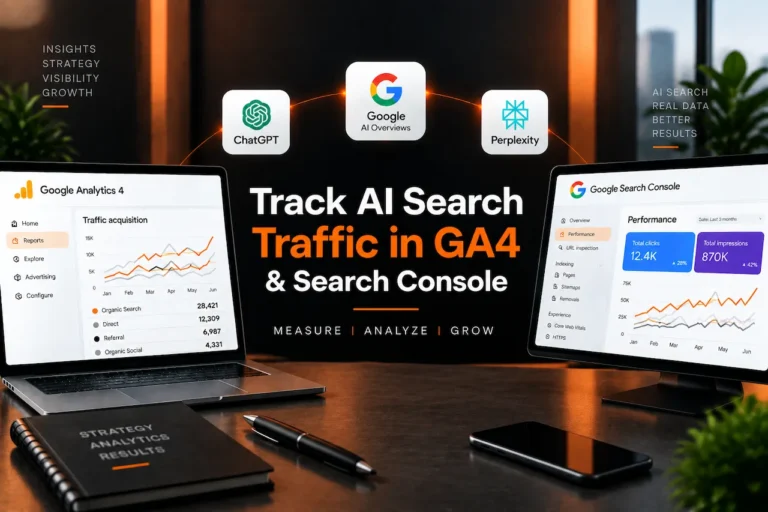
A website may gain visibility even if clicks change.
Impressions show whether Google still considers your content relevant.
Conversion Quality
The future of SEO is not only about traffic volume.
A smaller number of highly qualified visitors can create better business results than large amounts of low-intent traffic.
How Dexora Helps Businesses Adapt to Google Zero SEO
The search landscape is changing from:
“Ranking pages”
to:
“Building digital authority.”
Businesses need a strategy that combines:
- Traditional SEO
- AI Search Optimization
- GEO
- Content authority
- Technical foundations
- Brand trust
Dexora helps businesses prepare for AI-driven search through:
AI Search Strategy
Understanding how AI systems discover, interpret, and recommend information.
GEO Optimization
Improving brand visibility across generative search experiences.
Technical SEO Improvements
Ensuring websites are:
- Crawlable
- Indexable
- Structured correctly
Content Authority Building
Creating content that demonstrates:
- Experience
- Expertise
- Original insights
Businesses that want to understand their current position in AI search can start with an AI visibility audit to identify opportunities, weaknesses, and competitor gaps.
Final Thoughts: Google Zero Is Not the End of SEO
Google Zero does not mean SEO is dead.
It means the definition of search visibility is changing.
The businesses that succeed will not only focus on:
- Ranking higher
- Adding more keywords
- Publishing more content
They will focus on:
- Becoming trusted entities
- Creating useful information
- Building authority
- Earning AI citations
- Developing strong brand recognition
The future of search belongs to businesses that combine SEO with AI visibility strategies.
Traditional SEO helps you appear.
GEO and AI optimization help you get recommended.
Frequently Asked Questions About Google Zero SEO
Q. What is Google Zero SEO?
Google Zero SEO describes the shift where AI-generated answers reduce traditional organic clicks while increasing the importance of visibility, citations, and brand authority.
Q. Is Google Zero replacing SEO?
No. Google Zero is changing SEO, not replacing it. Websites still need strong SEO foundations, quality content, technical optimization, and authority signals.
Q. Why are AI Overviews reducing website clicks?
AI Overviews provide direct answers inside search results, allowing users to understand information without visiting multiple websites.
Q. How can websites appear in Google AI Overviews?
Websites need:
- Helpful content
- Strong SEO foundations
- Clear answers
- Authority signals
- Proper indexing
No method guarantees placement, but strong optimization improves eligibility.
Q. Does ranking #1 guarantee AI Overview visibility?
No. Ranking helps, but AI systems also consider relevance, usefulness, authority, and how well content answers specific parts of a query.
Q. What type of content gets cited by AI?
AI systems often prefer content with:
- Clear explanations
- Expert information
- Original research
- Structured sections
- Strong topical coverage
Q. What is the difference between SEO and GEO?
SEO focuses on improving rankings in traditional search results.
GEO focuses on improving visibility inside AI-generated answers and recommendations.
Q. Are backlinks still important in the Google Zero era?
Yes. Authority signals remain important. However, businesses also need:
- Brand mentions
- Expertise
- Original content
- Entity authority
Q. Does schema markup help with AI Overviews?
Schema markup helps search engines understand website information, but it does not guarantee AI Overview placement.
Businesses should use structured data as part of a broader SEO strategy.
Q. Can small businesses compete in Google Zero?
Yes.
Small businesses can compete by building:
- Strong local authority
- Reviews
- Expert content
- Unique experience
- Trusted brand signals
Q. How can I check if my website is affected by Google Zero?
Monitor:
- Search impressions
- Click changes
- CTR
- AI visibility
- Brand searches
A decline in clicks while impressions remain stable may indicate changing search behavior.
Q. Is AI-generated content bad for SEO?
AI-generated content is not automatically harmful.
The problem is low-quality content without:
- Expertise
- Original information
- Human review
- Added value
Q. What role does E-E-A-T play in AI search?
E-E-A-T helps demonstrate that information comes from a trustworthy source.
Important signals include:
- Author expertise
- Experience
- Case studies
- Reviews
- Brand reputation
Q. Should businesses optimize for ChatGPT and Perplexity?
Yes.
AI search is expanding beyond Google.
Businesses should consider visibility across:
- Google AI Overviews
- ChatGPT Search
- Gemini
- Perplexity
Q. What is the future of SEO after Google Zero?
SEO will evolve into a broader discipline combining:
- Search optimization
- AI visibility
- Entity building
- Content authority
- Brand trust
Businesses that adapt early will have a stronger advantage.
Need Help Preparing for Google Zero SEO?
AI search is changing how customers discover businesses.
Dexora helps companies improve visibility through advanced SEO, AI Search Optimization, and GEO strategies.
Request an AI Visibility Audit today and discover how your brand can compete in the AI search era.